
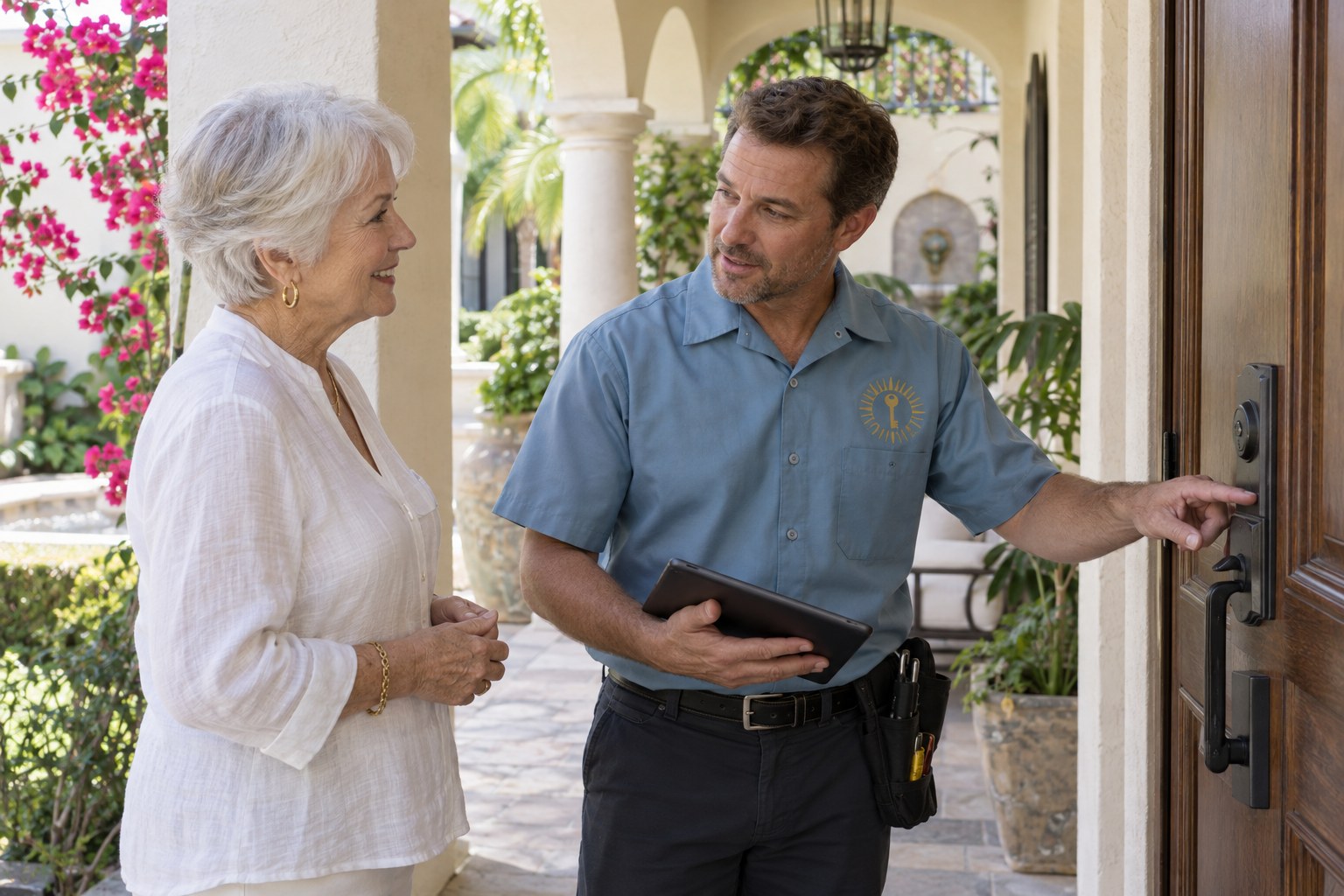
Start with what the door is doing, not what it is called
People often arrive at a locksmith page with a label already in mind, such as lockout, rekey or upgrade, when the door is really describing something simpler. A key that will not turn, a handle that spins loosely, a bolt that slides but the door stays shut, and a latch that misses its strike are four different problems with four different fixes. The cards above are grouped by situation for that reason. Read the short description on each one and pick the page that sounds most like what you actually see and hear at the door, rather than the one with the most familiar name.
A useful habit is to note three things before you browse: whether the key goes into the lock at all, whether it turns partway or not at all, and whether the door itself feels different from last week. Those three observations steer almost every choice. A key that enters but resists points toward the cylinder or toward corrosion. A key that turns loosely yet the door stays closed points toward the bolt, the latch or the frame. A door that suddenly feels tight in its opening points toward movement in the house, which is common after a wet season on this coast.
If two pages both seem to fit, read both. The topics overlap on purpose, and a sticking key page may mention a frame that has shifted, while a frame page may mention that a worn cylinder was hiding behind the problem all along. Nothing here asks you to diagnose perfectly. The goal is to arrive at the phone call with a clear description, because a clear description lets the technician bring the right tools and parts the first time, and that saves everyone a second visit. Clear descriptions save time, and a little patience at this stage tends to pay back later in the day.
Owners, landlords, managers and guests each need a different starting page
The same broken lock means something different depending on who is standing in front of it. A homeowner cares about the household and what the insurance paperwork might ask. A landlord cares about the tenant's right to the unit and about the paper trail. A property manager cares about turning a unit over before the next arrival. A guest who is stuck outside cares only about getting in. The rental pages in this group are written from the point of view of the person responsible for the door, so look for the page that matches your role first and the page that matches the symptom second.
Naples adds its own wrinkles. Many homes here belong to seasonal residents who are hundreds of miles away when something goes wrong, and many condos and townhomes sit inside communities with their own rules about who may change a lock and what kind of key is allowed. Vacation rentals add guests, cleaners and lockbox codes that travel further than anyone intended. If you manage from a distance, read the pages about access handoffs and turnover before you read the repair pages, because the wisest repair is the one a good access plan prevents. Setting up that routine once is far less work than managing the same trouble repeatedly.
Whatever your role, expect the same first step on any call: the locksmith confirms that you live there or have the authority to make changes before opening, rekeying or replacing anything. That is not suspicion, it is the reason a locksmith's work can be trusted. If you are a manager or caretaker rather than the owner, mention that on the phone and have a way to show your authority ready, such as a lease, a management agreement or a message from the owner. It keeps the visit smooth for everyone. Having the proof ready before the technician arrives is the quickest way to keep the schedule on track.
Rekey, replace or repair: three answers to three different worries
A rekey changes the internal pins so the old keys no longer work, while the hardware stays in place. It is the right answer when the worry is who might still hold a key, such as after a move, a tenant change, a separation or a contractor leaving. Replacement is the right answer when the hardware itself is worn, damaged, outdated or simply not the style you want. Repair is the right answer when the hardware is sound but something has drifted, loosened or corroded. The pages on rekeying, deadbolt choices and worn hardware each speak to one of these, and reading them together makes the decision much easier.
Salt air and humidity push many Gulf Coast doors toward the repair or replacement end of the spectrum sooner than inland homes would expect. Finishes pit, springs weaken, and cylinders that were once smooth begin to catch. A technician can often tell on arrival which of the three paths makes sense, but you can narrow it yourself by thinking about the worry. If the worry is access, lean toward rekeying. If the worry is how the lock feels or looks, lean toward repair or replacement. If the worry is both, a technician can explain how to combine them in one visit.
Smart locks sit slightly to the side of this choice. They can be a form of replacement, but they also change how access is shared, which is why the smart lock page speaks about codes, batteries and what happens during a power outage. If you are weighing a smart lock for a rental, read it alongside the rental turnover pages, since the real benefit there is not the gadget itself but the ability to change who can enter without handing over another metal key. Weighing these factors together tends to lead to a decision you will not regret.
A short list of things worth having in your hand before you call
A few minutes of preparation changes the whole call. Know the address and any gate, building or unit details that a technician needs to reach the door, including how visitors are admitted to your community. Know roughly how many exterior doors you have and which one is the problem. If you can, take a quick photo of the lock from the outside and the inside, since the style of hardware tells the technician which parts to bring. Have your identification and something that connects you to the property within reach, because ownership or authority is checked before work begins.
It also helps to know what you want the outcome to be. Do you only need the door open today, or do you want the lock to stay as it is, or do you want every key that ever existed to stop working? Those are different jobs. Quotes are given by phone, and a clear picture of the goal lets the quote be accurate. If the situation is more complicated than a phone call can capture, a technician will visit, and the service call charge is explained before anyone is dispatched, so there is never a surprise at the door.
For rentals and seasonal homes, add a few practical items: who else needs access during the work, whether a cleaner or neighbor can meet the technician, and where the existing keys are. Call to confirm availability before you plan around a specific time. If someone will be waiting at the property, tell them who is coming and what they should expect. A little coordination up front prevents the common situation where a technician arrives and nobody present can confirm that the work is allowed. Good coordination is a small courtesy that makes the work smoother for the technician and the household alike.
Common mistakes, and how the pages above connect
The most frequent mistake is forcing something. A stuck key gets twisted harder, a swollen door gets shoulder-checked, a jammed latch gets pried. Each of these turns a lock that needed a gentle fix into one that needs replacing, and a few of them damage the frame as well. The second most common mistake is delay: a missing key is treated as a minor annoyance for weeks, and by the time anyone acts, the question of who might hold a copy has become impossible to answer. The pages above are full of small stories about exactly these choices.
The topics connect more than their titles suggest. A lockout page leads naturally to a spare key plan. A spare key plan leads to a rekey after a change in the household. A rekey leads to a conversation about whether the hardware is still worth keeping. A repair of a sticking lock often reveals a frame issue, and a frame issue is usually tied to the season and the moisture the house has been through. Following one link of that chain often saves you from having to follow the next one in an emergency. Looking at the whole chain at once shows why prevention is so much lighter in worry than repair.
Treat this group as a map, not a menu. Pick the page that matches today's problem, then glance at the neighbors, because the question you will ask next month is probably answered there. And whenever a page leaves you unsure, call and describe the door in plain words. A knowledgeable neighbor on the other end of the line will tell you whether the job is something a technician can do at your door today or something that deserves a visit to look first. That simple conversation is often the most useful step you can take.