
The cleaner arrives to prepare the unit for the next booking, and the key is nowhere to be found. The guest checked out hours ago and is probably halfway up the highway with it in a pocket. For a host, this is a common and unsettling moment. This page explains how to respond calmly, how to restore control, and how to avoid a repeat.
Recognizing what has actually happened
The first thing to settle is whether the key is truly gone. Check the unit thoroughly: the kitchen counter, the pockets of beach bags left behind, the bottom of the laundry basket, the lockbox, the patio table and the planter by the door. Ask the cleaner whether they saw it. Guests sometimes set a key down in an unexpected place, and a quick search can end the worry in minutes.
If the key is not there, consider the other possibilities. It may have been placed in a lockbox that did not close, handed to a friend, or left at the front desk. Message the guest politely and ask whether they accidentally took it. Most people are embarrassed rather than malicious, and a friendly note often leads to a quick reply, with an offer to mail it back.
Even so, treat the situation seriously. A key that has left the property is a key you no longer control. Whether the guest returns it or not, you cannot be certain whether a copy was made. This is a good moment to decide how much risk you are comfortable with and what your standard is for access to the unit.
Rekeying versus changing a code
If your door uses a mechanical lock, the only way to make the missing key useless is to rekey the cylinder or replace the lock. Rekeying changes the internal pins so a new key works and old ones do not. It is a quick, practical solution for most doors, and it keeps your existing hardware. The key that left with the guest will no longer open the door.
If you use a keypad or smart lock, changing the code stops anyone from using the old code, but it does not affect a physical key backup that may exist. Many smart locks also have a mechanical keyway, and a guest who took that key could still open the door if the cylinder has not been changed. Check what your lock offers, and ask yourself which way in remains open.
The sensible approach is often both. Change any codes that the guest knew, and rekey the mechanical cylinder if a physical key is missing. A technician can do the second part and help you with the first. We confirm ownership or authority before touching the lock, so please have your documentation ready if you are the owner, or the owner's written approval if you are a manager.
Documenting what happened
Write it down while the facts are fresh. Note the guest's name, the booking dates, the time of check-out, the last time you saw the key, and any messages you sent. If your booking platform has a message history, save screenshots. If you use a smart lock with an activity log, record entries around check-out time. Documentation helps if you need to raise a question with the platform or an insurer.
Take a few photos of the unit and the door, showing that everything is otherwise in order. If there is any sign of damage or disturbance, document that as well. Keep copies of receipts for any lock work done in response. Good records turn an upsetting episode into a manageable administrative task and help you decide next steps calmly.
We do not give legal advice, and we will not tell you what rights you may have against a guest. If you want to explore any claim, speak to the booking platform's host support or to a qualified professional. Our role is simpler: make the lock secure again, tell you honestly what we find, and help you set up a better key system.
How quickly to act
There is no need to panic, but do not let the matter drift. If the unit is empty and the next guest is a few days away, you have time to plan a proper fix. If the next guest arrives later today, you need a solution that is ready before they do. Call us to confirm availability and explain your timing, and we will tell you honestly what we can do.
If you cannot get the lock changed in time, consider temporary measures. A lockbox with a code you control can hold a spare key for the arriving guest while the permanent fix is pending. If you have a smart lock, set a fresh code. Avoid asking the arriving guest to collect a key from a neighbor if you can help it, since that spreads access wider.
We do not promise arrival times. Distances in Collier County, traffic and season all affect how quickly a technician can reach you. The best step is to call early in the day, describe the situation and your deadline, and let us give you a candid answer. If it will not work out, we say so, so you can arrange a backup.
Proving you may authorize the change
Rekeying a rental door changes who can enter the property, so we confirm authority every time. If you are the owner, bring photo identification and a document linking you to the address, such as a deed, a tax bill or a closing statement. For condos, an association letter may help.
If you are a property manager or co-host, bring a management agreement or written confirmation from the owner. A message or email from the owner, ideally sent to us in advance, can speed things up. A tenant, a guest or a cleaner cannot authorize lock changes on their own, and we will explain why if that is the situation.
The same applies if the unit is managed by an agency. The agency typically has the authority and a clear process, and they may call us directly. Please tell us who to speak with, and make sure they are expecting our call. This avoids delays and ensures that the person asking for the work has the right to do so.
What the technician does on site
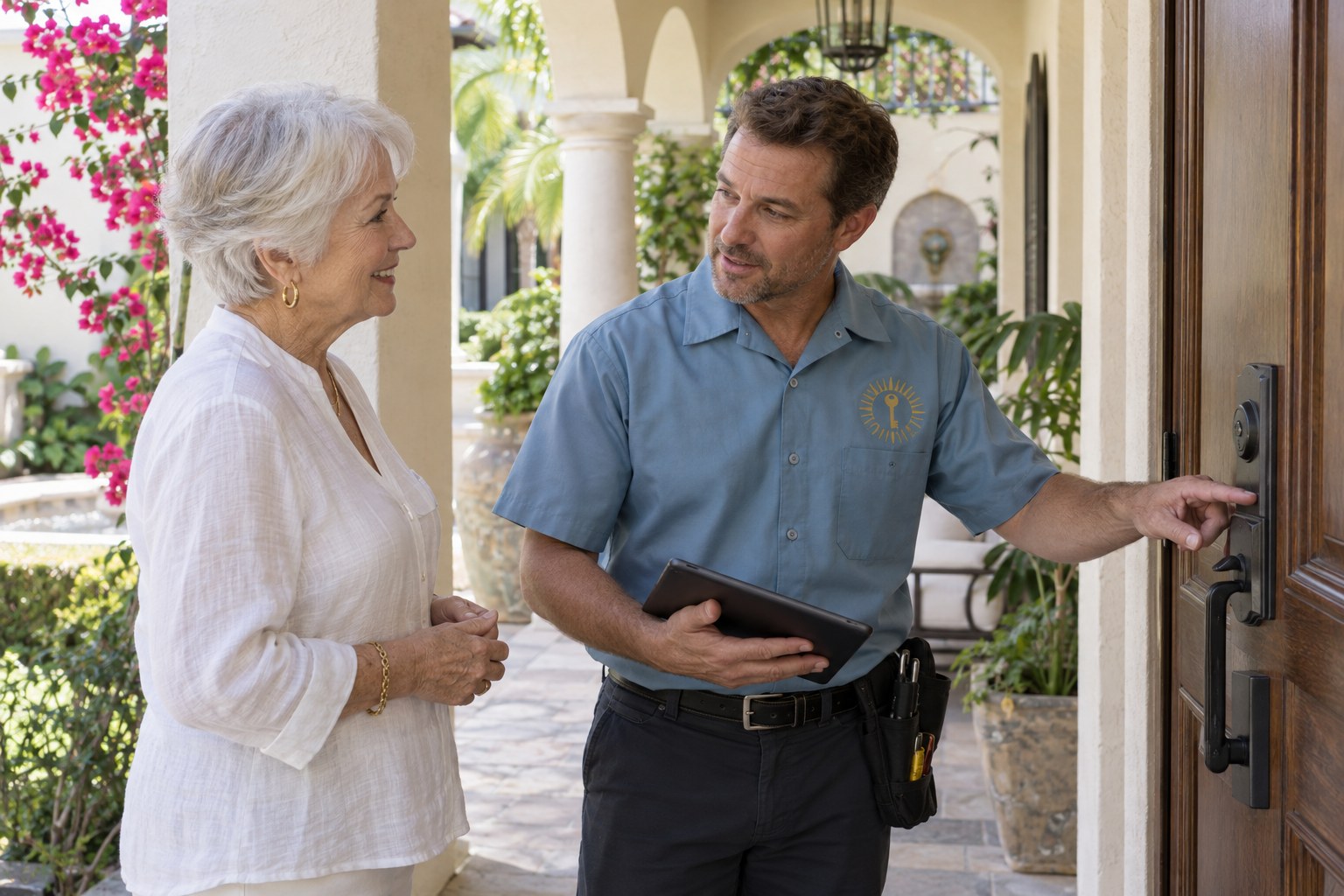
When the technician arrives, they confirm authority, look over the door and discuss the plan. They check the lock type, the number of cylinders and whether there are secondary locks, such as a deadbolt and a separate knob. Rental units often have more than one lock, and all should be considered, since a missing key may fit more than one.
Rekeying is done cylinder by cylinder. The technician removes each cylinder, swaps the pins for a new combination, cuts new keys and tests them. You are given the new keys, and old keys are checked to confirm they no longer work. The process is tidy and quiet, and the door looks the same when it is done.
If the lock is worn, corroded or of poor quality, the technician may recommend replacement. In a rental, durable hardware matters, because many hands use the door. We explain the difference between a rekey and a new lock, and the choice is yours. If a key snapped or the lock is damaged, we cover options on the spot.
Switching to a handoff that cannot walk away
The deeper fix is a system where guests cannot take a key with them. A keypad lock or smart lock gives each guest a unique code that expires when the stay ends. There is nothing physical to lose, and nothing to copy. For many hosts, this is the cleanest solution, and it saves the hassle of meeting guests or managing physical keys.
If you prefer a physical key, a lockbox mounted near the door can hold the key for each arrival. The guest uses a code to open the box, takes the key during the stay and returns it at check-out. This still depends on guests returning the key, so it is less secure than codes, but it is better than handing keys over in person.
Some hosts keep both options. A keypad lock handles daily access, while a mechanical key held by the host or manager serves as a backup. This layered approach gives resilience. Whichever system you choose, we can help you install and set it up, and we explain how to change codes between stays and what to do if a guest reports a problem.
Setting up codes the sensible way
A code system works best with good habits. Give each guest a unique code, set to expire at check-out. Avoid using the same code across bookings, because former guests may remember it. Avoid simple patterns such as 1234 or the last digits of a phone number. Keep a master code for yourself that is not shared with anyone.
Review the lock's activity log if it has one. It can show when codes were used, which helps if a guest says they cannot enter or if something is unclear after check-out. Remove old codes on a routine, and change the master code after any change in cleaning staff or management. Treat codes like keys that you can easily retire.
Tell guests how the lock works before they arrive. A clear message with the code, the steps to use it and a number to call if something goes wrong reduces lockouts. If your lock has a mechanical key backup, keep it in a secure place, such as a lockbox that only you and your manager can open, and keep track of who has the code.
Cleaners, contractors and everyone else with access
A guest is not the only person who may hold a key. Cleaners, maintenance staff, pool and landscaping crews and neighbors who help with check-ins may all have copies. Over time, the number of keys in circulation grows, and the rental becomes harder to secure. A rekey is a chance to reset the list and start fresh.
When you receive new keys, decide who truly needs one. A reliable cleaner might get a key, or you might prefer to give them a temporary code. A contractor can be given access for a specific day. Writing down who has what makes future changes easy, and it helps you notice if a key is not returned.
If someone leaves your service, retire their access promptly. With codes this takes seconds. With keys it takes a rekey. Neither is dramatic. It is simply part of managing a property that many people pass through. A routine, applied consistently, protects you, your guests and your neighbors in the community.
Gated communities, associations and rental rules
Many rentals in Naples sit within gated or managed communities, and these have their own access systems. A guest who left with a gate transponder or a pool key creates the same problem on a larger scale. Check with the association about lost items, and ask whether they need to be told about a lock change.
Some communities and condo buildings regulate short term rentals and may have rules on lock hardware or key handling. Others require that a key be kept on file for emergencies. If you rekey, you may need to provide a new copy. Read your documents, or contact the manager, to be sure you remain in compliance.
For gate access, a technician arriving for the work needs entry. Add us to the vendor or guest list before the visit, and tell us what the gate requires. Doing this ahead avoids a delay at the entrance. We will arrive with identification and explain who we are and why we are visiting.
Quotes, service calls and planning ahead
Costs depend on the number of cylinders, the type of lock and whether you want upgrades such as a keypad, so we do not publish amounts online. Call us, describe the doors and your situation, and we will give you a quote by phone. If the job is complicated, a technician visits and the service call charge is explained before dispatch.
We do not promise arrival times, and we ask you to call to confirm availability. If you manage several units, mention that. A single visit to rekey a group of doors is often more efficient than many separate calls. We can also advise on a consistent system across your properties.
After the immediate problem is solved, take a moment to plan. A single missing key is a useful warning about how your property is run. Whether you choose codes, a lockbox or a mix, a system that cannot be walked away with is worth the small effort of setting it up. We are happy to help you decide.
Talking to the guest without turning it into a fight
Tone matters. Most guests who leave with a key did so by accident, tucked into a swimsuit pocket or a purse and forgotten until the car was well down the road. A short, friendly message usually works better than an accusation. Say that the key appears to be missing, ask whether it might have come along, and offer a simple way to return it, such as a prepaid envelope or a drop at a nearby location.
Keep your messages factual and on the booking platform where possible, so there is a clear record. Avoid threats, sarcasm or guesses about motive. If the guest replies that they have the key, ask them to send it back and thank them. If they do not reply, you have still shown reasonable effort, and the paper trail will be useful if you later need to raise the matter with the platform.
Even when the key comes back, think about whether to rekey anyway. A returned key may have been copied, and you cannot know. Some hosts rekey regardless, treating the cost as a business expense, while others accept the risk after a cooperative reply. There is no single right answer, and we are glad to talk through the tradeoffs with you honestly, without pushing you either way.
Finally, use the episode to refine your check-out instructions. A clear note on the door, a reminder message on the morning of departure and a designated spot for returning the key all reduce the chance of a repeat. Guests are generally happy to follow simple steps when they are told what to do plainly and kindly, and your own stress at the next turnover drops accordingly. If you would like a second opinion on your check-out routine or your lock setup, call us and we will gladly talk it through.
Frequently asked questions
Is changing the code enough if the guest took a physical key?
Not if a mechanical key still opens the door. A code change only affects the keypad. If a physical key is missing, the cylinder should be rekeyed or the lock replaced so the missing key no longer works. Many hosts do both: change codes and rekey.
How do I prove I can authorize the work?
Owners bring photo identification and a document linking them to the property. Managers bring a management agreement or written confirmation from the owner. Guests, tenants and cleaners cannot authorize lock changes on their own. We confirm authority before rekeying or replacing any lock.
Can you come today if a new guest arrives tonight?
We do not promise arrival times, so please call early, explain your deadline and ask us to confirm availability. If we cannot reach you in time, we say so honestly. A lockbox or a fresh keypad code can serve as a temporary measure while you arrange the permanent fix.
What is the best system to prevent this?
A keypad or smart lock with unique codes that expire at check-out removes the physical key from guest hands. A lockbox is a second choice. Many hosts keep a secure mechanical backup held only by themselves or a manager. We can help you choose and set up a system.
Should I rekey after every guest?
Usually not. If keys are returned reliably and no one is missing a key, routine rekeying is unnecessary. Rekey when a key is lost, a worker leaves your service, or you take over a new property. Codes are simpler to rotate between stays.