
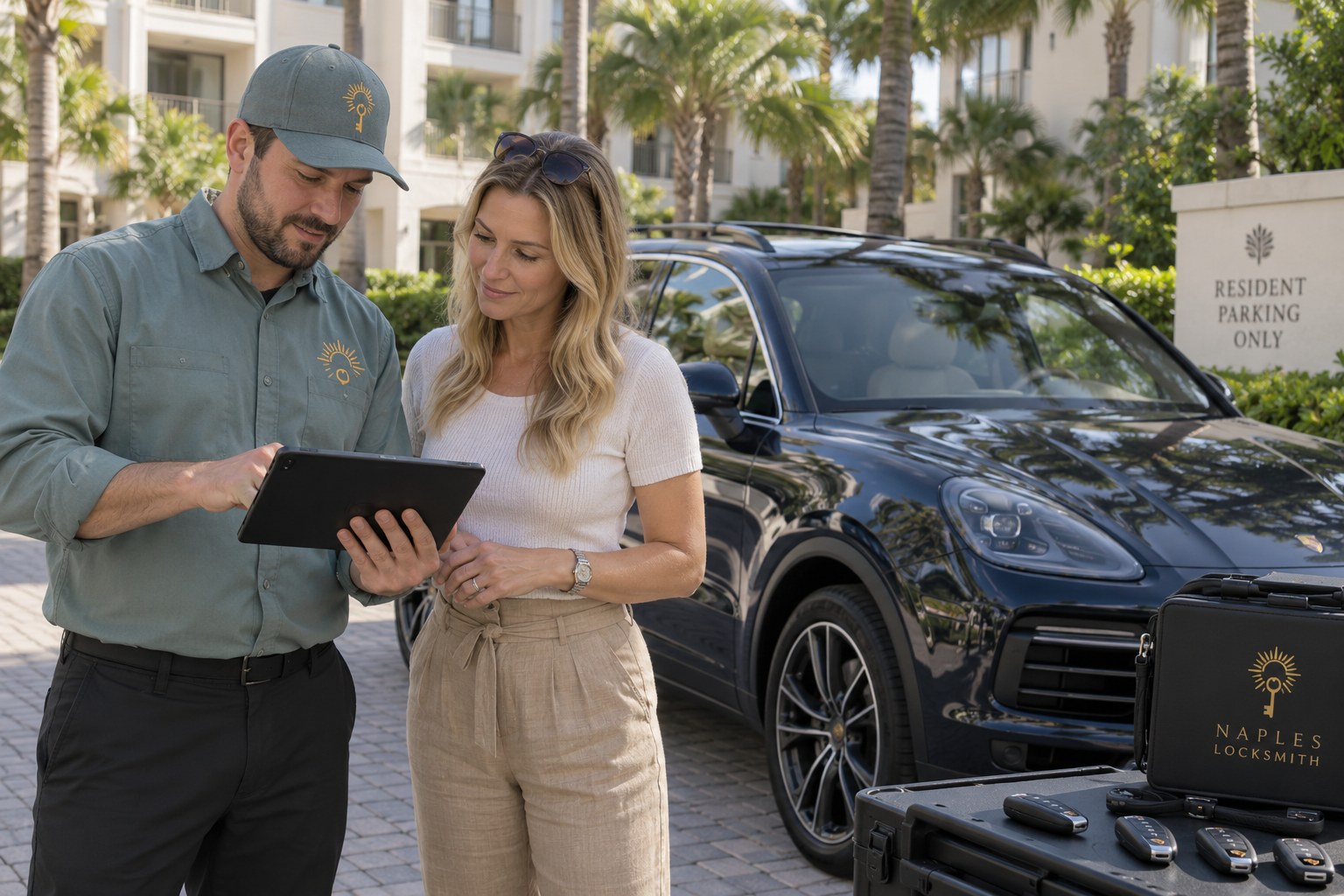
Few things sink a good day faster than seeing your keys on the seat while the doors are locked. A trained technician can open most vehicles without scratches or broken seals. This page explains how that is done, why ownership is checked first, what to do while you wait, and how Gulf Coast heat shapes the way you should handle the situation.
The moment the door clicks shut
Most lockouts follow the same pattern. You step out, close the door, hear the lock engage and realize the key is inside, in a bag on the seat, or in the ignition of a car that locked itself. Sometimes it happens at home, sometimes in a grocery store lot, and sometimes at a beach access with a line of cars behind you. In every case the first feeling is a small drop in the stomach.
Take a breath and check the obvious. Try every door, including the trunk or hatch, since a door left unlatched is an easy solution. Check whether a passenger window is cracked. If another person has a spare key, ask whether they can bring it. Spare keys at home are the quickest answer when they can reach you safely and without a long drive.
If those options fail, a locksmith is the right call. Avoid wedging coat hangers, pry bars or flat tools into the door yourself. Modern cars have wiring, airbags and electronic sensors in the door panel, and the rubber seals tear easily. A repair for damage you cause by forcing your way in can cost far more than a professional opening.
Why ownership is confirmed first
A locksmith who opens cars for anyone who asks would be helping thieves. For that reason, the technician confirms that the vehicle is yours, or that you are authorized to open it, before any tool touches the door. This is a normal, expected step and applies everywhere, including in a parking lot you know well.
Typically you will be asked for photo identification and some proof connected to the vehicle. Registration, title, an insurance card or a lease can serve. Sometimes the paperwork is inside the locked car. In that case, tell the technician. A phone photo of the registration, a matching name on an account, or confirmation from the registered owner can help, and the technician will tell you what is acceptable.
If the vehicle belongs to someone else, such as a family member, an employer or a rental company, the technician may ask for their permission. A phone call from that person is often enough. Be patient with the process. It exists to protect you, because the same rules stop someone from walking up to your car and claiming it as their own.
How a technician opens a locked car
Professional vehicle entry usually relies on a few methods, chosen to fit the car. A common approach is to create a small gap at the top of the door frame using an inflatable wedge, gently opening just enough space to slide a long thin reach tool inside. The tool then presses the unlock button or pulls the handle. When done correctly, the paint, weatherstripping and glass are left unmarked.
On some vehicles, the technician instead uses a tool that manipulates the lock mechanism through the door's edge. Older vehicles with simple linkages are often easier. Newer vehicles with sophisticated electronics and side airbags demand more care, since pushing the wrong wire or pressing the wrong spot can cause trouble. Technicians learn where not to reach.
The method depends on the vehicle, and a reputable technician will not promise a method before seeing the car. Whenever possible they pick the least invasive route. If a vehicle has a tight door seal or reinforced frame, the job may take longer. After the door is open, the technician tests the lock and the door, confirms nothing is damaged and returns control to you.
Keys in the ignition, in the trunk or nowhere in sight
Not all lockouts are identical. If you can see your key on the seat, the job is simply to open the door. If the key is in the ignition and the engine is running, it is the same, but a running car in a hot parking lot is a reminder to act quickly. If the key is in the trunk and the car locked itself, the technician may open a door and use the interior trunk release.
Sometimes you are not sure where the key is. Perhaps you lost it earlier in the day, and the lockout is an extra complication. Tell the technician. If a key cannot be found, the visit may include making a new key after the door is open. That adds ownership steps, programming and time, but it can be done in the same visit in many cases.
If you have a push-button start vehicle with a smart key, remember that the car may have locked itself because the fob left the cabin. Some vehicles will not lock if the fob is inside, but others will. Do not assume. Describe the situation to the technician and let them confirm what happened before you attempt any other fix.
- Key visible on a seat: open the door and retrieve it
- Key in the ignition: open the door, turn off the engine
- Key in the trunk: open the cabin and use the interior release
- Key lost entirely: open the car, then make a new key
Heat, sun and what to do while you wait
In Naples, a closed car in the sun becomes dangerously hot in a short time. The interior of a parked vehicle can reach temperatures far above the air outside, even on a mild day. If a child or a pet is inside, do not wait. Call emergency services immediately and explain the situation. A locksmith is not a substitute for emergency help when a life is at risk.
If you are alone and safe outside the car, find shade. A shop doorway, a covered walkway, the shaded side of a building or a nearby store lobby is better than standing beside the hot metal. Drink water if you have it, and apply sunscreen or wear a hat if you must remain in the sun. Summer afternoons also bring sudden thunderstorms, so look for a place that protects you from lightning too.
Stay in touch with the technician about your location. Give clear landmarks, floor numbers in a garage and any gate or access codes. If you need to move away from the car for comfort, tell the technician where you will be. A locksmith can arrive and begin work only if they know where to find you and the vehicle.
Protecting the car: paint, seals and electronics
A careful lockout is invisible afterward. The technician protects the paint with a pad under any wedge, uses tools with soft coatings, and avoids pressing too hard on the door frame. Door seals are rubber and easily torn, so the technician places tools to avoid sharp edges. The goal is to leave the door closing and sealing exactly as it did before.
Modern doors contain wiring harnesses, speakers, side airbags and sensors. Technicians learn where these sit, and they plan the path of their tool accordingly. Reaching through a gap to a door handle is routine, but the work demands patience. If a vehicle's design makes a safe opening difficult, the technician will say so rather than force an entry.
If anything unusual happens, such as an alarm triggering or a warning light appearing, the technician explains what occurred. Some cars sound the alarm when a door opens without the key. The alarm can usually be silenced once the key or the fob is back in your hand. Nothing here should surprise you if the technician describes it beforehand.
Garages, gated communities and tight spots
Lockouts happen in awkward places. A condo garage with low ceilings and neighboring cars can limit working room. A gated community requires the technician to be cleared at the entrance. A marina or beach lot may have uneven pavement and sun glare. Each of these shapes the plan, and a quick conversation on the phone helps the technician prepare.
If you are in a garage, tell us the level and the space number, and let the building office know a locksmith is coming. If your vehicle is parked bumper to bumper with others, the technician may have to work through the narrow gap on the driver side. Do not move other cars unless you are sure you can do so safely and legally.
In a gated or condo community, notify the gate, the front desk or the property manager. Provide the technician's expected arrival and the name of the person who will meet them. Delays at the entrance are common and avoidable. A small amount of coordination lets the technician reach your car without waiting at the gate.
When the lockout is a symptom of something else
Sometimes a lockout is more than bad luck. If your car repeatedly locks itself, the central locking system may be faulty. If your key fob works only sometimes, the battery or the receiver may be failing. If the door lock cylinder is stiff, a mechanical problem may be developing. A good technician will notice these signs and mention them.
A worn key or fob can lead to repeated lockouts as well. A fob that does not respond reliably encourages people to lock the car with the physical key, and a lock cylinder that sticks may jam. If you find yourself locked out often, consider having a spare key made and the fob battery replaced. These are inexpensive steps compared with repeated emergencies.
If the car has been through a flood or heavy rain, moisture may have affected the electronics. Salt air can corrode door lock actuators over time. When the technician tests the lock after opening the door, ask about the condition of the mechanism. They can tell you if something needs further attention, so you are not surprised by the next failure.
Preventing the next lockout
A little habit goes a long way. Make a routine of checking pockets or bag before closing the door. Keep a spare key in a safe place that is not on the car. Consider a key with a small lanyard that clips to your clothing. Some drivers use a phone app that can unlock the car remotely, if their vehicle supports it, so check what features come with your model.
At home, keep a spare key with a trusted person nearby. Seasonal residents may leave a spare with a neighbor or property manager. Avoid hiding keys on or under the car, since thieves know the usual spots. A lockbox in a discreet place, with a combination only you know, is a better option if you must leave a key outside.
Finally, keep your vehicle documents accessible. A photo of the registration and insurance on your phone speeds up the ownership check during a lockout. If you carry your driver license, you have most of what you need. Preparing for an emergency in calm moments makes the emergency shorter.
What to expect when you call
When you call, tell us where you are, the type of vehicle and what has happened. Mention whether anyone or any animal is inside, whether the engine is running, and whether you can see the key. We will ask a few questions and give a quote by phone. Please call to confirm availability, and tell us about any gate codes or garage rules.
The technician arrives, confirms ownership, inspects the vehicle and explains the method. The door is opened with care, the lock is tested, and you are handed your keys or helped with a replacement. The whole process should feel unhurried and clear. If you have questions, ask them as the work proceeds.
If the lockout turns out to involve a lost key, a damaged lock or a complicated vehicle, the technician tells you promptly. If the job is complicated, a technician visits and the service call charge is explained before dispatch. You should never be asked to approve something you do not understand. Our job is to help you get on with your day.
Trucks, vans, older cars and unusual vehicles
Not every vehicle opens the same way. Pickup trucks and work vans often have large doors with different seal designs, and some have manual lock posts or simple linkages that respond well to a careful reach tool. Others have central locking systems wired through multiple doors. The technician looks at the vehicle before deciding on a method, rather than assuming the same approach works every time.
Older cars can be easier in some ways and trickier in others. Simple mechanical locks may open quickly, but old rubber seals are brittle and crack under pressure, and rusted door edges can flake. Care is needed to avoid breaking trim or tearing weatherstrip that is no longer easy to replace. Classic and collector vehicles deserve extra patience, and owners are welcome to describe any known quirks.
Boat trailers, golf carts, motorcycles and recreational vehicles are different again. RV doors often have their own keyed locks, sometimes in a series, and the cabin may be separate from the cab. Tell us exactly what you have, and whether a particular door or compartment is the one that is locked. We will explain what we can do and whether special tools or a longer visit are needed.
If your vehicle is unusual, a photo can help us prepare. Send a description when you call, and mention any aftermarket alarms, remote starters or window tint, since those can change the approach. The more we know in advance, the less time you spend waiting in the heat while a technician figures out what they are dealing with.
Finally, if the car is more than a few seasons old, ask the technician to check the door lock actuators and the key blade while the door is open. A sluggish actuator or a rounded key is often the quiet cause of repeat lockouts, and a small repair now can spare you another stressful afternoon in the sun later this year.
Keep this page in mind the next time you hand your keys to a valet, a friend or a child. Knowing the steps, from the ownership check to the careful opening, helps you stay calm and make clear decisions when a door clicks shut with the key still inside.
Frequently asked questions
Will opening my car damage the paint or the seals?
A skilled technician uses protective pads and soft-coated tools to avoid marks, and works carefully around seals and wiring. The aim is to leave the door closing exactly as before. If a vehicle is unusually difficult, the technician will say so first. Modern doors contain airbags and sensors, which is why forcing a door yourself is risky.
What if my registration is locked inside the car?
Tell the technician. A photo of the registration on your phone, a matching account record or confirmation from the registered owner may be acceptable. Photo identification is expected in every case. We explain what we can accept when you call, so you can prepare before the technician arrives.
What should I do if a child or pet is locked inside?
Call emergency services right away. A closed car heats quickly in Southwest Florida, and a life at risk is an emergency that comes before anything else. Once emergency responders are on the way, you can also call us. Do not wait for a locksmith if someone inside appears distressed.
Can you also make a key if mine is lost and the car is locked?
In many cases yes. The technician opens the vehicle, confirms ownership, and then cuts and programs a new key during the same visit. The details depend on the vehicle. Tell us the make, model and approximate age when you call, and we will explain what to expect.
How do I get a quote for a vehicle lockout?
Call us with your location and a description of the vehicle and the situation. Quotes are given by phone. If the job is complicated, a technician visits and the service call charge is explained before dispatch. Please call to confirm availability. Ownership is checked before any vehicle is opened.