
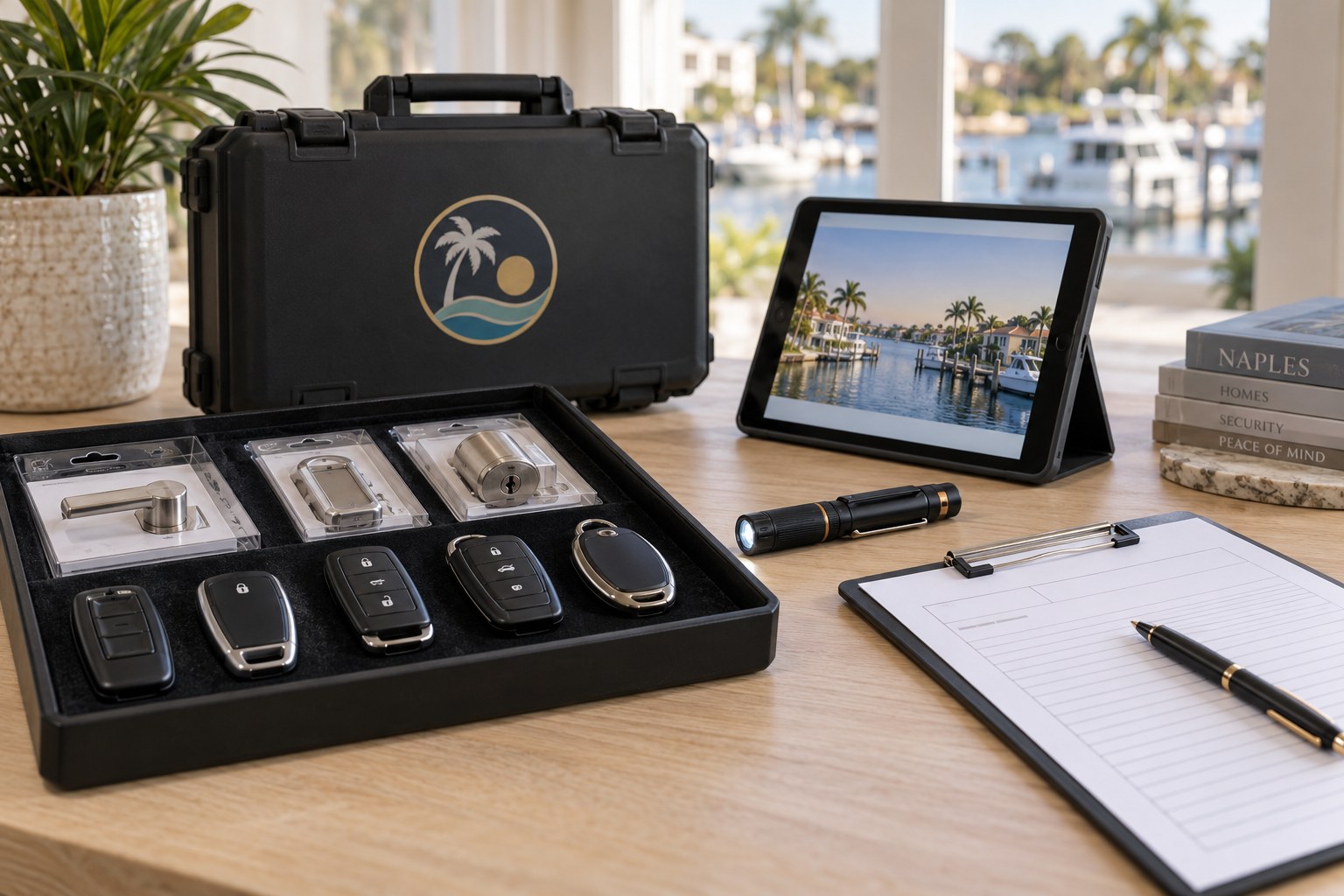
When the season winds down and the flights north are booked, a Naples house will sit quiet through the hottest, wettest months. This checklist walks through the locks to service before you leave, where spare keys should and should not live, who deserves access, and how to avoid the small signs that tell the street nobody is home.
A house that sits empty is a different kind of home
A home lived in every day announces its own problems. A sticky lock gets noticed, a loose handle gets tightened, a strange noise gets checked. A seasonal home loses all of that attention for months, and small faults grow quietly in the heat and damp until you return to find a door that will not open or a lock that has seized.
That is why the closing routine matters more than any single product. It is a chance to look at every entry with the eye of someone who will not be back for a long while, and to ask which problems will still be small in October and which will not. The goal is simple: leave a house that is secure, and leave it in a state where a caretaker can manage it.
The advice here applies to single-family homes, condos, villas and townhomes alike. The details change with the building, but the questions are the same. Who can get in, how do they get in, what happens if a key is lost, and what will the house look like from the street while you are gone?
If you own the home jointly, or share it with relatives who come and go on different schedules, the closing routine needs a little more coordination. Decide who is the last person out, who verifies the locks, and who holds the master record of keys. Without that, each person assumes someone else checked, and the house ends up with one door that nobody actually tried.
Walk every door and exercise every lock
Start the closing routine a week or two before departure, not the morning of the flight. Walk the whole house and operate each exterior lock, including the garage service door, the lanai slider, side doors and any gates. Turn each key, throw each bolt, and notice anything that feels gritty, stiff or loose.
Pay particular attention to the locks you rarely use. A back door that has been bolted since winter may have stuck without anyone knowing, and a slider track full of grit can make the latch miss its mark. If a lock needs more effort than it used to, it is telling you something. A technician can clean, lubricate and adjust it in a short visit.
Try the locks from outside as well as inside, with the door closed the way it will be left. It is surprisingly common to find a lock that works from the inside but fails to catch when the door is pulled shut from the porch. Finding that now, with time to fix it, beats discovering it from a text message in July.
Keep a simple log of what you find. A line such as back door deadbolt sticks, or lanai slider latch loose, takes seconds to write and gives the technician a head start. It also gives your caretaker a baseline, so if something changes while you are away, they can tell whether it is new. Notes beat memory every time, particularly when the trip north is a hurried one.
Which locks deserve service before you go
Not every lock needs attention every year, but a handful of signs mean it is time. A key that sticks, a deadbolt that does not extend all the way, a handle that wobbles, or a finish that has pitted from salt air all point toward service. Keypad and smart locks need fresh batteries and a test of the physical key override.
Consider the weather in your absence. Months of heat, humidity and the occasional storm will test hardware that has been left alone. A lock with worn internal parts may work fine today and fail in August. Replacing a tired cylinder while you are in town is far easier than arranging it remotely.
A technician can also advise on whether a mechanical deadbolt, a keypad lock or a combination makes sense for your situation. Each has tradeoffs for a house that is left empty. Keypads are convenient for caretakers but need battery care, while a mechanical lock is simple and robust but depends on key management. The right answer depends on your household.
Mailbox and package locks deserve a thought too. A community mailbox key is easy to forget, and a lost one can mean a long process to replace. If you expect important mail, arrange forwarding or a hold rather than leaving a full box. Likewise, any outdoor storage box or utility closet with a lock should be checked, since those often hold tools or equipment you would rather not lose.
- Deadbolts that do not fully extend or retract
- Keys that stick, bind or have worn smooth
- Sliding door latches and track condition
- Keypad batteries and the backup key
- Garage service door and gate locks
Spare keys: where they belong and where they do not
The most common mistake is hiding a key outside. The fake rock, the planter, the ledge above the door and the mailbox have all been checked by people who do this for the wrong reasons. A hidden key is only hidden from you. If you need to leave a spare for a caretaker, hand it to a person, not a place.
Think about how many keys exist and who has them. Over several seasons a house collects copies: a neighbor, a cleaner, a past tenant, a contractor who needed access one winter. If you cannot list every holder, the safest move is to rekey, which changes the lock so every old key stops working and you issue a clean new set.
A small lockbox with a code can work for short arrangements, but treat the code like a key and change it between users. A key given to a caretaker should be one that you can account for, and a note of who holds it belongs in your records. Simple discipline here removes a lot of worry during the months away.
When someone moves out, sells, or hands over the house to a manager, the same logic applies. A key list is only as good as its last update, and old copies tend to survive in drawers and on other people's rings. Rekeying resets the whole picture in one visit, and the cost in time is small compared with the effort of tracking down every copy that may exist.
Choosing a trusted person and giving them the right access
Every seasonal home needs someone nearby who can respond. That might be a neighbor, a property manager, a family member or a house-watching service. The relationship matters more than the title. Choose someone dependable, who can reach the house, and whom you are comfortable calling when something looks off.
Give them what they need and no more. A caretaker needs a key to the front door, perhaps the garage, and the code for the alarm if one exists. They do not need a key to everything, and they do not need to know where valuables are stored. Limiting access limits risk, and it makes it simpler to change things afterward.
Write down the plan: who to call, who has access, what to do if a door will not lock, and how to reach a locksmith. Print it, leave a copy with the caretaker and keep one yourself. If the caretaker changes, update the plan and rekey if there is any doubt. Clear arrangements protect the home and the relationship.
Consider how a caretaker will handle an emergency. If a door is damaged by wind or an attempted entry while you are away, they should know to secure it, take photographs, and call you and a locksmith. Having that plan written down means the response is calm and quick. Without it, a small break-in attempt can sit unattended for days and grow into a bigger loss.
Avoiding signs that nobody is home
A house that looks abandoned invites trouble, and a few small habits make a big difference. Mail and packages piling up, newspapers on the driveway, and overgrown landscaping all signal an empty property. Arrange for mail to be held or collected, and have the lawn and plants looked after on a regular schedule.
Lighting can help. Timers or smart plugs that turn a lamp on in the evening give the impression of life, provided the pattern looks natural. Blinds should be set the way they would normally be, not tightly closed in a way that looks deliberate, and valuables should not be visible from the windows or the lanai screen.
Avoid advertising your trip on public social media until you return. It is a small thing, but it gives strangers information they have no need for. Let neighbors and your caretaker know your schedule, and let them know who should have access, so an unfamiliar visitor stands out and can be questioned.
Neighbors are underrated. A friendly word with the people next door, plus a note of when you will be away and who has access, gives you an extra set of eyes at no cost to anyone. They will notice a strange vehicle, an open door or a light that should not be on. In communities where people look out for one another, that awareness is a real layer of protection.
Doors that fail first in heat and humidity
Summer in Southwest Florida is long and damp. Wooden doors swell, metal parts corrode, and seals harden under the sun. A door that closed easily in March may drag on the frame by September, and a lock that turned smoothly may have picked up grit that slows it to a crawl.
Sliding doors are especially prone to trouble. Dirt collects in the track, rollers wear, and the latch can drift out of alignment. A slider that does not lock properly is an open invitation, so clean the track and check the latch before you leave. A technician can adjust the latch hook and test the secondary lock.
Garage doors and their service entries deserve the same attention. The emergency release on an automatic opener should be considered, since a thief who knows the trick can use it to open the door. Locking the opener down, or disabling it for the duration, is a measure a technician can advise on in a few minutes.
Hurricane season overlaps with your absence, so a plan for storms should be part of the closing. Decide who will put up shutters if a storm threatens, and make sure that person can reach every door they need to lock. After a storm, the caretaker should check doors and locks for damage before anything else, since a door knocked out of line may no longer latch.
Condos, villas and homes with association rules
If you live in a building or community with an association, the rules will shape what you can do. Some buildings hold master keys, require a copy of your key on file, or restrict who may change door hardware. Before rekeying or replacing anything, ask what is required, and find out whether the association must be notified.
High-rise and mid-rise condos often have shared entrances, key fobs and access lists. When you leave for the summer, confirm that your guests and caretaker are on the list, and that any temporary fobs are deactivated afterward. A technician can work on the unit door, while the building controls its own systems.
Gated communities present a similar picture. Gate codes and transponders should be reviewed before departure, and you should remove access for anyone who no longer needs it. A locksmith can help with the lock on your own door and advise on what questions to ask the association. Always ask before assuming you may change something visible.
Rental homes that are used part of the year by the owner and part by guests need an extra layer of thought. Decide whether guests get a code or a key, how they will return it, and how you will know the house is empty again. Between stays, a quick lock check by the manager confirms nothing was damaged or left unlocked, and a rekey at the end of the season resets access.
What a closing-up visit looks like
When you contact us, tell us what kind of home you have, how many exterior doors there are, and what you want to accomplish. Quotes are given by phone. Please call to confirm availability, because the weeks before the summer departure are busy and it helps to plan the visit a bit ahead of your travel date.
On arrival, the technician confirms that you own the home or have the owner's authority, and then works through each door. Expect cleaning, lubrication, adjustment, and an honest list of anything worn or failing. You decide what to do now and what can wait, and the technician explains the choices without pressure.
If the work is more involved, such as replacing several locks, rekeying the whole house or repairing a damaged frame, the technician visits to assess it and the service call charge is explained before dispatch. That way there are no surprises. You leave with working locks, a clear set of keys and a short record of what was done.
One last point: do not wait for a problem to find a locksmith. Having a name and number on hand before you leave means a caretaker, a neighbor or a manager can act quickly if they need to. Save the contact in your phone, share it with your caretaker, and note it on the printed plan. Preparation costs a few minutes and saves a lot of stress.
A final walk-through on the day you leave
On departure day, do a final pass with a short checklist. Lock every door and window, test each lock by trying the handle, confirm the garage is secured, and make sure lights and timers are set. Set the alarm if you have one. Take photographs of the closed house, which can be useful later.
Leave a clear note for your caretaker with anything unusual: a door that sticks, a lock that needs a trick, or an alarm code. Hand over the keys in person, and confirm that they know how to reach you. A few minutes of explanation can prevent a long phone call across time zones.
Finally, keep the contact information for a locksmith with you. If something goes wrong while you are away, a quick call to the right person gets the house secure and keeps the problem small. A calm, prepared departure makes the summer easier and your return something to look forward to.
Frequently asked questions
Should I rekey before leaving for the summer?
It is worth doing if you cannot account for every key, if a tenant or contractor has had access, or if you recently bought the home. Rekeying makes old keys stop working and gives you a clean set. A technician can advise based on your situation.
Is it safe to leave a key under a planter?
It is better not to. Hidden keys are among the first places a person checks, and a hidden key is only hidden from you. Give a spare to a trusted person, or use a coded lockbox whose code you change between users.
Do keypad locks work well for a home I leave empty?
They can, provided batteries are fresh and a physical key backup exists. They are convenient for caretakers, because codes can be changed without a new key. A mechanical lock is simpler and does not depend on power. The right choice depends on the household.
Do I need to prove I own the home?
Yes. The locksmith checks ownership or authority before rekeying, repairing or changing hardware on a home. That could be a deed, a lease with the owner's approval, or a property manager acting for the owner. It protects you and the property.
How do I arrange a visit and get a quote?
Call us and describe the home, the number of doors and your travel timeline. Quotes are given by phone. If the job is complicated, a technician visits and the service call charge is explained before dispatch. Please call to confirm availability.