
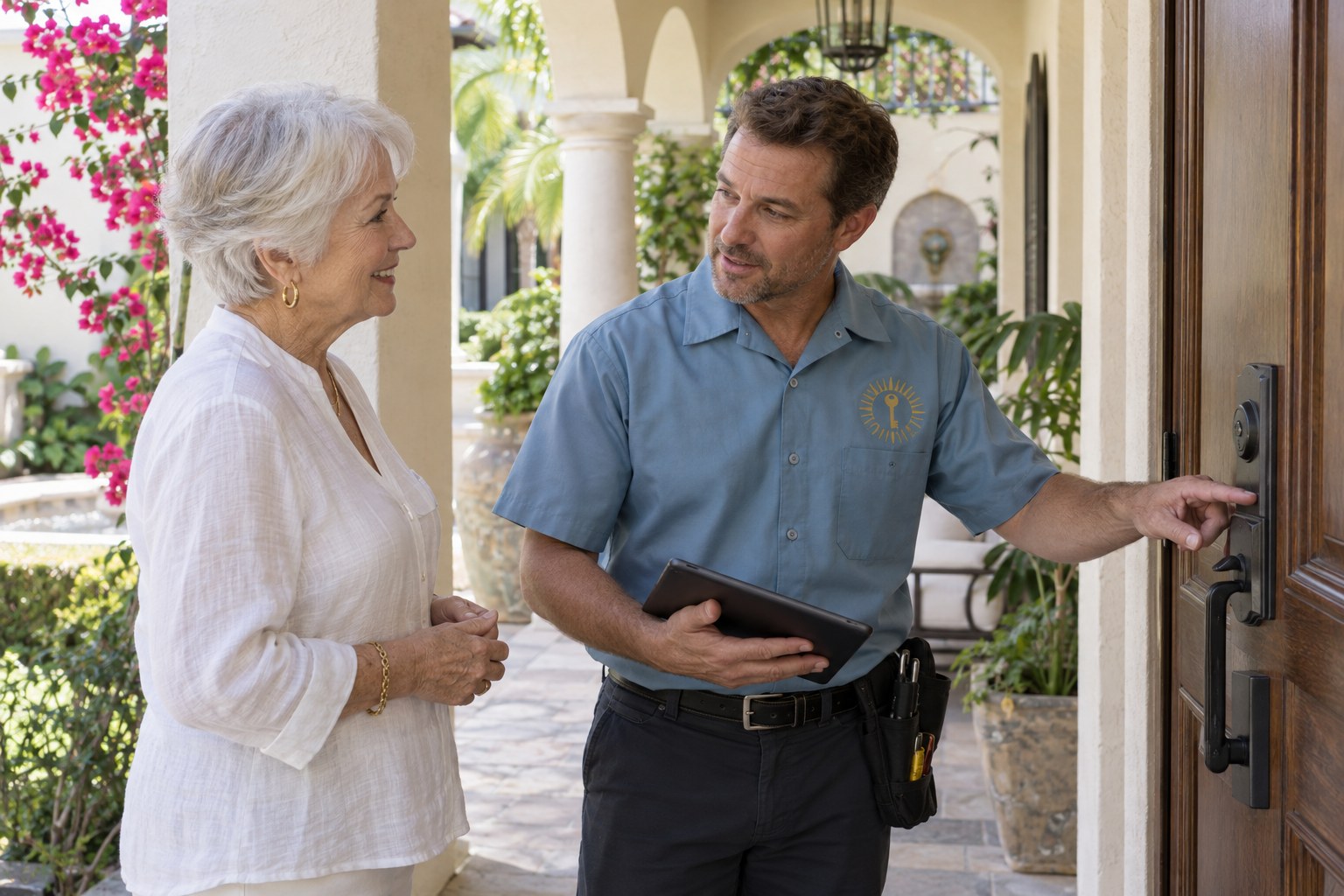
The papers are signed, the agent hands you a small bundle of keys, and the house is finally yours. What nobody can tell you is how many other copies exist. This page explains why rekeying on closing day is such a sensible first step for a new Naples owner, what it covers, what proof we need, and how to schedule it around a busy move.
The question no one can answer at the closing table
When you buy a home, you inherit its history of keys. The seller had copies, perhaps cut a few for a spouse or adult children, left one with a neighbor while traveling, handed another to a cleaner, a pool technician or a contractor. Previous owners may have done the same. Even with the best intentions, nobody can give you a reliable count of who holds a working key to your new front door.
This is not a reason to suspect anyone. Most of those people are honest and have long since forgotten they hold a key. But a house is the largest purchase most people make, and it makes sense to start your ownership with control over who can enter. Rekeying turns an unknown into a known. After it is done, only the keys you were handed that day will work.
The timing matters because the first days of ownership are when a home is most exposed. You may be moving furniture, letting in delivery crews, arranging internet and utilities, and leaving doors unlocked between trips. A fresh set of keys at the start is a calm way to begin, and it lets you decide from day one who receives access.
What rekeying covers and what it does not
Rekeying means changing the pins inside each lock so that a new key works and old keys do not. The hardware itself stays on the door. For a new owner, this is usually the most sensible choice, because the locks are often in acceptable condition and you may not want to replace everything before you have even unpacked.
It does not change anything about the lock's strength. If a deadbolt is weak, a strike plate is flimsy or a door frame is damaged, rekeying will not fix that. A good technician looks at the whole door while on site and tells you if reinforcement or replacement would be wise. Many new owners find that a few small upgrades, done at the same visit, make the home noticeably more secure.
Rekeying also does not affect codes on keypad locks, garage door openers or alarm systems. Those are separate and should be reset on their own. We can help with the mechanical side and point you toward the right people for the rest. Making a simple checklist of everything that grants access is a smart project for the first week.
The doors people forget on closing day
Front and back doors are obvious. The ones that get forgotten are often the quiet ones. A garage entry door, a side door to a lanai or pool area, a detached garage or workshop, a storage closet on a balcony, a gate to a courtyard or a screened enclosure all have locks, and each of them may have its own key. Walk the whole property slowly and list every lock.
Other overlooked items include mailbox locks, if the mailbox is private, a pool equipment room, an outdoor shower enclosure and any exterior cabinets. Condo owners should add the building's storage cage, a bike room key if one is assigned, and any mailbox in a shared bank. Associations sometimes handle the shared areas, so ask which items you are responsible for.
Windows with locks, sliding doors with keyed latches and security grates can also be keyed. Some of these use their own small keys, hidden in a drawer or on a hook. Finding them early saves frustration later. During the rekey visit, the technician can handle many of these locks at once, and can often key several to match so you carry fewer keys.
Proving ownership to the technician
Because rekeying changes who can enter the home, we always confirm ownership or authority before starting. This protects you, and it protects the previous owner and the neighborhood. The process is quick and routine. Bring a photo identification and a document that ties you to the address.
For a new owner, the best document is your closing paperwork: a settlement statement, a deed, or the recorded transfer. If the closing happened that same day, the signed settlement documents or a letter from the title company are usually enough. A property tax bill or a purchase contract with a closing date can help as well. If you have several, bring them all.
If you are buying through a trust or a company, or if someone else is acting for you under a power of attorney, the paperwork may differ. Tell us ahead of time what you have, and we will say what else is needed. If a technician cannot confirm authority, we cannot proceed, and we will explain what could resolve it. We do not make exceptions, even when the story is sympathetic.
Timing the visit around your move
The best moment is as soon as you have legal possession. Some buyers schedule the rekey for the same afternoon as the closing. Others book the next morning, before the movers arrive. Either works, as long as you plan. Call us a bit in advance so we can confirm availability and fit the work into your schedule.
Think about sequence. If movers will be coming and going, it can be sensible to rekey first, so the keys they use are the new ones, and then retrieve them after the move. If you prefer to rekey after the movers finish, plan to let them in and lock up carefully. Whichever way you choose, note who has keys at each stage.
If you are an out-of-town buyer, arrange to have someone meet the technician with proof of authority, such as your agent, a property manager or a trusted relative, who has your permission in writing. We would rather confirm everything cleanly than rush. Please call to confirm availability, and tell us the community or building so we can plan for gates and parking.
Gated communities and condo rules for new owners
Many Naples homes sit inside gated or golf communities, and new owners are often still waiting for gate credentials on closing day. A technician arriving for a rekey needs to enter the gate, which usually requires you to add the service to a guest or vendor list. Contact the community office, give them our company name and the date, and ask what they require.
Condos have their own considerations. Some buildings require notice before any work on unit doors, and some set rules for contractors, such as hours or parking. A few keep a master key arrangement that your unit may or may not be part of. Read your association documents or ask management before scheduling, and tell us what you learn.
If your community or building has a lockbox or spare key system, ask whether it needs updating after the rekey. A previous owner may have given management a key that will no longer work. Provide the new key if the rules require it, or arrange another approach. We can help you think through the details, but the association's rules always take priority.
One key for everything, or a sensible mix
Many new owners like having one key for the front door, the garage entry and the lanai. It simplifies life and means fewer keys on the ring. A technician can often rekey several locks to match, as long as they share a compatible keyway. If some locks use different brands, they might be replaced or adapted so the whole set works together.
Others prefer separate keys for different doors. A workshop or a guest cottage might be keyed differently from the main house, so that someone with access to one does not automatically have access to the other. This is a reasonable approach for homes where contractors or helpers need limited entry. We discuss what suits your household.
Decide how many keys you want. Some families need a copy for each adult, plus a spare, plus one for a trusted neighbor. Others want only two. Extra keys can be cut during the visit. If you want a restricted key that is harder to copy, ask about it and we will explain what the process involves.
Checking the condition of each lock while we are there
A rekey visit is also a quiet inspection. While the cylinders are out, the technician looks at their condition. Gulf air takes a toll on locks, and an older home may have cylinders that are gritty, pitted or worn. If a lock is in poor shape, we tell you, and show you what we found.
We also check the other parts of each door. Are the deadbolts fully extending into the frame? Are the strike plates secured with long screws? Does the latch align cleanly? Are door closers or weatherstripping interfering? These are not part of the rekey itself, but they affect how the door performs, and you will want to know about them early.
If we find an issue, we explain your options. A worn lock might be replaced now or monitored. A weak strike can be reinforced in minutes. A door that is out of alignment may need a carpenter. We do not pressure anyone. You are just beginning to learn your new home, and a calm, honest assessment is a useful gift.
Garage openers, alarms and smart devices
Locks are only one part of home access. Garage door openers store codes or remote fobs that may be in the hands of previous owners. Alarm systems have user codes. Keypads on doors may remember codes the seller used. Smart home devices may still be linked to the seller's accounts. Each of these deserves attention in the first week.
For garage openers, many models allow you to clear all stored remotes and keypad codes and then program new ones. The instruction manual or the manufacturer's website explains how. For alarm systems, contact the monitoring company to change codes and update contacts. Smart devices should be reset to factory settings and set up under your own account.
We can help with the lock side, including keypad deadbolts and smart locks, which we can reset and program with new codes. For other systems, we suggest working through a short list: garage, alarm, cameras, thermostat, doorbell, Wi-Fi password. A little time spent now removes the lingering access of strangers and gives you a clean slate.
Rentals and investment purchases
If you bought a home to rent out, rekeying is just as important, and perhaps more. Tenants, cleaners, maintenance staff and former managers may all hold keys. Starting with a fresh set lets you decide who gets access, track the keys you issue and rekey again between tenants when you wish.
Vacation rental owners may consider a keypad or smart lock so that codes can be changed for each guest. We cover that on a separate page. A mix of mechanical and electronic locks is common, with a backup key stored somewhere secure. A technician can help you plan the system that suits your property and your style of management.
If you buy with a property manager already in place, coordinate with them before the visit. They may need to be present, to receive keys and to confirm authority. We ask who is responsible for the property, and we work with them directly if you prefer. Clear communication keeps everyone informed and the home properly secured.
Quotes, service calls and getting started
The work depends on the number of locks, their type and condition, so we do not post amounts online. Call us, tell us how many doors you want rekeyed and what kind of locks they are, and we will give you a quote by phone. If the job is complicated, a technician visits and the service call charge is explained before dispatch.
We do not promise arrival times, and we ask you to call to confirm availability. It helps to call as soon as you know your closing date, because the days around a closing tend to be busy for everyone. Early planning lets us fit your visit into a convenient window.
Bring your ID, your closing documents and every key you were handed. Walk the property with a list of doors. We will take it from there, test every key, and explain what changed. By the time you unpack the first box, you will know exactly who has a key to your new home, and that is a good feeling.
Keeping track of the new keys
Once the rekey is complete, you are holding a new set of keys that matter more than the old ones ever did. Decide right away where each one will live. Many new owners keep one on their own ring, one in a secure spot inside the house and one with a person they trust. Resist the temptation to hide a spare outdoors, since the usual hiding places are the first ones anyone checks.
Label the keys carefully, but not with the address. A small colored tag or a code known only to you tells you which key opens which door without telling a stranger who finds it where to go. If you have several matching keys, a simple log in your phone listing who holds each one makes future changes much easier, especially if you decide to rekey again.
Think about how you will share access with helpers. A painter, an electrician, a landscaper or a cleaner may all need to enter during your first months. Lending your only key is risky, and cutting extra copies for every visitor defeats the purpose of the rekey. A lockbox with a code you change after each job is a tidy alternative.
When the move is finished and the dust has settled, walk through once more and test every lock with the new key. Make sure each door closes, latches and locks smoothly. If anything feels off, call us. A small adjustment in the first weeks, while the house is still settling and the humidity is working on new wood and paint, is simple and keeps your fresh start on solid footing.
Lastly, keep the paperwork from the visit with your closing documents. A note of the date, the doors that were rekeyed and the number of keys cut becomes a handy reference when you sell someday, insure the home or hand a copy of the plan to a property manager. It takes a minute to file, and future you will be grateful for it.
Frequently asked questions
How soon after closing can I rekey?
As soon as you have legal possession, which can be the same day as the closing. Many buyers book the same afternoon or the next morning. Call to confirm availability in advance, and bring identification and closing paperwork so the technician can confirm ownership before starting.
What proof of ownership do you need?
A photo identification plus a document linking you to the address, such as a settlement statement, a deed, a title company letter or a purchase contract with a closing date. Trusts, companies and powers of attorney may need different paperwork, so tell us ahead of time.
Do I need to rekey if the seller gave me all the keys?
It is still wise. The seller may have given copies to relatives, cleaners, neighbors or contractors, and earlier owners may have done the same. Rekeying makes all older keys useless, so only the keys you receive that day work.
Which doors should be rekeyed?
All exterior doors, plus garage entry, lanai or pool doors, detached garages or sheds, and any gate or storage locks you control. Condo owners should also check storage cages and mailbox locks. Walk the property with a list so nothing is missed.
Does rekeying change my garage remote or alarm codes?
No. Those systems are separate. Clear stored remotes and codes on the garage opener, update alarm codes with the monitoring company and reset smart devices to your own accounts. We can help with keypad and smart locks on doors.