
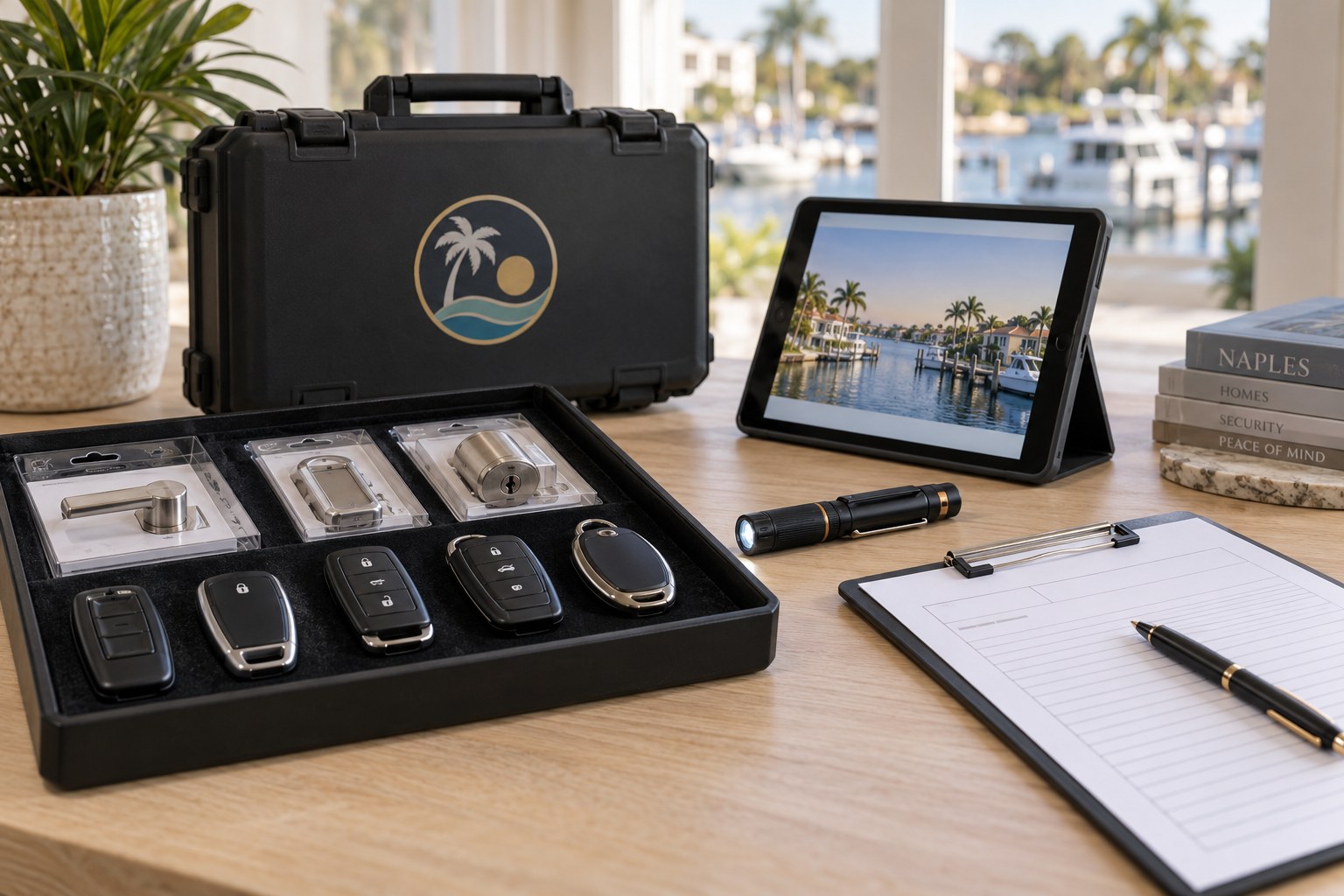
A lockbox is a convenient way to hand over a key without meeting anyone, and that convenience is exactly why the code travels. It reaches cleaners, past guests, a neighbor, a contractor and their helper. This page explains how to take control back: resetting the box, deciding who truly needs entry, moving to individual codes and keeping an access record that makes sense to an owner.
How a Lockbox Code Quietly Gets Out of Hand
Nobody sets out to publish a code to the whole world. It starts with one reasonable text to a cleaning crew, then a repair visit, then a friend who watered the plants during a trip. Each person passes it along to a partner or a helper because it seems harmless, and nobody remembers to ask who else is now holding it. On a Naples rental, where seasonal guests come and go and managers change, the list of people who know the code grows far faster than the owner imagines.
The code also lingers in places the owner never thinks about. It sits in old text threads, in the confirmation emails of past guests, in a note on a refrigerator at a cleaner's home, or in a shared spreadsheet that several people can open. A code that was safe in March can be quite public by autumn, even though nothing has been stolen and nothing looks wrong at the front door.
The honest test is simple: if someone asked you to list every person who could open the box today, could you do it with confidence? If the answer is a pause and a guess, the code has outlived its usefulness. That uncertainty is the real problem, because you cannot judge risk when you cannot name the people involved.
Signs It Is Time to Reset Instead of Wait
Some situations make the decision easy. A guest who stayed last month still knows the code and has no reason to return. A contractor finished the job and left. A property manager relationship ended. A cleaner who used to work the house moved on. In all of these cases the person simply no longer has a legitimate reason to hold access, and the cleanest fix is a new combination rather than hoping they never use the old one.
Other signs are quieter. The box looks scuffed or the dials do not sit at the numbers you left. Someone mentions they found the house unlocked or a door ajar. A neighbor says they saw an unfamiliar person at the entry. None of these proves anything, but each one is a fair reason to stop wondering and change the code the same day you notice.
It also helps to reset on a schedule rather than only after trouble. Many owners pick a natural rhythm, such as the turnover between seasons or the start of the winter rental period when snowbirds arrive. A reset on a calendar date feels routine, avoids awkward conversations, and keeps the habit alive without blaming any one person.
- A past guest or worker still knows the code
- The code was sent in an email or text thread that many people can read
- The box shows wear, damage or dials that moved
- A manager, cleaner or helper changed recently
What the Technician Does at the Door
The first step is establishing who is asking. A locksmith checks that you are the owner or someone with real authority over the property, because resetting access on a home you do not control is not something we do. Once that is settled, the technician looks at the box itself: how it mounts, whether the shackle or wall plate is solid, whether the dials turn cleanly, and whether salt air has begun to stiffen the mechanism.
A basic code reset is usually quick when the box is in good shape and the owner knows the current combination. If the box is jammed, corroded or the old code was never recorded, the technician works out the safest way to open it without damaging the key inside, and sometimes replaces the box entirely. Gulf humidity is hard on cheap internals, and a box that sticks is a box people start propping open.
Before leaving, the technician confirms the key inside actually works the door, because a freshly reset box holding a worn or poorly cut key only creates a new problem. If the key is tired, we cut a clean copy and test it in the lock. You are then shown the new combination and the habit of scrambling the dials after each use, so nothing is left exposed.
Changing the Key Inside Matters as Much as the Code
Resetting the combination protects the box, but it does nothing about copies of the key that already exist. If a past cleaner once borrowed the key and had a duplicate cut at a hardware counter, the new code means little. The door still opens for anyone holding that copy, and no one will ever know it was made.
When there is any real doubt about copies, rekeying the lock is the stronger answer. Rekeying changes the internal pins so the old keys stop working while the hardware stays in place, and then a fresh key goes into the box. It is a modest job compared with replacing the lock, and it removes the entire question of who might be carrying an old key in a pocket or drawer.
Owners sometimes ask whether this is overkill. It depends on how long the arrangement has run and how many hands have been involved. A new code on a box that has been in use for years, with an unchanged key inside, is like changing the gate code to a community while leaving the old fob active. A technician can talk through which level of change fits your situation and explain the cost by phone before anything is scheduled.
Moving From One Shared Code to Individual Codes
The deeper fix is to stop sharing a single code at all. A traditional dial lockbox gives every user the same combination, which means you can never tell who came in and you cannot remove one person without changing it for everyone. That is the structural weakness, and no amount of careful texting solves it.
Keypad deadbolts and smart locks let an owner create separate codes for different people. The cleaner gets her own, the pool service gets his, and each guest receives a code that expires after checkout. If someone leaves your circle, you delete that single code and nobody else is affected. Some models also record the time each code was used, which answers the question of who arrived and when without any detective work.
These devices are not magic. They depend on batteries, on firmware, and sometimes on a phone app, and a keypad that is installed badly can be worse than the lockbox it replaced. A technician can help you choose hardware that keeps a physical key override, fits the door you actually have, and does not require a subscription you did not expect. Call us and describe your door, and we will talk through what makes sense before anyone visits.
Keeping a Simple Access Log That Owners Actually Use
An access log sounds formal, but it can be a single page. List each person or group with entry, the reason they need it, the date it was issued, and the date it should end. Keep it somewhere you can reach from a phone, and update it whenever someone is added or removed. The goal is that you can answer the question of who has access in a few seconds.
If your lock records usage, check it occasionally rather than daily. A glance at the weekly pattern tells you whether the codes are used in sensible hours. A cleaning code that opens the door at midnight, or a guest code that works days after checkout, is worth a closer look. A quiet log with no surprises is also useful, because it confirms the arrangement is healthy.
For a dial lockbox that offers no record, the log has to be manual. Ask each person to message you when they arrive and leave, and write the dates down. It feels slightly old fashioned, yet it turns an anonymous box into a trail you can read. When owners live out of state for part of the year, this small discipline often matters more than any piece of hardware.
- Name or group, reason for entry and start date
- Planned end date for each code
- Date the box or key was last changed
- Who to call if something looks wrong
Rentals, Vacation Guests and the Naples Season
A vacation rental in Collier County sees a steady rhythm of arrivals, departures and quick turnovers between guests. Lockboxes make sense for that flow, because nobody wants to meet every visitor with a key at noon on a Saturday. The risk is that each guest receives a code that never changes, so over a busy winter dozens of people could know it.
A sensible approach is to rotate the code between stays, or at minimum between seasons, and to give guests a code that is only valid for their dates when the hardware allows it. Where the lockbox must stay, make sure it is mounted somewhere out of casual sight, secured to something solid, and not left hanging on a gate that a stranger could simply lift away.
Owners who live elsewhere for part of the year should think about who inspects the property between guests. Condo and gated community rules often add their own layers, such as a front desk, a guard house, or an association that must be told about new access methods. Check those rules first so the lock change does not conflict with them, and call us if you want to talk through how it fits your community.
What You Can Do Before the Technician Arrives
A little preparation shortens the visit. Write down the current combination if you know it, and note roughly how long the box has been in place. If you can, find out whether other keys to the door exist, who has them, and whether any were ever copied. This information helps the technician decide between a simple reset, a rekey, or new hardware.
Think about who genuinely needs access over the next few months. Bring that list to the conversation. It is much easier to design a sensible setup when you already know that one cleaner, one pool service and a set of guests are involved than when the picture is vague. If you are not on site, tell us who will be, and we will confirm the authority question before anything is changed.
Finally, avoid the temptation to fix it by hand with a drill or by forcing the dials. A damaged box can trap the key inside and make a small job messier. If the box will not open, simply leave it and call us. We would rather open it carefully and show you the new setup than repair the damage from an attempt that went wrong.
Habits That Keep the Code From Spreading Again
Once the system is clean, a few habits keep it that way. Send a code only to the person who needs it, never to a group message. Avoid putting it in emails that live forever in a shared inbox. When someone asks to pass it to a helper, ask them to contact you instead so the log stays accurate.
Treat the box like any other lock. Scramble the dials after every use, check that it still latches, and rinse salt residue away if it faces the water. A quick spray of an appropriate lubricant once in a while keeps the mechanism from stiffening in humid weather. If it starts to stick, replace it rather than letting people prop it open.
Finally, remember that convenience and control pull in opposite directions, and the right balance depends on the property. A family home used a few weeks a year can live with a simple box and a seasonal reset. A busy rental deserves individual codes and a log. A technician can help you judge where your property sits on that line, and the first step is a phone call to talk it through.
When the Box Itself Is the Weak Link
Not every lockbox deserves to stay on the wall. Some are mounted with short screws into thin trim, so a determined person could pry the whole unit loose and take it away to open at leisure. Others hang from a gate latch or a hose bib, which is convenient but means the box can simply be lifted off. A technician looks at how the box is attached before deciding whether a reset alone is sensible.
Construction varies a great deal. Lightweight plastic and thin zinc housings wear out quickly in coastal weather, where salt air eats at hinges, springs and the little wheels that hold the combination. A heavier, better built box fastened into solid framing or masonry holds up far longer, and the difference in upkeep over a few seasons is usually noticeable even when the purchase looks similar on the shelf.
Location matters as well. A box placed in plain view from the street invites curiosity, while one tucked beside a side entrance or behind a planter is less obvious without being truly hidden. Whatever you choose, avoid mounting it where it can be reached from a lanai rail or a low wall by someone who has no business there. The right spot is one you could defend if you were asked to explain it.
How to Get Help Without Guesswork
Start by calling us and describing the situation in plain words: what kind of lock holds the key, how old it is, whether you remember the code, and what worries you most. We will explain what a visit would involve and give you a quote by phone for straightforward work. Call us to confirm availability for the day you need.
If the situation turns out to be more complicated, such as a damaged door, a lock that has been tampered with, or a frame that no longer lines up, a technician visits first and the service call charge is explained before anyone is dispatched. You decide whether to go ahead after you understand what is involved.
On arrival, expect the technician to confirm that you are the owner or hold proper authority, to check the existing hardware, and to walk you through the options without pressure. When the work is finished you should know the new codes, who holds which key, and what to do the next time the arrangement needs a refresh. That clarity is the real result.
Frequently asked questions
Is resetting the lockbox code enough to secure the rental?
It helps, but it only protects the box. Anyone who already copied the key inside can still open the door. If there is any doubt about duplicates, rekeying the lock changes the pins so old keys stop working, and then a fresh key goes into the box. A technician can explain which level of change fits your situation.
Can I use a different code for every guest?
Not with a standard dial lockbox, since it holds one combination. Keypad deadbolts and smart locks can store separate codes and often let them expire after checkout. Call us, describe your door, and we will talk through hardware that keeps a physical key backup and suits your property.
Do you need proof that I own the property?
We check ownership or authority before changing access on a home, because opening or rekeying a place you do not control is not something we do. A technician will ask a few simple questions and may ask to see documents or confirm with the owner. It protects you as much as anyone.
What if the lockbox is stuck and I forgot the code?
Please do not force it or drill it. A technician can work out the safest way to open the box without damaging the key inside, and may replace the box if corrosion has set in. Call us to confirm availability, and the quote for straightforward work is given by phone.
How often should I change a shared code?
There is no single schedule, but a reset between seasons, after any change in cleaners, managers or contractors, and whenever you cannot name everyone who knows it is a sensible rhythm. Busy rentals benefit from individual codes and a short access log instead of one shared combination.