
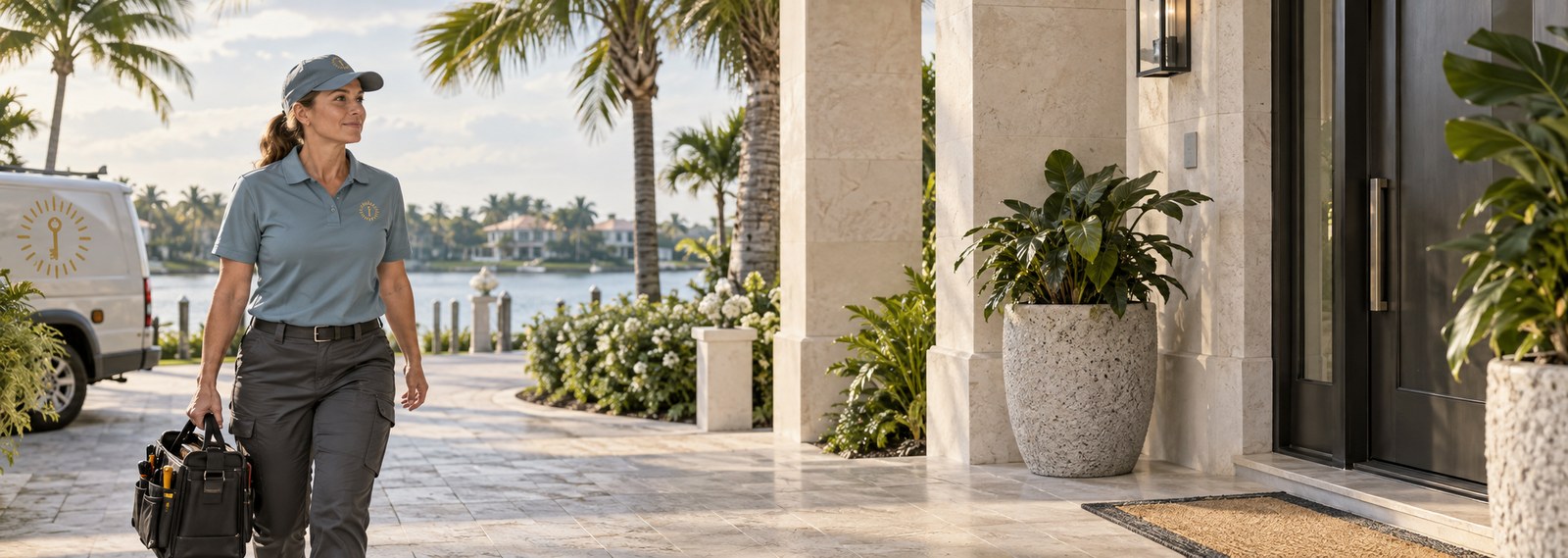
Marco Island is an island community with its own rhythm: a bridge connects it to the mainland, canals thread through residential streets, condo towers face the Gulf and salt air touches nearly every lock. A mobile locksmith call here has a few special features. This page explains them, from getting across the bridge to the best ways to protect hardware from the coastal environment.
Reaching the island and what it means for a call
Marco Island is reached by road across a bridge, and every visit begins with that crossing. For a mobile service, it means the trip is a little more involved than a call within the mainland city. Travel is part of the service call arrangement, and we explain it by phone before dispatching a technician, so there are no surprises when someone arrives at your door.
Traffic on the approach roads varies with the season and the time of day. In winter, when seasonal residents and visitors fill the island, the roads are busier and parking near beaches and condos is tight. In the quieter summer months, travel is easier. We do not make promises about timing, because conditions change. Please call to confirm availability, and we will tell you what we can honestly plan for.
Because the trip matters, it is worth bundling jobs when possible. If you need a lock rekeyed, a spare key cut and a garage entry door adjusted, mention all of it on the call. A single visit that handles several tasks is more efficient than separate trips. Neighbors and condo owners sometimes coordinate, and where an association is involved, one authorized contact can approve work for several units.
Canal-front and waterfront homes
Many Marco Island homes sit on canals with a dock, a seawall and a view of the water. These properties come with a collection of locks that mainland houses rarely have: dock gates, boat lift controls, seawall access doors, outdoor storage lockers and pool cage doors. All of them are exposed to spray, humidity and the occasional storm surge, and all of them wear faster than interior hardware.
The front door of a canal-front house may face the street or the water, and in the second case salt air hits it directly. A lock that looks fine from outside can be corroded inside. The signs are familiar: a key that needs a wiggle, a latch that sticks, a deadbolt that turns heavily. These are warnings that a cleaning, a replacement or a better finish is due.
When a homeowner calls about a stiff lock, we ask about exposure. Which direction does the door face? Is it covered? Does spray reach it? The answers help us recommend materials. Stainless steel, solid bronze and quality sealed cylinders hold up better than bright plated steel. We do not claim any lock will last forever, but good choices make a big difference to how often you deal with problems.
- Test dock gates, boat house doors and storage lockers as well as the front door.
- Rinse exposed hardware with fresh water after storms or heavy spray.
- Use dry lubricant in keyways, not heavy oil.
- Replace worn keys before they damage the cylinder.
Condo towers on the Gulf
Tall condominium buildings line the beach side of the island, with lobbies, elevators, parking structures and balconies facing the water. Residents range from full-time owners to seasonal visitors and renters. Access is controlled by a front desk, key fobs and building rules, and these rules shape any locksmith visit. Contractors usually need to be approved by management, and some buildings require advance notice.
The unit door lock is often the owner's responsibility, though some associations specify the type of hardware or keep a master key for emergencies. Before rekeying, ask your manager what the building allows. We check authority before working, so the owner or an authorized manager must approve the job. If a tenant or guest calls, we need confirmation from the owner or the rental manager.
Balcony sliders are a frequent concern. They sit in a track that collects sand and salt, and the small hook latch can corrode or break. A lockout from the balcony side, on an upper floor, is not something we recommend attempting yourself. Call us and describe the situation. We will explain what is possible, what the building requires, and how the service call is handled before we send anyone.
Salt air, humidity and what happens to keys
Keys on Marco Island live a rough life. They ride in pockets with sand, sit in damp beach bags, hang in humid kitchens and get used with wet hands. Brass keys tarnish, plated keys flake and the cuts wear down. A worn key is a common cause of lock trouble, because it no longer lifts the pins correctly, and it also damages the cylinder as it turns.
A good habit is to replace a key that looks shiny, thin or rounded at the cuts. Cut the new one from the original or a clean copy, not from a worn one. If you carry a key in a beach bag, wipe it after use. Keep spare keys somewhere dry. A small tin with a silica packet is a simple trick, and it protects a spare from the worst of the humidity.
Cylinders suffer too. Salt film and dust gather in the keyway, and the pins stiffen. A dry graphite-type lubricant, applied sparingly, helps. Oil-based sprays attract grit and often cause more harm than good. If a lock has become hard to turn, do not force it. A technician can clean it, repair it or replace the cylinder, and we explain the options and the quote by phone before a visit.
Lockouts: houses, cars and lanais
Lockouts on the island follow the pattern of daily life. A resident steps onto the lanai in the evening and the slider latches behind them. A beachgoer locks keys in a car. A visitor loses a key in the water. A guest in a rental forgets the code. Each has its own approach, and each begins with staying calm and avoiding damage.
For a home lockout, we ask for proof of ownership or authority before opening: identification that matches the address, or confirmation from the owner or manager. For a vehicle, we ask for identification and registration that match. These checks protect owners and are a standard part of every opening. We cannot open a home or car for someone who cannot show they are entitled to enter.
If a child or a pet is locked inside a hot vehicle, call emergency services first. Do not wait for a locksmith. For all other lockouts, tell us where you are and what happened. Many beach and parking areas have rules, and we will ask about the exact location. We give a quote by phone first, and if the job is complicated, a technician visits and the service call charge is explained before dispatch.
Vacation rentals and seasonal homes
Marco Island has a large number of vacation rentals and seasonal homes. These properties see a rotating cast of guests, cleaners, maintenance crews and managers. Keys and codes multiply, and nobody keeps track of them. A rental owner often lives elsewhere, and the first sign of a problem is a call from a guest standing at the door.
A tidy key plan helps. Use keypad or smart locks if you want to change codes between guests, with a physical backup key stored securely. If you prefer traditional keys, keep a small set, numbered and logged, and rekey at the start of each season. Make sure the manager knows how to handle a lockout, so you do not rely on a late-night phone call across time zones.
If you are a guest locked out of a rental, contact the owner or manager first. We cannot open a rental on a guest's word, because the owner must approve. If you cannot reach them, call us and explain. We will tell you what verification we need and what can be done. Owners and managers can call to set up an arrangement in advance, including who may authorize entry.
Hurricane season on an island
An island community takes storm preparation seriously. Evacuation plans, shutters, boats and supplies all come into it, and locks are a small but real part. Before the season, make sure every exterior door latches fully, hinges are tight and deadbolts turn smoothly. Check the garage entry door, the lanai slider and any gate. Keep a spare key in a safe place, and share a copy with a trusted person.
After a storm, return carefully. Doors may have swelled, frames may have shifted and water may have reached the locks. A lock that sticks should be handled gently. Forcing it can break the key or damage the mechanism. A technician can often clean and restore a lock if the problem is addressed early, before corrosion sets in.
Demand for locksmith services rises after a storm, and access to the island may be limited by road or bridge conditions. Be patient and describe your situation clearly. Please call to confirm availability. If the property has taken water, photograph the damage and note which locks are affected. That information helps with insurance and with planning repairs.
Garages, gates and shared driveways
Garage entry doors, side gates and shared driveways are part of everyday life on the island. The door between the garage and the house should be as sturdy as the front door, with a solid deadbolt and a good strike. Garage door openers add convenience but also risk, so consider where the remote is kept, especially in a parked car.
Side gates and fences on residential lots often use simple latches and padlocks. In salt air, these corrode quickly. Replace rusted padlocks and use stainless or sealed models. If you have a shared driveway or a common gate, agree with neighbors on keys and codes, and keep a short list of who has them.
Many homes have pool cages with their own doors and latches. These doors matter for safety as well as security, particularly with children in the household. The latch should close by itself and be out of reach. We can advise on hardware, and we always follow the rules that apply in your area, putting safety first in how a lock is used on such a door.
Businesses and shops on the island
Marco Island has restaurants, shops, offices, marinas and service businesses, many of them seasonal in their rhythm. Front doors see heavy traffic in winter and quieter use in summer. Storefront glass doors rely on narrow hardware that wears, and rear doors in service areas take knocks from deliveries and trash.
A business owner calling for service needs to confirm authority. If the premises are leased, the landlord may need to approve exterior changes. Staff turnover, common in seasonal businesses, makes rekeying and credential control a regular concern. A written list of keyholders and a routine for collecting keys saves trouble later.
For marinas and waterfront businesses, the salt air problem is even more serious. Gates, dock boxes and office doors all need hardware chosen for the conditions. We can inspect these during a visit and advise on materials, keying and maintenance. Quotes are given by phone, and where the work is complicated, a technician visits first and the service call charge is explained before dispatch.
Getting ready for a call from the island
When you call, have your address or building name, your location on the island and the nature of the problem. If you are at a condo, tell us the unit and any front desk requirements. If you are at a gated or controlled property, let the guard know in advance. If you are at the beach, tell us the exact lot or street.
We explain what is likely to happen: a quote by phone, a visit if the job is straightforward, or a visit to assess a complicated job with the service call charge explained before dispatch. We check ownership or authority at the visit. We ask for patience around travel and the bridge, and we will be honest about what we can plan for.
Think about timing too. Winter weekends on the island are busy, with traffic near beaches and shops, while summer is calmer. If a job is not urgent, such as rekeying a rental between guests or replacing a worn lanai latch, plan it for a quieter day and tell us when you call. Flexible timing helps us group visits and keeps the trip across the bridge worthwhile for everyone involved.
Afterward, test the work. Try the key several times, from both sides. Ask the technician about maintenance and about anything else they noticed. A short conversation can save a second call. We aim to leave you with locks and keys that work smoothly, whether you live on the island year-round, spend the winter here or manage a property for someone else.
Boat houses, docks and the keys that go with them
Boating is part of the island's character, and many residents keep a boat at a private dock or a shared slip. That brings a bundle of keys: the dock gate, the boat lift, a storage box, perhaps a shed for gear and the boat itself. These keys are often kept on a single ring, tossed into a cup holder and rinsed in salt water more often than anyone would like to admit.
Marine locks need to be chosen carefully. Standard padlocks rust and seize quickly in constant spray. Stainless and bronze bodies with sealed keyways cope far better. A key ring that mixes house keys, dock keys and boat keys can also be hard on the keys, as the weight and movement wear the cuts. Consider keeping dock keys separate, on a floating tag so they survive a drop in the water.
If a dock gate or a storage box lock fails, avoid forcing it. A broken key in a salt-damaged cylinder is difficult to extract. Call us, describe the lock and the setting, and we will explain what is realistic. We check ownership or authority before opening anything, and for a shared dock, we need the association or the dock owner to approve any change.
Boat keys themselves, with ignition systems and sometimes electronic components, are a specialty we approach carefully. We tell you plainly if a particular key or system is outside what we can do, and we suggest the right specialist. For everything on the land side of the dock, from gates to sheds to the house itself, we can help and keep your keys manageable.
Frequently asked questions
Does the bridge crossing affect how a call is handled?
It adds travel, which is part of the service call arrangement. We explain it by phone before sending anyone. We do not promise timing, since traffic and conditions change. Combining several tasks into one visit makes better use of the trip. Please call to confirm availability.
Why do my keys wear out so quickly near the water?
Salt, sand and humidity corrode brass and plated keys, and the cuts wear down. A worn key lifts the pins poorly and damages the cylinder. Replace shiny, thin keys, cut new ones from a clean original and keep spares in a dry place.
Can you help with a balcony slider that will not open?
Often, after we confirm authority and learn what the building allows. Describe the problem and the floor, and we will explain what is possible. Do not attempt to climb or force the door yourself. Condo management may need to approve the visit first.
I am a guest in a rental and locked out. What should I do?
Contact the owner or manager first, since they must approve entry. We cannot open a rental on a guest's word alone. If you cannot reach them, call us and explain, and we will tell you what verification is needed.
What should I do after a storm if my door sticks?
Do not force it. Swollen doors and wet mechanisms can break keys and parts. Let things dry if it is safe, then try gently. If it still sticks, call us. A technician can often clean and restore a lock if the problem is handled early.