
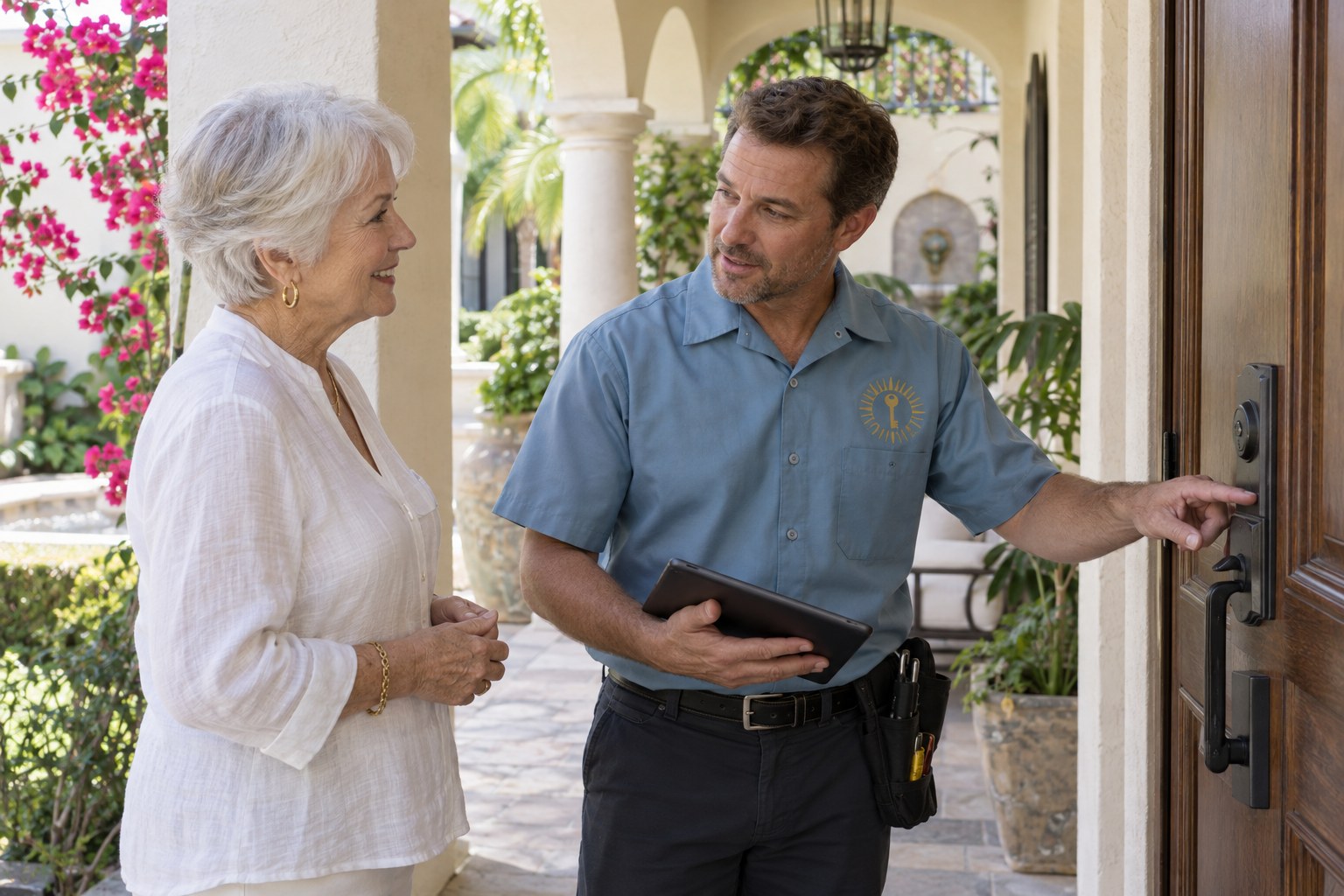
The interior door that joins the garage to the house is used constantly and protected rarely. When its latch stops catching, the one barrier between a garage and your living space turns into a suggestion. This page explains why these doors fail, how a technician finds the cause, and how a closer, a better strike and a proper deadbolt change the picture.
Why This Door Gets Ignored Until It Fails
Most people think of the front door as the entry that matters and treat the door from the garage as a hallway convenience. It gets slammed with a hip while carrying groceries, left ajar for the dog, and propped open during a move. Because it is inside, nobody checks it, and the hardware is frequently the simplest model the builder could install.
Yet in many Florida homes the garage is where the household keeps its tools, bicycles, spare keys and sometimes the garage door remote. If an intruder opens the overhead door, even briefly, or reaches the garage through a side door left unlocked, the entry into the house becomes the only obstacle left. A latch that does not catch means that obstacle does nothing.
The warning signs are usually small. The door needs a firm pull to stay shut, drifts open with a breeze, or latches only if you lift the knob. Because the problem builds slowly, many owners adapt without noticing. A quick test is worth doing: close the door normally, release the handle, and watch whether it stays shut without help.
Worn Latches and Tired Springs
The latch bolt is the small angled tongue that retracts when you turn the handle and springs out when you release it. Inside a typical passage or entry set, a spring pushes that tongue out thousands of times over the years. As the spring weakens or the internal parts wear, the tongue sticks partway, or retracts and fails to return fully.
Dirt and humidity speed the process. Garages collect dust, sawdust and moisture, and humid Gulf air encourages corrosion on the inside of the latch. A latch that has not been lubricated in years can bind, and a knob that wobbles on its spindle is an early sign of worn parts. Often the quickest solution is replacing the latch assembly or the entire handle set.
A technician will operate the handle with the door open and watch the latch bolt. It should snap out firmly and fully. If it hesitates, drags or sits shy of its full length, the mechanism is the problem. In many cases a new latch body, matched to the existing bore, solves it in a single visit without replacing the door.
Misaligned Strikes and the Gap Test
The strike plate is the metal piece on the frame with a hole for the latch. If the hole sits a bit too high or low, or the door has sagged, the latch tongue meets the edge of the plate and cannot enter. Everything may be fine mechanically, yet the door will not stay shut. This is one of the most common reasons for a door that refuses to latch.
A simple test uses lipstick or a dab of marker on the latch tongue. Close the door gently and see where the mark lands on the strike. If it is off center, the technician can move the strike, file the opening slightly, or adjust the hinges to lift the door back into position. A quarter inch of misalignment is enough to cause trouble.
Look at the gap around the door too. A door that has dropped shows a wider gap at the top latch side and a tighter one along the bottom. Hinge screws that have loosened or a frame that has shifted with settling or humidity explain it. Tightening the hinge screws, adding a longer screw into the stud, and adjusting the strike often restores a clean, positive latch.
- Latch bolt that does not extend fully
- Strike plate set too high or too low
- Hinge screws loosened by constant use
- Warped or swollen door edge from humidity
Door Closers and Why Some Garage Doors Need One
A door closer is the arm or spring that pulls the door shut after you pass through. For the garage entry, many local building rules and fire safety practices call for a door that closes and latches on its own, because it separates the garage, where vehicles and fuel are stored, from the living space. I cannot tell you what applies to your specific home, but a closer is a sensible feature either way.
Without a closer, the door relies on the latch alone and on people remembering to push it shut. With one, the door returns to the frame every time, so the latch has a chance to engage. Hinges with built in springs do a similar job on lighter doors. Which style suits depends on the door weight, how often it is used and the look you want.
Adjustment is the secret. A closer that is too strong makes the door difficult to open, especially for children and older adults, while one that is too weak leaves the door ajar. A technician sets the closing speed and the final latching snap so the door shuts quietly yet firmly every time. Without that adjustment, a closer can add frustration instead of security.
Strengthening the Door Itself
A latch is only as secure as the door and frame around it. Many garage entry doors are hollow core, thin interior doors that could be kicked through by a determined person. If yours is hollow, consider replacing it with a solid core or a steel door, ideally one built for exterior use. That change alone improves security more than any single lock.
The frame matters just as much. Most break ins through a door are kicks that split the jamb around the strike. A reinforcing plate, a longer strike with three inch screws that reach the wall stud, and a metal wrap on the lock area all spread the force and make the door far more resistant. These are inexpensive upgrades that a technician can often complete at the visit.
Weather also plays a role. Even though the door is inside the garage, humidity can swell wood and warp edges, and uninsulated garages swing through large temperature changes. A door that sticks in summer and loosens in winter will never keep a consistent latch. Weatherstripping and a sealed finish help the door hold its shape.
Adding a Deadbolt to the Garage Entry
Many garage entry doors have only a knob with a button lock, which is a weak barrier. A deadbolt adds a heavy steel bolt that extends deep into the frame, and it cannot be slipped with a thin card the way a spring latch can. For most households it is the single most valuable upgrade for this door.
Installation requires care. The technician drills the door for the bolt, sets the strike into the frame with long screws, and ensures the bolt throws cleanly without binding. If the door is thin or the frame is damaged, reinforcement is added first. We choose a deadbolt that suits your door and frame and keep the key setup simple, often matching it to your other locks so one key operates several doors.
A single cylinder deadbolt uses a key outside and a thumb turn inside. Some people worry about getting trapped in an emergency, but a thumb turn is quick to operate. Double cylinder models that require a key on both sides can be dangerous in a fire and are restricted in many places, so we generally steer households toward a single cylinder with a good strike.
Keyless Entry and Garage Door Remote Habits
Keypad entries are popular on garage doors because they let family members come and go without keys. A keypad deadbolt on the entry door lets the household use a code and removes the need to carry a house key on a jog or a beach walk. Pick a model with a physical key backup so a dead battery never strands anyone.
Habits matter as much as hardware. A garage door remote left in a parked car gives a thief access to the garage and, if the entry door is weak, the house. Keep remotes out of vehicles when parked on the street, and consider disconnecting the opener or using the vacation lock feature when you travel. The best deadbolt cannot help if the door is left unlocked all day.
Give some thought to who should have codes. Housekeepers, pool technicians and visiting relatives can each receive a separate code that you can remove later. This is far safer than copying keys. If you are unsure whether a keypad fits your door, call us, describe the setup, and we will talk through the options before a visit is scheduled.
Condos, Townhomes and Attached Garages
Attached garages in townhomes and planned communities often come with shared walls and association rules. The door between garage and house may be subject to guidelines on color, hardware or fire rating, and changes might need approval. Check with your association before purchasing new hardware or replacing the door.
Some townhomes have garages that open onto a common alley or driveway visible to neighbors, which can both help and hinder. A well lit, visible garage deters casual intruders but also shows when a household is away. Sensible habits, such as bringing in packages promptly and not leaving the overhead door open for hours, add protection without any hardware.
For homes that sit empty during the summer, a final check before closing up helps. Test the entry door latch, lock the deadbolt, and confirm the overhead door is closed and disabled if you wish. A garage that stays shut and a house entry that latches firmly give you real peace of mind while you are away.
Hurricane Season, Water and Garage Doors
Garages are among the first places to feel a storm. Wind pressure can strain the overhead door and force the entry door against its frame, and flooding or blown rain can swell wooden doors and jambs. Make sure the door latches securely before a storm so it does not bang and loosen its hardware.
After heavy weather, test the latch again. A door that stuck or sagged afterward may have a shifted frame or swollen edge, and the strike may need adjustment. If the frame itself has moved or the wall has cracked, a carpenter or contractor should look at it. We can adjust latches and strikes but cannot repair structural damage.
Store important items thoughtfully. Keep spare keys, documents and valuables in the house rather than in the garage, where moisture, heat and easy access make them vulnerable. A small waterproof box inside a closet is far safer than a hook on the garage wall. Preparation before the season is much easier than recovery after it.
Lubrication, Cleaning and Small Checks You Can Do Today
Before calling anyone, a few minutes of attention can reveal a lot. Open the door and operate the handle several times, watching the latch tongue. Wipe the tongue clean, check that the knob is snug on its spindle, and tighten any visible screws on the handle plate. A dry graphite or silicone lubricant on the latch edge helps, while oil soaked rags and heavy grease do more harm than good.
Check the hinges next. Close the door slowly and watch its gap against the frame. If the screws turn without biting, the holes are stripped and need longer screws or a filled and redrilled hole. A loose top hinge is the most common reason a door drops. Tightening it can instantly restore the latch alignment.
Finally, look at the floor and threshold. A door that scrapes on the garage side may be catching on a raised slab or a swollen bottom edge, which changes how it arrives at the frame. If you can see rubbing marks on the door or frame, tell us when you call. That detail helps us bring the right tools and decide whether a plane or an adjustment is needed.
Safety Notes About Garages and the Home Interior
A garage holds things a living room does not: vehicles, fuel, paint, cleaners and tools. That is part of why the door between the two matters. It slows the spread of fumes and, in some cases, fire. It also stops a vehicle's exhaust from drifting into bedrooms if someone starts a car in a closed garage. A door that closes and seals properly is more than a security feature.
Never prop the door open for long stretches, especially when running a vehicle or a generator. In hurricane season, many households run generators after outages, and exhaust must never enter the home through a garage door that does not seal. Run generators outdoors, well away from windows and doors, and treat a poorly fitting entry door as a hazard.
Locks should never trap anyone inside. Make sure everyone in the house, including children and guests, knows how to open the deadbolt quickly, and that the interior thumb turn is easy to reach and use. A technician can adjust the hardware so it operates smoothly in the dark and when a person is anxious. A secure door is only good if everyone can use it in a hurry.
Tradeoffs: Repair, Replace or Upgrade
Repairing the latch is the least expensive path and often enough if the door and frame are sound. Replacing the whole handle set gives a fresh start, fixes wobbly handles and can include a matching deadbolt. Upgrading the door and frame is the most thorough solution, appropriate when the door is hollow, damaged or poorly fitted.
There is no single right answer. A rental property that sees regular turnover may favor a sturdy, simple solution that tolerates abuse. A family with young children may prioritize a self closing door that always latches. An owner who stores valuable equipment in the garage may invest in a stronger door and a quality deadbolt.
We lay out options in plain terms, with no pressure to choose the biggest one. Explaining what each level of work addresses, and what it leaves unaddressed, helps you spend where it counts. Bring your questions to the call, and we will give a quote by phone for straightforward work.
What to Expect When You Call
Describe the door and the problem in simple words: does the latch fail to catch, does the door sag, is there already a deadbolt, how old is the home. Photos help if you can send them later. We will explain the likely repair and give a phone quote for straightforward work. Call us to confirm availability for the day you need.
For more involved cases, such as a damaged frame, a thin door or hardware we cannot identify, a technician visits first and the service call charge is explained before dispatch. You decide what to do with a clear picture in hand. We confirm ownership or authority at the property before working on any entry.
Once the work is complete, test the door repeatedly. Close it with your hip as you would with an armful of bags, and see if it catches. Try the deadbolt and the key from both sides. If anything feels off, tell the technician before they leave, so it is corrected on the spot rather than becoming a second visit.
Frequently asked questions
Why does my garage entry door open by itself?
Usually the latch bolt is worn or the strike plate is misaligned, so the tongue cannot seat in the frame. A sagging door or loose hinge screws can cause the same issue. A technician checks the latch, strike and hinges, and in most cases a small repair solves it.
Should the door from the garage have a deadbolt?
For most homes it is a sensible upgrade, since a deadbolt resists tools and kicks far better than a spring latch. It needs a solid door and a strong frame to be effective, so we check those first and reinforce the strike with long screws if needed.
Do I need a door closer?
A closer helps the door return and latch every time, and some building practices expect garage entry doors to close on their own. Rules vary by property, so check with your local building office. We can install and adjust a closer so it works smoothly.
Can I replace the latch myself?
A handy homeowner can swap a standard latch if the bore and backset match. Problems often come from misalignment or a weak frame, which a simple swap will not fix. If you are unsure, call us and we will talk through the symptoms.
How do you handle ownership at a rental or townhome?
We confirm that you are the owner or hold proper authority before working on any entry. In communities with associations, we suggest checking their rules first. A technician will ask a few simple questions when they arrive.