
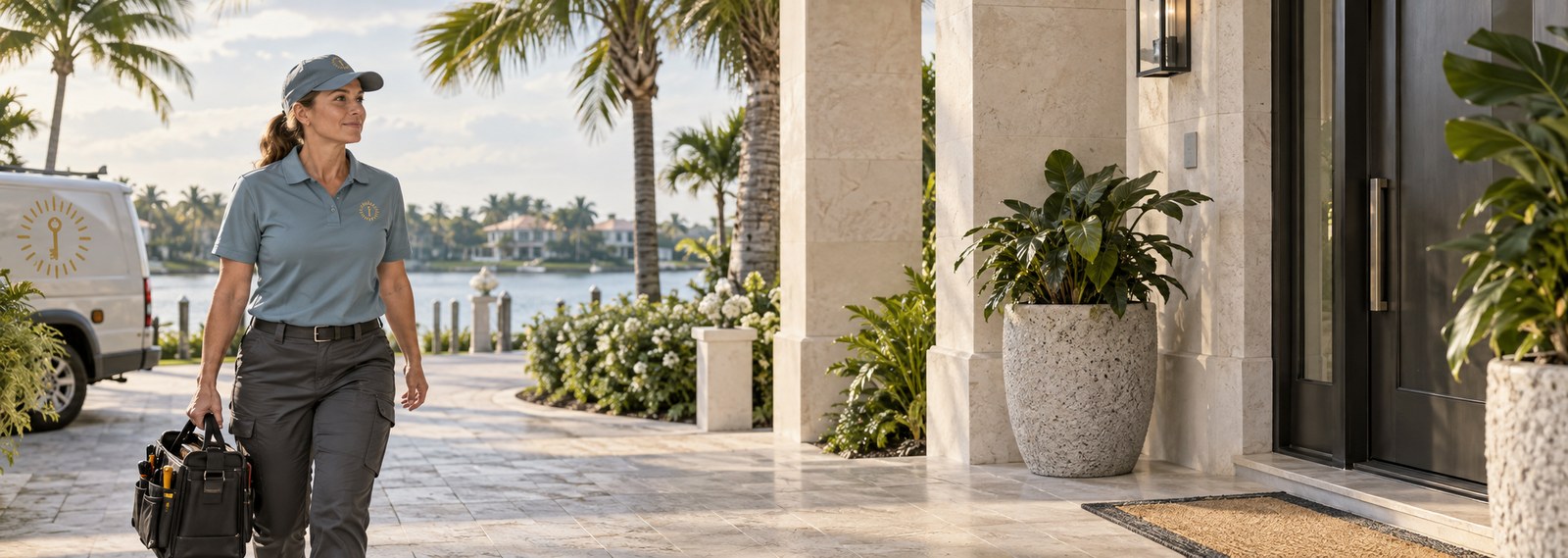
Standing outside your own front door is a strange, sinking feeling, especially when the sun is high over the Gulf and your phone battery is low. This page explains what a lockout call actually looks like in Naples and Collier County: who we need to hear from, what we check at the door, how entry is made without harming the lock, and how you can stay comfortable while you wait.
The first few minutes after the door closes
Most home lockouts begin the same way. A door swings shut behind someone carrying groceries, a toddler flips the latch, or a key stays on the kitchen counter while the person steps out to water the plants. Before you call anyone, take a slow breath and walk the exterior in your mind. Is there a garage keypad, a lanai slider you remember leaving unlatched, or a neighbor who holds a spare? Those quick questions sometimes solve the problem without a service call at all.
If none of those options work, call us and be ready to describe the situation plainly. Tell us the address or the nearest cross street, the kind of door, and what kind of lock you see. A deadbolt with a thumb turn inside, a keypad lever, and a knob with a button each behave differently, and knowing which one you have helps the technician bring the right tools the first time.
We do not promise arrival times and we do not guess at them over the phone. Instead we ask you to call to confirm availability, and we give you an honest sense of when a technician can reach your part of the county. Naples traffic changes with the season, with beach days and with bridge or road work, so a straight answer beats a hopeful one.
Proving the home is yours before we open it
Every responsible locksmith checks that the person at the door has the right to be there, and we do this on every residential lockout. It is not a sign of suspicion toward you. It protects you, because the same careful process keeps a stranger from talking their way into your house. When the technician arrives, we will ask for a photo identification and something that connects you to the address.
That connection can be many things: a driver license showing the address, a utility bill, a lease, a closing document, or mail addressed to you that is visible through the door or in the box. In a condo, the building office or a neighbor who knows you can sometimes confirm residency. Guests, house sitters and relatives are welcome to call on an owner's behalf, but the owner or manager may need to confirm by phone.
If we cannot establish that you live there or have authority over the property, we will not open the door. We will explain why, suggest other ways to prove it, such as contacting the property manager or association, and stay polite about it. The rule applies to every home, every condo and every rental, no matter how convincing the story sounds.
How a technician actually gets inside
The goal on any lockout is entry that leaves the door exactly as it was. The first thing a technician does is look. Is the deadbolt thrown, or only the spring latch engaged? Many lockouts involve only the latch, and a thin, properly shaped tool can ease it back in seconds without touching the cylinder at all. Your door frame, weatherstripping and finish are all preserved.
When the deadbolt is locked, the technician moves to picking or manipulation. Pin tumbler cylinders can be opened with picks and a tension wrench, working each pin to the shear line the same way the correct key would. Some locks offer a bypass, a way to reach the retractor without turning the cylinder. Which method is used depends on the lock design, its condition, and how much humidity has taken a toll on the inside.
Drilling is the last resort, not the first. If a lock is corroded, damaged or a high security model that resists picking, the technician explains the options before touching it. You decide whether to proceed. Often the lock is replaced afterward anyway, and we can do that during the same visit if you want. Nothing is done without your say.
Doors you will meet around Collier County
Doors in this part of Florida are varied. Older single family homes in established neighborhoods often have standard knobs and deadbolts. Newer builds, especially in planned communities and golf developments, tend to have lever handles with matching deadbolts, sometimes with a keypad deadbolt on the garage entry. Each of these has its own quirks during a lockout, and the technician adapts rather than forcing a one size approach.
Condo and high-rise doors are different again. Many are heavy, fire rated metal doors with a lock set that must be preserved to stay in compliance with building rules. Some buildings require that a technician check in with the front desk or the association before work begins. If you live in one, it saves time to tell us on the phone so we can plan around the lobby and any parking restrictions.
Glass sliders and lanai doors are common here as well, and their latches are usually simple hooks or pins rather than cylinders. They can often be opened without damage, but we always talk through what we see. If your lockout involves a slider, check whether a screen door is also latched, since that affects how a technician reaches the main latch from the outside.
Waiting outside in the Gulf heat
Waiting for a locksmith in Naples is not like waiting in a cooler climate. From late spring through early fall, the heat and humidity build quickly, and afternoon thunderstorms can roll in with little warning. If you are locked out for more than a few minutes, move to shade. A covered entry, a garage apron if the door is open, or a neighbor's porch is better than standing in direct sun.
Bring water if you can get to it, and keep your phone charged by turning down screen brightness and closing apps. If you have children or pets with you, prioritize their comfort first. A parked car with the air running is a reasonable refuge, as long as the car is yours and you can lock it. Do not leave anyone in a closed vehicle, even briefly.
If anything feels unsafe, such as someone in distress inside the home, a stove left on, or a young child alone behind the door, tell us immediately and call emergency services first. A locksmith is not a substitute for a fire or medical response. When an emergency is the reason for the lockout, say so on the call so the situation is handled with the right priority.
Why keys get left behind more often in a resort town
Part of Naples life is a rhythm of coming and going: beach bags, pool towels, golf bags, grocery runs, guests arriving from the airport. That rhythm makes it easy to forget a key. Seasonal residents and short stay guests are especially prone to lockouts, because they are in an unfamiliar routine and often have only one key between them.
Many homes here also have self-locking features. A lever with a locking button, a garage entry door that latches when it closes, and automatic deadbolts on some smart locks can all lock a person out the moment the door shuts. If you are not used to your own door, it is worth learning exactly which of its parts locks automatically and which require a deliberate turn.
Another cause is a key that no longer turns well. In humid coastal air, a lock that once worked smoothly can become gritty, and a stiff key may stop turning when it is pulled out of the cylinder halfway. If a lock has been sticking for weeks, mention that when you call. It tells the technician what to expect and whether a repair or replacement might be wise afterward.
What we check after the door is open
Once you are back inside, a good technician does not simply pack up. We take a minute to look at the lock that caused the problem. Does the key turn without effort? Is the latch aligned with the strike plate? A door that sticks or drags is more likely to catch and lock you out again, and a quick adjustment can prevent a repeat.
We also check the lock for wear that the lockout revealed. Picking or bypass work sometimes shows that internal pins are rough, a spring is tired or the cylinder has seen better days. If we notice something, we tell you honestly and leave the decision to you. Many locks simply need cleaning and lubrication, while others are better retired.
If you lost a key rather than leaving it inside, we talk about rekeying. A key that is gone may have been picked up by someone who knows your address. Rekeying changes the inside of the lock so the missing key no longer works, usually without replacing hardware. We explain the choice, and you decide whether it is worth doing on this visit.
Small preparations that prevent the next lockout
The best lockout is the one that never happens. A few habits make a big difference. Keep a spare key with someone you trust who lives nearby, rather than hiding one under a pot or a fake rock, which is the first place anyone looks. A lockbox with a code, mounted somewhere discreet, can work well if you manage the code carefully.
Consider small changes to your daily routine. Put the key in the same pocket or bag compartment every time. Form the habit of touching your pocket before you pull the door shut. If your phone is usually in hand, a keychain tracker can help you notice a missing key before the door closes behind you.
If you often find yourself locked out, ask about options such as a keypad deadbolt or a smart lock that lets you enter by code. These are useful for homes with children, rentals and seasonal properties, and we cover them on a separate page. A technician can talk through what fits your door and your habits, without any pressure to buy.
Quotes, service calls and what to expect on cost
We do not list prices on this site because lockouts differ. A simple latch on a standard door is not the same job as a locked deadbolt on a heavy condo door. When you call, we ask a few questions and give you a quote by phone, based on the details you share. That quote is meant to be clear, with no surprises at the door.
If a job turns out to be more complicated than it first sounded, a technician visits and the service call charge is explained before dispatch. You will know what you are agreeing to before anyone drives to your home. If the situation changes after the technician sees the lock, we pause, explain what we found and what it means, and let you decide.
The honest answer to many cost questions is that it depends on the lock, the door and what you want afterward. Opening a door is one task, and replacing a damaged lock or rekeying is another. We keep those decisions separate so you never pay for something you did not choose. Call us, describe what you see, and we will take it from there.
Gated communities, guard shacks and association rules
A large share of Naples homes sit behind gates, whether it is a golf community with a staffed entrance or a small enclave with a keypad and call box. A locksmith cannot simply drive up and knock. Before a visit, the gate usually needs to know that a technician is expected, and some communities ask for the name of the company, the address being visited and the resident who requested the service. When you call us, mention the gate and give us whatever code or contact name the entrance requires. That small detail often decides whether the visit goes smoothly or stalls at the guardhouse for a long while.
Some associations also have rules about contractors working during certain hours, about what vehicles may park on the street, and about which entrances a service vehicle may use. Residents sometimes forget these rules until they are standing in the driveway waiting. If your community has a management office, a quick call from you to the office can add your name to the guest or vendor list. Our technician will also be asked to show identification at the gate, which is normal and which we encourage, since it keeps the neighborhood safe for everyone living there.
If you are a guest or a renter rather than the owner, the situation has one more layer. The owner, the rental manager or the association may need to approve the visit before we open anything. We understand that can feel like an obstacle when you are standing in the heat, but it is the same protection that keeps your own home secure when you are away. Have the manager's contact ready, let us speak with them if needed, and we will work through it together without pressure on anyone.
When the lockout involves more than a front door
Not every lockout is the front entry. Some people are shut out of a lanai, a detached garage, a guest cottage, a pool bath, or a storage closet on a balcony. Each of these has its own lock type, and a few of them use inexpensive builder grade hardware that behaves differently from a quality deadbolt. We handle these with the same care, and we ask the same questions about who lives there and who has authority. A detached garage may also hold valuables, so confirming ownership is just as important there as at the main house door.
Interior doors are another common call. A bedroom or bathroom door with a privacy knob can lock a child inside or an adult outside, and these are usually opened with a simple tool through the small hole in the handle. If a child or a person who needs help is locked in a room, tell us right away so we can treat it with urgency, and call emergency services first if there is any danger. Many families in Naples have small children, older relatives or visiting grandparents, and a calm, practical approach matters in those moments.
Finally, there are doors with more than one lock, such as a deadbolt plus a secondary slide bolt, a chain, or a security bar. A technician can open the cylinder from the outside, but a bolt or chain that is thrown from the inside cannot be reached without other methods. If you know you used one, tell us. We would rather explain the limits than promise something and then discover the door is secured in a way that needs a different approach.
Aftercare and what we leave behind
When the door is open and the work is done, we like to leave things better than we found them. That means testing the lock several times with the key, checking the latch against the strike plate and wiping away any marks from tools. If we adjusted anything, we show you what was changed so you can see it for yourself. A short walk through the result takes less than a minute and gives you confidence that the door will behave tomorrow the way it does today.
We also share simple advice that fits your situation. A family with teenagers might want a spare key arrangement. A seasonal resident may want to talk about how to leave the home secured for months. A condo owner might want to confirm with the association where a master key or lockbox is kept. None of this is a sales pitch. It is the kind of practical conversation a knowledgeable neighbor would have, and you can take it or leave it.
If you decide later that you want a lock changed, a spare made, or a keypad added, you can call us again and we will pick up the thread. We keep notes on what we saw so the next conversation is faster. Whatever you choose, we ask that you call to confirm availability first, and we will tell you plainly what the next step looks like and what the service call involves before anyone is dispatched.
Frequently asked questions
Will you damage my door or lock to get me in?
Our first approach is always entry that leaves the lock and door unharmed, such as latch manipulation, picking or a bypass. Drilling is a last resort, used only when a lock is damaged or resists other methods, and the technician explains the situation and your options before doing anything. You make the decision, and the work is not started without your agreement.
What do I need to show you before you open the door?
Bring a photo identification and something that links you to the address, such as a lease, a utility bill, a closing document or mail. In a condo, the building office may also confirm residency. If the technician cannot confirm that you live there or have authority over the property, the door stays closed.
Can someone else call on my behalf if I am away?
Yes, a relative, house sitter or property manager can call, but the owner or manager may need to confirm by phone, and the technician will still check authority before opening the door. This protects the home from anyone who only claims permission. Have the person with you ready to show identification.
How do I find out when a technician can come?
Call us to confirm availability. We do not promise arrival times, since conditions in Naples and Collier County change with traffic, weather and distance. When you call, we describe honestly where a technician can reach you and update you if something changes, so you can plan around a real answer.
Should I replace the lock after a lockout?
Not always. If the key turns smoothly and the lock is in good condition, there is usually no need. If the lock is worn, corroded, or the key is lost, rekeying or replacement is worth considering. The technician examines the lock after entry and tells you plainly, leaving the choice to you.