
Equipment sheds and small barns on rural land sit far from the house, face sun, rain and dust, and hold things that are costly to replace. A padlock on the door is only one part of the answer. This page explains shackles, hasps, weather, and how to key several padlocks alike so the key ring stays manageable.
What an outbuilding needs from its lock
A shed behind the house and a barn at the far edge of a pasture have the same basic problem: they hold valuable, portable things, and nobody is watching them. A mower, a generator, power tools, feed, fencing supplies and a trailer of hand equipment add up to a sum that would hurt to lose. The lock is the first, and sometimes the only, barrier.
That barrier has to work in conditions that wear it down. Direct sun, humid nights, blowing sand, and the occasional storm all take a toll on locks mounted outdoors. A padlock that works perfectly in a drawer can seize within a season on a shed door. Choosing the right model for outdoor service is as important as choosing a strong one.
It also has to suit how you use the building. A shed you open every morning needs a lock that is easy to work with dirty hands. A barn you visit weekly can have something heavier. Matching the lock to the routine keeps you from skipping it when you are busy, which is how many losses begin.
The strength of the whole system matters more than any single part. Door, frame, hasp, screws and padlock work together, and a thief will go after the weakest. This page looks at each piece in turn, so you can see where your outbuilding stands and what to improve first.
Farm and ranch buildings add a few more concerns. Feed rooms attract rodents and stored chemicals need a lock for safety reasons as well as security, since children and animals should not reach them. Fuel cans, pesticides and veterinary supplies belong behind a lock that you can trust, and a technician can suggest an appropriate arrangement for each.
Understanding the shackle
The shackle is the U-shaped bar that loops through the hasp. It is the part of a padlock most often attacked, because it is thinner than the body and can be cut with bolt cutters or a hacksaw. A thicker shackle made of hardened steel resists cutting far better than a thin one, and the difference is easy to feel in the hand.
The length of the shackle matters too. A long shackle leaves room for a tool to get a grip, while a short one is harder to reach. A padlock with a short, fat shackle that fits snugly through the hasp leaves little gap for cutters, and that tight fit makes the lock more difficult to attack.
Some padlocks have a shrouded or guarded shackle, where the body of the lock wraps around most of the bar so only a small portion is exposed. This makes cutting very awkward and is a popular choice for outbuildings and equipment storage. These locks are heavier and cost more, but they target the weak point directly.
Look at how the shackle locks into the body, as well. Better models lock both sides of the shackle, so cutting one leg does not release the other. Cheaper ones lock only one side. A technician can show the difference with a sample in hand, and explain what each design resists.
Padlock bodies come in several constructions, and the differences are worth knowing. Solid brass resists corrosion but can be softer, laminated steel layers add toughness, and cast bodies vary widely in quality. A heavier padlock is not always a better one, but extremely light models are rarely a good sign. Weight in the hand is a rough but honest clue.
- Thick, hardened steel shackle
- Short shackle that fits snugly through the hasp
- Shrouded or guarded shackle on high value buildings
- Locking on both sides of the shackle
The hasp is where many locks fail
A good padlock on a poor hasp is a poor lock. The hasp is the hinged strap and staple that the padlock passes through, and it is attached to the door and frame by screws. If the hasp is thin, or the screws are short and visible, a pry bar can remove the whole assembly in seconds without touching the lock.
Choose a hasp made of heavy gauge steel, with a hinge that cannot be unscrewed from outside when the lock is closed. Concealed screw designs, where the fasteners are covered when the hasp is shut, defeat the easy approach. A heavy hasp turns a quick job into a noisy and difficult one.
Attachment is as important as the hasp itself. Use carriage bolts that pass entirely through the door and are fastened with nuts on the inside, rather than wood screws that pull out of soft material. On a thin wooden door, a reinforcing plate on the inside spreads the load and keeps the bolts from tearing through.
Check that the staple, the loop on the frame side, is anchored into solid framing rather than thin trim. If the frame is weak or rotted, repair it first. A security hasp screwed to rotten wood offers only the appearance of protection, and a technician will tell you honestly when the building needs attention before the lock does.
Padlock cylinders vary in security too. Basic models use a handful of pins and a common keyway, which can be picked by a determined person with practice. Better models use more pins, security pins that resist picking and keyways that are harder to copy. For a shed full of tools, a step up in cylinder quality is a reasonable investment.
Weather, dust and keeping padlocks working
Padlocks outside face a hard life. Humid air condenses inside the body and corrodes springs and pins. Sandy dust packs into the keyway. Insects such as wasps sometimes build nests in the shackle hole. A padlock that is not maintained can seize, and that is how people end up cutting their own locks off.
Choose models built for weather, with sealed bodies, drain holes and covers over the keyway. Brass and stainless steel components resist corrosion better than plain steel. Laminated steel bodies are common and tough, though the quality of the plating determines how long they last in coastal and humid conditions.
Lubricate twice a year with a dry lubricant made for locks, such as a graphite or PTFE product. Avoid heavy oil, which collects dust and makes a gummy paste. Work the key several times after lubricating, and wipe away any excess. This simple routine adds years to the life of a padlock.
Position matters. A padlock hanging with the keyway pointing up collects rain and dirt. Mounting it so the keyway faces down, or fitting a small cover, keeps water out. If the lock must face the weather, a plastic or rubber boot over the body is a cheap and effective shield.
If a padlock has become stuck, avoid hammering on it or using heat. Both damage the lock and can hurt you. Spray a penetrating lubricant into the keyway and shackle hole, wait several minutes, and work the key gently. If the lock still refuses, a technician can remove it cleanly without damaging the hasp and replace it with a better suited model.
Keying several padlocks alike
A rural property can collect padlocks the way a drawer collects loose screws. One for the shed, one for the barn, one for the gate, one for the tool chest, one for the trailer. Each came with its own key, and the ring has grown too heavy to be practical. The answer is to key them alike.
Keyed alike means several padlocks open with one key. Buy locks from the same maker with the same keyway, and ask a locksmith to match them, or have the technician rekey existing padlocks to a common code. You can have all outbuildings on one key, and keep the house and valuables on separate ones.
Plan the groups on paper first. A caretaker who needs the barn and the gate may not need the house or the tool chest. Create separate key groups for different levels of access, and issue keys by group. When someone leaves your service, change only the group they used, instead of every lock on the property.
Record which key opens which lock. Mark the padlocks with a number or tag that matches your list, not with the name of the building, since a visitor reading the tag learns too much. The list stays with your records, and you can find the right key quickly even when several look alike.
Consider the key blanks. Some padlock series use common blanks that any hardware counter can duplicate. Others use restricted blanks that require authorization to copy. For outbuildings where many people have held keys over time, a restricted system adds a layer of control that ordinary padlocks cannot offer.
Doors, frames and the building itself
Even the best lock and hasp cannot make up for a flimsy building. A thin sheet metal door that flexes, a gap between door and frame wide enough for a pry bar, or hinges whose pins can be pulled out are all weaknesses. Spend time looking at the structure with the eye of someone trying to get in.
Hinges that face outward are a common problem. If the door opens outward and its hinge pins are exposed, a person can drive them out and lift the door away, ignoring the padlock entirely. Remedies include non-removable pins, peening the pin ends, or adding a set screw. A technician can show which suits your door.
Doors that sag or rub benefit from adjustment. A door that does not close firmly puts stress on the hasp and leaves a gap. Tightening hinge screws, shimming a hinge or planing an edge restores the fit. Weatherstripping at the edges keeps out rain and dust, which protects both the contents and the lock.
Windows, vents and roll-up doors are other ways in. A barred window, a screened vent with a stout mesh and a roll-up door with a lock on the track all contribute. Where a building is simple, consider reinforcing the main door and leaving the rest sturdy and plain, so there is no obvious weak point to attack.
Livestock and wildlife create odd problems. A horse can lean on a door until a weak hasp gives way, and a determined raccoon can undo a simple latch. A lock that defeats animals is often a lock that defeats people too, so a sturdy latch with a padlock is worth fitting even where theft is not the main worry.
Protecting what is inside
Think of the shed in layers. The outer door and lock are the first. Inside, a lockable cabinet or chest for small, valuable and easily carried items adds another. Even if someone defeats the building lock, the best items still require time and noise to reach, and that often convinces a thief to leave.
Record what you own. Write serial numbers and take photographs of equipment, and store the list somewhere other than the shed. If something is taken, a clear record helps with reporting and recovery. Marking tools with a distinctive paint mark or engraving also makes resale harder.
Anchor heavy items. A generator or compressor chained to a ring set in the floor, or a trailer with a hitch lock and a wheel lock, is harder to carry off. Chains and cable locks come in many strengths, and a technician can match them to the item and the key group you already use.
Visibility is a double edged tool. A building that is easy to see from the house is more likely to be noticed, while a hidden one has privacy for an intruder. Lights with motion sensors, and even a simple camera pointed at the door, add deterrence. Where power is not available, solar lights are a practical option.
Portable items can also be locked in place. A chain through the frame of a mower or a lock on a tractor hitch makes theft harder. Use hardened chain, not the thin kind sold for bicycles, and match the padlock to the chain so neither is the weaker link. Attention to these small details adds up across a property.
What happens when you ask for help
Call us and describe the buildings, the locks you have, and what you want to achieve. Rural properties around Immokalee can be a good distance from the main roads, so tell us where the property is. Quotes are given by phone. Please call to confirm availability for your location before planning around a visit.
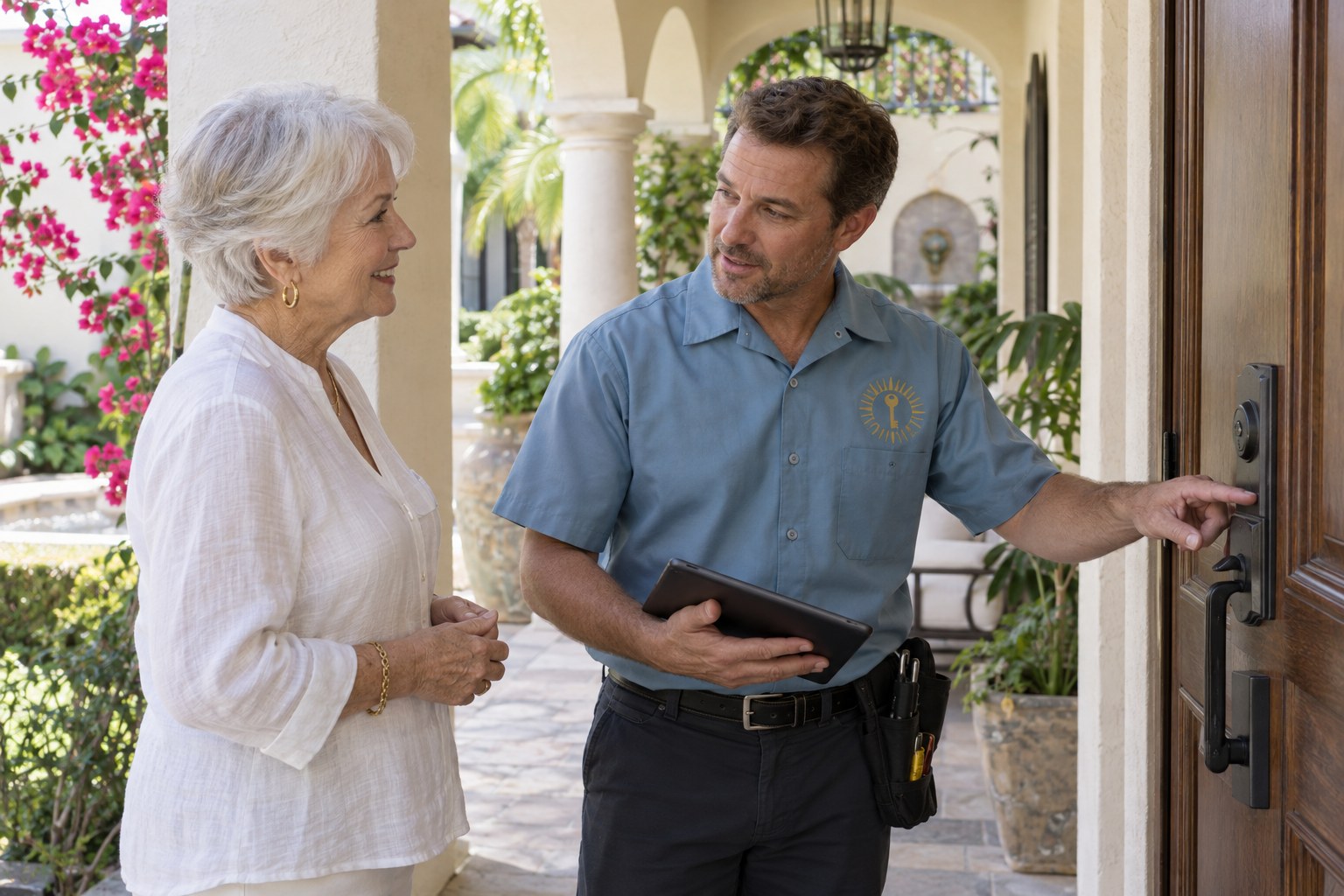
On arrival, the technician confirms that you own the property or have authority to approve work. This applies to sheds and barns just as it does to homes. Rekeying or replacing locks without that confirmation is not something a responsible locksmith does, and it protects owners who may be away.
The technician looks at each building, noting the door, frame, hasp and existing lock. They explain what they see and offer a plan that fits your use. You decide what to do, and the work is carried out on site, with padlocks rekeyed or replaced and hasps upgraded as agreed.
If the job is complicated, such as multiple buildings with damaged framing or a gate system as well, a technician visits and the service call charge is explained before dispatch. You leave with working locks, a key chart and advice on upkeep. The aim is a setup you can understand and manage on your own.
A simple yearly routine
Once a year, walk the property with a notebook. Try each padlock, clean and lubricate it, and check that the key turns smoothly. Look at each hasp for rust, loose screws and signs of tampering. Check the hinges and the door fit. Make notes of anything that needs attention.
Review who holds keys. People who helped during the year, such as workers or friends, may still have copies. If you cannot account for all of them, rekey the group they used. It is usually quicker and cheaper than hunting for every copy, and it gives you a clean slate.
Replace what is worn, and do it before it fails. A padlock that has seized or a hasp that has rusted through is easier to replace on your schedule than on an emergency basis. Keep a spare padlock of each type in the house so you can swap quickly if one gives out.
Over time, the routine becomes habit. Rural property rewards steady attention more than dramatic measures. A few good locks, a strong hasp, a tidy key system and a yearly check are enough to make most outbuildings a far less attractive target, and they take little time to maintain.
Frequently asked questions
What kind of padlock is best for a shed?
Look for a thick hardened shackle, a body built for outdoor use and a design that locks both sides of the shackle. A guarded shackle is useful on higher value buildings. The hasp and its fasteners matter as much, so choose a heavy hasp bolted through the door.
Can several padlocks use the same key?
Yes. Padlocks of the same maker and keyway can be keyed alike, or existing padlocks can be rekeyed to match. You can plan key groups, such as one key for outbuildings and a separate key for the house, and a technician sets them up.
Why does my padlock keep seizing?
Humidity, dust and corrosion get inside outdoor padlocks. Use a weather rated model, mount it with the keyway facing down and lubricate with a dry lock lubricant twice a year. Avoid heavy oil, which collects dust. A seized lock should be replaced.
Do you check ownership before changing locks?
Yes. The locksmith checks ownership or authority before rekeying or replacing locks on any property, including sheds and barns. This protects owners and tenants, and it is a routine part of every call.
How do I get a quote?
Call us and describe the buildings, the locks you have now and where the property is. Quotes are given by phone. If the job is complicated, a technician visits and the service call charge is explained before dispatch. Please call to confirm availability.