
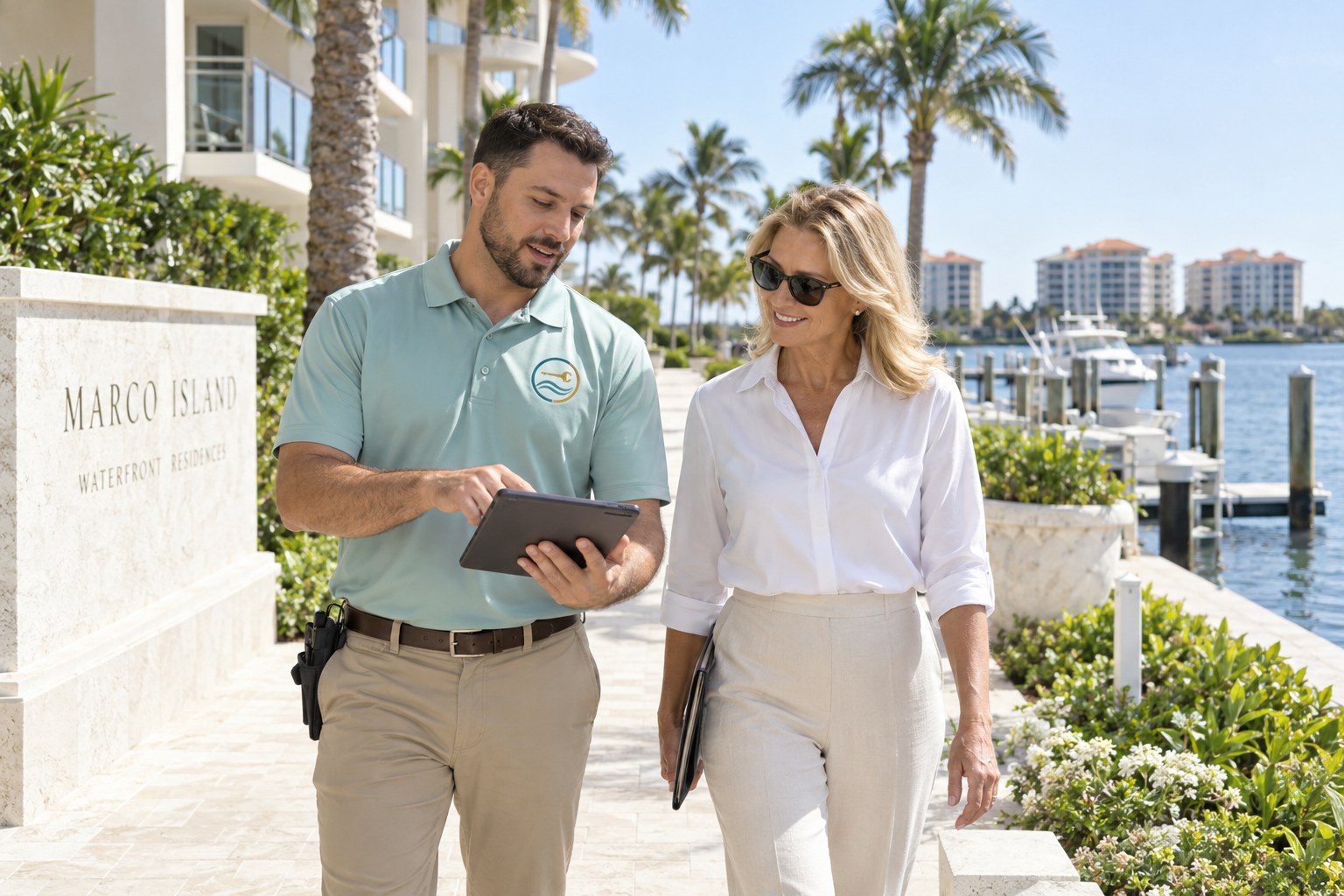
Isles of Capri is a small island community of canal homes, docks and boat lifts, reached by crossing water from the mainland. Locks here live in constant salt air, and a service call involves a bridge crossing and careful planning. This guide covers weather exposure, dock and boat house hardware, house doors, and how to prepare before you call us to confirm availability.
Life on a small island changes the lock conversation
Living on a small island has a rhythm that mainland neighborhoods do not share. Everything arrives by one route, neighbors know each other's boats and cars, and the water is never far from any front door. These features create a close, comfortable community, and they also shape how locks wear, how keys are shared and how a locksmith visit is planned.
Because access to the island depends on a single crossing, a technician needs to think ahead. Tools and parts must be right the first time, since a forgotten item means a long trip back. That is why we ask detailed questions when you call: the type of door, the brand of lock if you can see it, and exactly what is happening. Good information shortens the visit.
We also keep a realistic view of what we can promise. We ask you to call and confirm availability, and we do not state arrival times. What we can offer is clear communication, a quote by phone for straightforward work, and an honest explanation of any service call charge before dispatch if the job is complicated and a technician needs to see it first.
Salt, spray and the slow corrosion of ordinary locks
Saltwater is the enemy of metal. On an island surrounded by water, salt in the air settles on every exposed surface, and locks are small mechanisms with fine tolerances. A deadbolt that would last a long time inland can start sticking within a season or two. Brass tarnishes, steel pits, and the internal springs weaken as corrosion builds up in tiny spaces.
The first signs are subtle. A key that once slid in smoothly starts to drag. A latch takes two tries. A padlock on the dock box becomes hard to turn. These are your warnings. A rinse with fresh water on a cloth, followed by a dry lubricant, can slow the problem, but once corrosion is inside the cylinder, replacement is often the better answer.
When choosing new hardware, ask about marine-grade or coastal-rated finishes. Stainless steel, specially coated brass and sealed cylinders all handle salt better than basic plated sets. They cost more at the outset, and we explain the tradeoff by phone so you can decide. For a door under a covered entry, standard hardware may be fine. For exposed doors, tougher finishes usually pay off.
- Rinse exposed hardware with fresh water on a cloth
- Use dry lubricant, never heavy oil, in keyways
- Choose stainless or coastal-rated finishes outdoors
- Replace a cylinder once the key drags or sticks
Dock gates, boat lifts and waterside storage
Canal homes often have a private dock with a gate, a boat lift control, a storage box for lines and fenders, and sometimes a small shed for fishing and water sports gear. These items live in the harshest environment on the property, wet and sun-baked by turns. Locks here fail faster than anywhere else, and replacing them is a routine part of owning a waterfront home.
A dock gate latch should be strong, simple to operate with wet hands and made from corrosion-resistant materials. Dock boxes need locks that resist swelling and rust. Padlocks with covered shackles keep salt out of the mechanism. We can install or replace these and key them alike so one key operates the lot, which is especially useful when your hands are full of lines and a cooler.
We do not service boat engines, lift motors or navigation equipment, and we are clear about that. Our work is the lock, the latch, the hasp and the key. If a dock gate is damaged or a lift control box will not open, we can often help with the lock side while you call a marine specialist for the rest.
Boat keys, ignition and boat house doors
Boat keys are small, buoyant at best and easily lost overboard. Many owners keep a spare in the house, another at the dock and a third on the boat, which means three places to secure. A lost boat key is not only an inconvenience, it is a risk, because whoever finds it may know which boat it belongs to from a tag or a keychain.
We cannot promise to cut every marine ignition key. Some are common patterns that we can duplicate, and others are specialized pieces that belong to the manufacturer or a marine dealer. When you call, describe the key and the brand if you can, and we will tell you honestly whether it is something we can handle or whether you should go elsewhere.
For boat houses and covered lifts with doors, we can fit keyed locks or hasps, advise on weather sealing, and help you set up a system in which house, dock and storage are all on the same key. Fewer keys on a ring means fewer chances of losing them in the water, and a simpler routine every time you head out.
Front doors on canal-side homes
Canal homes frequently have two fronts: the street side and the water side. The water side may include a lanai, sliding doors and a dock path, and it is usually less visible to people passing by. This is where good hardware matters. A solid deadbolt on the water-facing door, a secure slider lock and a well-lit approach give the home a strong second front.
Because of the weather, wood doors can swell and warp, and metal hardware can corrode. A door that closed perfectly in spring may rub in the wet season. A technician can adjust strikes and hinges to restore smooth action. If the door itself is failing, we recommend a carpenter, and we can coordinate the lock work to match the new slab.
We also check that every household member can operate each lock in an emergency. A door that only the owner can open is not a safe door. Storm season brings extra concern about escape routes, so we make sure latches are simple from the inside while remaining secure from the outside, and that sliders glide freely.
Hurricane season on an island
Island residents take storm season seriously. Preparing the home, boat and dock is a significant task, and locks are part of it. Before the season, test every key, check every latch and make sure strikes are well fastened. A door that rattles in a strong wind is under stress, and tight hardware helps it hold its shape.
We do not install shutters or rate doors for wind, and we make no claims about storm outcomes. What we can do is make sure your locks work and your keys are organized. After a storm, swollen frames and shifted doors can bind. If a deadbolt will not throw, do not force it. A technician can adjust the strike and hinges to bring it back into line.
If you evacuate, leave a working key with a trusted friend or relative, and keep a labeled spare set where you can reach it. The return trip, often across a damaged or crowded route, is stressful enough without a locked door that will not open. A calm, prepared approach makes a measurable difference to the first hours back home.
Seasonal homes, rentals and guest access
Many island homes are lived in part of the year or rented to visitors. A house that sits empty for months is vulnerable to humidity damage, including locks. Before leaving, work each lock several times, apply dry lubricant and ensure someone local has a working key. A key held by a trusted neighbor is worth more than any gadget.
For rentals, constant guest turnover creates a key control problem. Keypad locks allow codes to change between stays, and a mechanical backup key is sensible. Keep a log of who has codes and delete old ones. A technician can install and program a keypad lock and explain how to manage it, and we can rekey physical locks between long-term tenants.
We confirm ownership or authority before rekeying or reprogramming any lock. A manager can show a management agreement and an owner can show ownership paperwork. If you are a guest locked out, contact the owner or manager first, as they can authorize help. We are glad to assist once the right person gives permission.
Garages, carports and vehicle keys on the island
Many island homes have carports or garages used for cars, golf carts and storage. Since vehicles are the only way to reach the mainland, a lost car key or a lockout can feel more serious here than elsewhere. Salt air also degrades key fobs and remote buttons, and corroded contacts inside a fob are a frequent reason for a key that suddenly stops working.
We can help with many vehicle lockouts and key replacements, after confirming ownership or authority. Tell us the make category and the kind of key you use, whether a traditional blade, a transponder head or a push-button fob. We bring the right equipment when we know what to expect, and we are honest if a particular key needs a dealer.
For the carport or garage, a solid deadbolt on the interior door and a good habit of closing the overhead door at night go a long way. Storage cabinets in garages often hold paint, tools and fuel, so a keyed lock is worthwhile. A technician can look at everything in one visit and suggest the practical upgrades.
Lockouts when the world feels very small
A lockout on an island can be unsettling. If you step out to retrieve something from the dock and the door closes behind you, the nearest hardware store is across the water. Stay calm, check other entries such as a lanai slider, and call a trusted neighbor who may hold a spare. If nothing works, call us and describe the situation.
When we arrive, we ask for identification and some link to the address, such as mail, a lease or a utility bill. This applies to every residence and protects occupants. Our aim is to open the lock without damage using picking or bypass tools. If the lock is badly corroded or damaged, drilling may be necessary, and we explain this before proceeding.
After entry, we usually recommend replacing a lock that nearly defeated us. A cylinder worn by salt is a lockout waiting to happen again. We can swap it on the spot, test the key several times and leave the door working smoothly. That is better than a temporary fix that fails again the next time the tide turns.
Sliders and lanai doors facing the water
On a canal home, the sliding glass door to the lanai or the dock is often the most used entrance. Boaters walk in and out all day with wet feet, coolers and gear, and the track at the bottom of the door fills with sand, salt crust and small debris. A gritty track makes the door heavy and encourages people to leave it unlatched because it is such a bother to close and lock properly.
A technician can clean the track, replace worn rollers and adjust the panel height so the latch bites the frame fully. A keyed secondary lock gives you a stronger option when you leave the house, and a simple pin or bar stops the panel from sliding if the primary latch fails. Stainless components resist the salt far better than the zinc parts found in many factory sets.
Test the latch every month during the wet season, because sticking tracks often hide a latch that has quietly stopped engaging. If you can lift the door slightly and wiggle it out of the frame, the track and rollers need attention. This is a modest repair that makes the whole home feel more secure, and it often takes only a single visit to put right.
Keeping a tidy key system on a boating property
Boating households collect keys faster than most: house, dock gate, storage box, boat, trailer, vehicle, golf cart and sometimes a neighbor's boat house. These accumulate on a single ring that is heavy, awkward and easy to lose over the side of a boat. Losing that ring means locking yourself out of everything at once, which is the opposite of what a key system should do.
A simpler approach is to separate keys by purpose. Keep house and vehicle keys on one ring. Keep dock and boat keys on a floating keychain on a lanyard. Store spares of each in a dry place inside the house. Where possible, key the dock gate, box and shed alike, so you carry one key instead of three. A technician can rekey these locks in a single visit.
Label each key with a code known only to you, rather than the address. If a ring is lost, whoever finds it should not be able to tell which door it opens. Replace tired keys with fresh cuts, since worn keys snap more easily in corroded locks. A tidy system saves time and removes much of the stress of a lost or damaged key.
Quotes, planning and getting ready for the visit
Start with a phone call. Describe your door, the lock and what has happened. Tell us whether you have a dock, a boat house or other items needing attention, so we can group work into a single trip. Quotes for straightforward jobs are given by phone. If a job is complicated, a technician visits first, and the service call charge is explained before dispatch.
Before the visit, clear a path to the door and put away pets. Have identification ready, along with something that ties you to the address. If you want rekeying, have your existing keys on hand so the technician can test them. Let us know about any gate codes or access notes that will help the technician reach your property.
We always ask you to call and confirm availability, because a trip to the island takes planning and we would rather be honest than make a promise we cannot keep. After the work, the technician tests every key and lock, shows you how things operate and explains what was done, so you know your home is in good order.
Frequently asked questions
Why do my locks fail so quickly near the water?
Salt in the air settles on metal and works into cylinders, causing corrosion, stiff springs and rough keys. Rinsing with fresh water on a cloth and using a dry lubricant helps. When a key drags or sticks, replacing the cylinder with a coastal-rated one is usually the better choice.
Can you work on dock gates and storage boxes?
Yes. We install and replace gate latches, hasps and padlocks, choosing corrosion-resistant materials and keying them alike when you wish. We do not repair lift motors, boat engines or electronics, and we will tell you plainly when a problem belongs to a marine specialist.
Can you make a spare boat key?
Sometimes. Many keys follow common patterns, while others are specialized and must come from the manufacturer or a marine dealer. Call and describe the key and brand, and we will tell you honestly whether it is something we can cut. We confirm ownership first.
What happens if I am locked out of my island home?
Check other entries and ask a neighbor with a spare. If that fails, call us. We ask for identification and a link to the address, then open the lock without damage when possible. If the lock is badly corroded, we explain the options and replace the cylinder.
How do I confirm availability and get a quote?
Call us and describe the job. Straightforward work is quoted by phone. For complicated jobs, a technician visits first and the service call charge is explained before dispatch. Please call to confirm availability, since a trip to the island needs planning.