
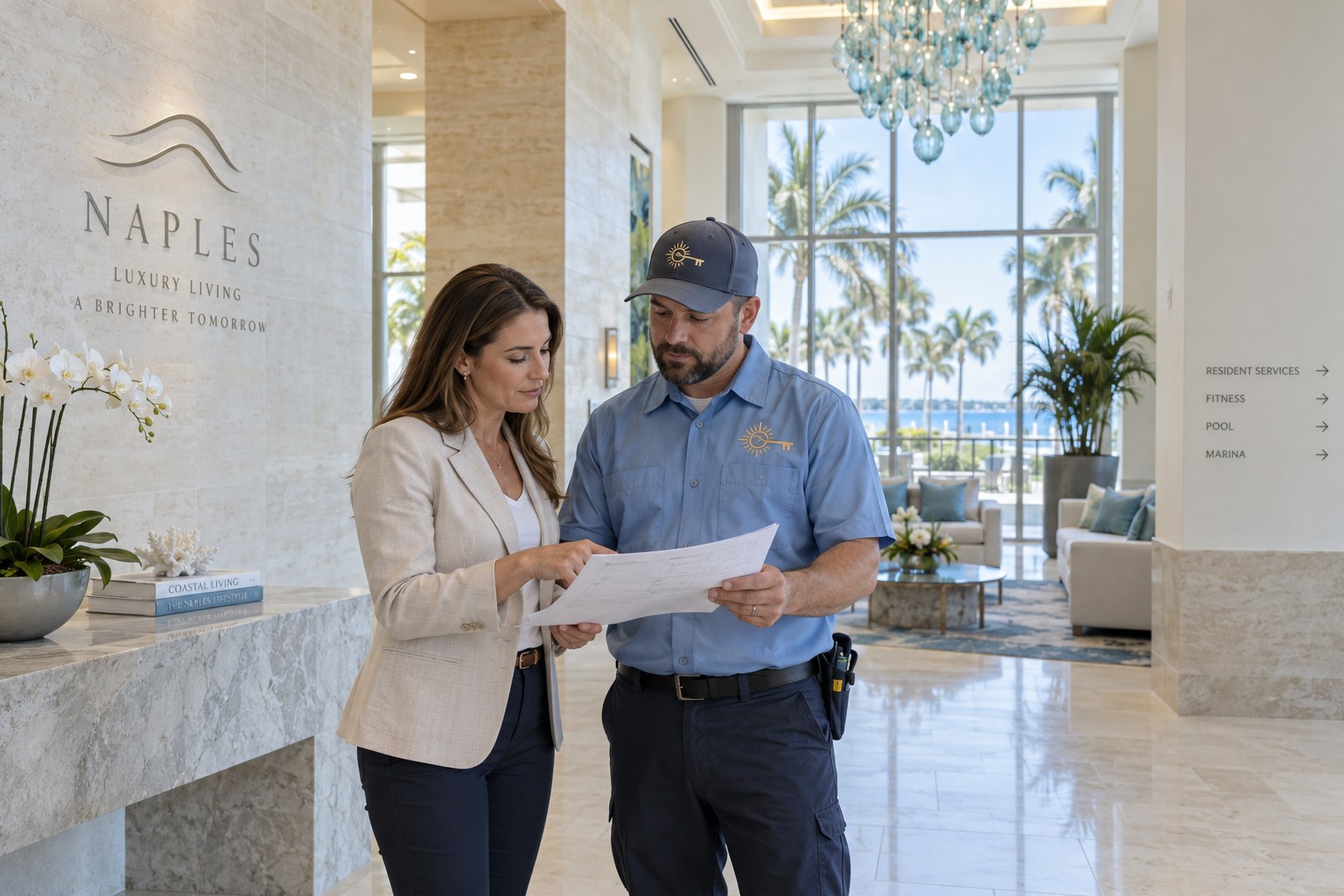
Lakeside villas and golf-course homes inside a gated community share a rhythm: early rounds, evening walks, garages used as front doors, and a lot of coming and going after dark. That rhythm creates a predictable set of key problems. This guide looks at how a mobile locksmith handles them, and how to prepare so a late call goes smoothly.
A community built around the garage
In a gated golf community, the garage often does the work of a front door. Residents pull in from the street, close the overhead door behind them, and walk into the kitchen or laundry room through a single interior door. Guests might use the front door, but the family almost never does. That means the garage entry and the interior service door bear the biggest share of daily wear.
Because that interior door is used constantly, its lock is usually the first to complain. The latch may stick, the key may feel rough, or the door may stop closing firmly against the weatherstrip. Garage doors themselves rely on a spring system and an opener with a small receiver, and those have their own wear patterns. The locksmith's role covers the key and lock side, while opener repair is separate work.
When you contact us about a garage entry, say which door is giving trouble: the overhead door, the keypad outside, the walk-in side door, or the interior door to the house. Those are four different problems with four different solutions. Clear detail up front helps us bring the right parts. Please call to confirm availability, and we will talk through the situation before sending a technician.
Evening and after-hours key problems
Many lockouts in a community like this happen at the edges of the day. Someone takes a walk around the lake at dusk and the door locks behind them. A visitor arrives late and cannot get the lockbox open. A resident returns from dinner with a key that suddenly will not turn. After dark, small problems feel bigger, and people tend to try whatever is at hand to get inside.
Our advice is to pause before improvising. Pulling hard on a stuck key, striking a lock, or trying to slip a card past a latch can damage the door or the lock and make the problem more expensive. Check whether another door or a window is already unlocked and safe to use. If not, call, and describe the situation so the technician can choose the least invasive method.
If you are waiting outside in the evening, stay in a lit, comfortable spot, and let a neighbor know what is happening. Bring your identification to the door, because the technician will ask to confirm that you live there or have authority over the home. If you live with others, tell them a technician is coming so no one is startled by an unexpected visitor.
- Stay somewhere lit and comfortable while you wait
- Do not force the key or strike the lock
- Keep your identification with you for the technician
- Tell household members that a technician is on the way
Lakeside lanais and sliding doors
Homes along the water in this setting tend to have large lanai openings that face the lake. Sliding glass doors are the usual choice, and they bring a standard set of lock concerns. The latch is a small hook, the track gathers grit, and the door rides on rollers that wear. With time, the door sits slightly out of alignment and the latch engages only partially, giving a false sense of security.
A technician can clean the tracks, adjust or replace rollers, and swap a tired latch for a stronger one. A secondary lock or a track bar adds a second level of protection. Because lakeside humidity and the occasional afternoon storm are part of life here, we favor hardware designed to resist moisture and recommend avoiding oil based sprays that collect dust and sand.
Screen doors on the lanai add another layer. Their latches are light and often fail, leaving the screen swinging loose. A broken screen latch is not a security issue in itself, but a loose screen can hide the fact that the inner slider is unlocked. Walk your lanai doors occasionally and check each one. If something rattles, sticks or fails to latch, a quick repair now saves a call at a bad hour.
Villa clusters and shared exteriors
Villas and attached homes often share walls, rooflines and exterior maintenance, and an association may control what the front of each unit looks like. This affects locks in practical ways. Door color, handle finish and sometimes even the style of hardware can be specified. Before replacing visible hardware, check with your association, because a mismatch could cause trouble later.
Rekeying is attractive in this setting because it leaves the visible lockset untouched. The inside of the cylinder changes, old keys stop working, and the front of the unit looks exactly as before. If a replacement is truly needed, we help you choose a model that matches the existing finish and style, which often keeps both you and your association comfortable.
Parking can be tight where several units share a drive or a loop. Tell us where to park when you call, and if possible leave room near your entry. Technicians carry tools in and out, and short walking distances help. If a guest spot or a street space is available, share that information. A little planning makes the visit smoother for you and your neighbors.
Golf cart storage and outdoor equipment
Golf communities mean golf carts, and golf carts mean storage. Some households keep a cart in a dedicated bay, others in the garage. Carts themselves have simple ignition switches, and a lost cart key is more common than you might think. Replacement of cart keys falls into a gray area of automotive work, so talk to us about what you have and we will tell you honestly what we can do.
Lockable storage for clubs, bikes, beach chairs and tools is also common. A small cabinet lock or a padlock on a shed door can seize in humid weather. We can loosen a stuck lock, cut a key if the lock is healthy, or fit a new one. If you want several of these locks to share a key, matching them reduces the clutter on your key ring.
As with any property work, we confirm that you own or control the space before opening or changing a lock. In shared storage areas, the authority may belong to an association or manager rather than to an individual resident. In that case, we ask for their permission, and we work with whoever holds the right to the space. It is a courtesy that protects everyone's belongings.
Replacement keys and spares for busy households
In a community where people golf, walk, bike and swim, keys get lost. They fall out of pockets on the course, slip off belts, get left on a lanai table, or disappear into a bag. A household with a single copy of each key is one mishap away from a lockout. Making a few well managed spares is among the simplest improvements a family can make.
We cut keys by code or by copy, depending on the lock and what you have. If you still have a working key, copying is straightforward. If you have lost every key, a technician can often make a new one from the lock itself, which may involve removing a cylinder and reading its pins. In some cases rekeying is the better choice because it also cancels any key that went missing.
Where possible, store a spare in a place that is not obvious. A key under a mat or in a fake rock is known to everyone. A trusted neighbor, a family member or a small lockbox mounted discreetly can be better. A lockbox with a code that you change from time to time works well for short term guests. We can install and set up such a device on request.
Vehicles after a round of golf
Vehicle key problems have their own pattern here. A fob goes into a golf bag and stays there. A key falls into the cup holder of a cart. A remote gets soaked in a sudden shower. When you return to the car, there is no key and the doors are locked. Because the car is not in danger, the situation is mostly an irritation, but it still needs a calm and correct fix.
We can unlock vehicles without damage in many cases, and we can cut and program replacement keys on site. The technician will ask for the make and general key type, and will check that you own or have authority over the vehicle. A registration, a title, a rental agreement or a work order are typical documents. We will not open or program a vehicle for someone who cannot connect themselves to it.
If you drive a vehicle with a smart key, consider keeping a spare programmed and stored safely at home. These keys are more expensive and time consuming to replace when none are left. A spare is also a backup if the battery in your main fob fails. Mention to us which key type you have and we can talk through the options for adding another.
Keeping hardware healthy in humid air
Humidity, summer storms and sun all work on locks over the years. Moisture collects inside cylinders, dust sticks to oils, and metal parts expand and contract. A lock that once felt smooth becomes stiff, and the key shows wear. Regular small care helps. Every few months, wipe the exterior hardware, test each key, and listen for any change in the sound or feel of the lock turning.
When a lock needs lubrication, choose a dry product designed for locks, such as a graphite or a PTFE based spray, rather than a heavy oil. Apply sparingly into the keyway and work the key a few times. If the lock remains rough, do not keep forcing it. A technician can remove the cylinder, clean it thoroughly and replace worn pins, or recommend a new unit if the damage is serious.
Door alignment matters as much as the lock. A door that rubs on the frame will wear the latch and strain the deadbolt. If you see scrape marks on the strike plate or have to lift the handle to lock the door, the problem may be a sagging hinge. Tightening or replacing a hinge screw can solve it. We check this during visits, since it often explains a sticking lock.
Garage keypads, codes and the people who know them
The keypad beside a garage door is one of the most casual security devices in a neighborhood. A code gets set when the opener is installed, then shared with a landscaper, a painter, a pet sitter, a cousin who stayed for a month, and a cleaning crew. Years later nobody remembers the full list. Meanwhile the code still opens the largest door of the house, and often the interior door behind it is left unlocked because it is used so often.
Changing the code is easy and is worth doing at least once a year, and again any time someone leaves your service. The steps depend on the opener brand, and we can walk you through them or do it for you during a visit. Avoid codes that are birth dates, street numbers or repeating digits. A code that is easy to remember but not obvious is a reasonable compromise.
Remember that the keypad is only one barrier. The emergency release cord inside the garage door can be reached by a determined person through a gap at the top, so some owners add a zip tie or a shield to the release. The interior door should lock behind you every time. We can help you review all these small points in one visit, and fit a better deadbolt on the inside door.
Things we ask before a technician heads over
Over the phone, we try to learn enough to send the right person with the right tools. We ask for your address and the community entrance you will use. We ask which door has trouble and what kind of lock it is. We ask whether you can see the key stuck or broken in the lock, whether anyone is inside, and whether you have tried anything yourself. These questions are simple, but the answers shape the whole visit.
We also ask what outcome you want. Some people only need the door opened. Others want the lock rekeyed, a spare cut, or a stronger deadbolt added to the same door. Knowing that in advance lets us bring cylinders, keys blanks and hardware in one trip. If the request becomes larger, we explain the plan and the service call charge before a technician is dispatched.
Finally, we confirm that you can show a connection to the property. This is the same for every job, whether a lockout or a rekey. Identification with the address, a lease, a utility bill or a call from the owner can all work. People are sometimes surprised by the step, but most appreciate it once they realize it also protects their own home from anyone else making the same request.
How we handle a call to a gated community
Gated entry is part of life here. When you call, tell us your address and the gate arrangement, and let the gate know a service visitor is expected. We recommend doing this as early as you can so there is no waiting at the entrance. If the gate requires specific information such as a vehicle description, we will provide what we can once a technician is assigned.
On arrival, the technician confirms your identity, explains the plan, and begins work. Quotes are given by phone for straightforward jobs. If the work is more complicated, a technician visits and the service call charge is explained before dispatch, so you can decide with all the facts. We do not pressure anyone to approve work, and we welcome questions at every step.
When the job is finished, test everything. Lock and unlock each door, try each key, and ask whatever you like about maintenance. Keep a note of how many keys exist and who holds them. If your household changes, for example with a new tenant or caretaker, a rekey keeps the access list simple. Call us to talk it through, and to confirm availability for a convenient time.
Frequently asked questions
Can you help if I am locked out of my garage at night?
Please call and describe which door is affected: the overhead door, the walk-in door or the interior door. We will talk through safe options and confirm availability. Let the gate know a service visitor is coming, and keep your identification with you so the technician can confirm you live at the home.
Will rekeying change the look of my front door?
No. Rekeying changes only the internal parts of the cylinder, so the handle, deadbolt and finish stay exactly as they are. This is helpful in communities where an association controls exterior appearance. Old keys stop working, and you receive new keys that fit the same hardware.
My sliding lanai door will not latch. Can that be fixed?
Usually yes. Sliders often fail to latch because the track is dirty, the rollers are worn or the hook latch is tired. A technician can clean, adjust and replace parts, and can add a secondary lock for extra security. Describe how the door moves when you call so we can bring suitable parts.
Do you make golf cart keys?
Cart ignition keys can vary, so tell us what you have when you call and we will say honestly whether it is something we can help with. For house locks, storage cabinets and padlocks, we can cut, repair or replace keys. We always confirm that you control the space or item.
What does a service call involve for a complicated job?
If the work is complicated, such as several doors or unusual hardware, a technician visits first. The service call charge is explained plainly before dispatch, and the plan is discussed with you. Simple jobs are quoted by phone. You choose whether to proceed after hearing the details.