
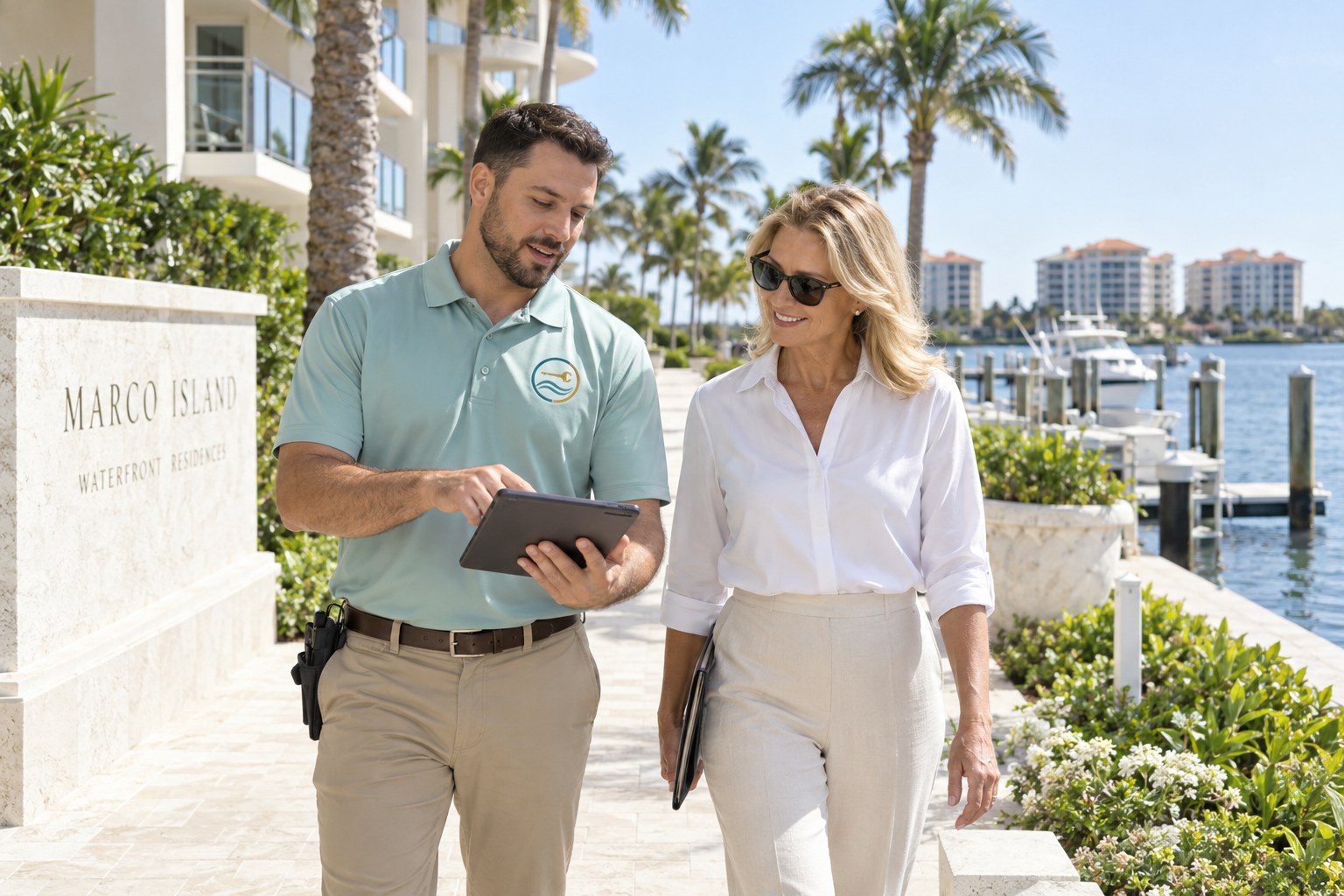
Goodland is a small waterfront village of casual homes, work sheds and boat storage, with salt in the air and only a few roads leading in and out. Locks here take a beating, and keys get passed around easily. This guide covers doors, sheds, boat houses, key habits and how a mobile locksmith plans a visit, so you can prepare before you call.
A village where the water comes first
In a small fishing village, life orients itself around the water. Mornings begin with coolers and rods, afternoons end with hosing off boats, and the evening porch is where neighbors compare the day. Houses tend to be practical and relaxed, built for sandy feet and quick exits. That casual spirit is part of the charm, and it also affects how people treat their locks, which often feel like an afterthought.
Yet the same casual habits can leave a property exposed. Doors left unlocked while someone is out on the dock, sheds secured with a flimsy hook, and keys hidden in obvious places are all common. None of this is a criticism. It is simply the way relaxed communities live. A few modest, thoughtful changes can make a home and its outbuildings more secure without spoiling the village feel.
We approach this kind of community with respect for how people live. We do not push unnecessary equipment or lecture anyone about their habits. We look at what you have, tell you honestly what works and what does not, and suggest sensible improvements that fit your property and the way you actually use it. If the best advice is to leave something alone, we say so.
What salt does to a lock in a fishing village
Salt air is relentless. In a waterfront village, every exposed lock lives in a mist of moisture and minerals. The result is corrosion that creeps into keyways, locks up springs and eats through plating. A deadbolt on a front door facing the water can feel stiff within a year or two, and a padlock on a shed can seize completely if left alone.
The signs are easy to spot. Keys that drag or stick, latches that need a push, and rust stains around the screw heads all signal trouble. A quick rinse with fresh water on a cloth, a wipe and a dry lubricant slow the damage. Heavy oils and grease attract grit and salt crystals, so we avoid them in keyways. Dry graphite or a purpose-made lock lubricant is better.
When it is time to replace, choose finishes meant for the coast. Stainless steel and sealed cylinders last far longer than standard plated brass. We explain the tradeoff by phone so you can decide what makes sense for each door. A shed that holds fishing line may not need the most expensive hardware, but the front door of your home often justifies it.
- Rinse and wipe exposed hardware after salt spray
- Use dry graphite or a lock-specific lubricant
- Choose stainless and sealed cylinders near the water
- Replace a stiff cylinder before it breaks a key
Boat houses, bait sheds and work sheds
Fishing communities hold a surprising amount of equipment in small buildings. Outboard motors, tackle boxes, nets, crab traps, ropes, tools, fuel cans and bait coolers live in sheds and boat houses. Many of these items are portable and valuable, and outboard motors in particular are tempting targets. A shed with a weak latch is an open invitation.
A secure shed door starts with a solid hasp mounted with carriage bolts or through bolts that cannot be removed from outside. A shielded padlock keeps bolt cutters from reaching the shackle. A door that fits tightly in its frame prevents prying. We can fit these and key several padlocks alike, so one key serves the boat house, the bait shed and the storage box.
Think about the weather too. Wooden doors swell and rub, and a hasp that lined up in dry weather may misalign in the wet season. A technician can adjust or reposition the hasp to keep it working. If a building is in rough shape overall, we will say so honestly and suggest repairs to the structure before spending much on a lock.
Home doors in casual waterfront houses
Houses in village-style communities range from tidy, updated cottages to older homes with original doors and hardware. A common pairing is a screen door with a simple hook-and-eye latch outside a wooden or metal front door with a basic knob lock. These are charming and also quite easy to defeat. A deadbolt, a reinforced strike and decent hinge screws change the picture considerably.
Many homes have several entries: front, back, side, a deck door and sometimes a sliding door to the porch. Each should have a lock that works and a latch that catches. Walk around and test each one. If any door sticks, drags or fails to latch, it needs attention. We can adjust strikes, replace worn latches and add deadbolts where there are none.
If you live full time, think about what you would want to protect and what routines you follow. If you visit on weekends or seasonally, plan for an empty house. Either way, a few decent locks and tidy habits form a strong foundation. We are glad to talk through your options by phone and give a quote before anything is dispatched.
Keys that wander in a close-knit place
In a small community, keys travel. A neighbor holds a spare, a friend borrows the boat house, a relative has a key from years ago. This is the heart of village life, built on trust. It also means that over time nobody can say exactly how many working keys exist for a given door, and keys can pass to people the owner has never met.
Rekeying is the gentle way to reset. It changes the inside of the lock so old keys stop working, and you choose who gets new ones. It does not suggest distrust of anyone. It simply tidies up the list, much like cleaning out a closet. Plenty of long-time residents rekey after a family change, a sale or a long period of neglect.
We confirm ownership or authority before we rekey, as we do for any residence. If you inherited a property or bought it recently, bring the paperwork. If you are managing a house for someone else, a note from the owner is enough. This is a simple, routine step that protects every household from unwanted changes to their locks.
Limited roads and the practical side of a service call
A village with a few access roads has its own rhythm for service work. Parking can be tight, driveways short and gravel, and traffic may slow when visitors arrive for a weekend. A technician needs to find the address easily and park without blocking neighbors. Clear directions help a great deal, and so does a note about where to park and which entrance to use.
Because the trip may involve travel and planning, we ask you to call and confirm availability. We do not promise arrival times, and we do not claim to be anywhere in particular at any hour. We give a quote by phone for straightforward work, and if the job is complicated, a technician visits first, and the service call charge is explained before dispatch.
On arrival, the technician asks for identification and some link to the address, looks at the lock and explains the plan. You see the old and new parts. After the work, every key is tested. If we notice other issues, such as a loose strike or a corroded hasp, we mention them and let you decide whether to deal with them now.
Hurricane season in a waterfront village
Every waterfront community thinks about storms, and in a village with a lot of boats and sheds there is plenty to prepare. Locks are part of the plan. Check that every key works, that hasps are firmly fastened and that strikes are tight. A rattling door under pressure will loosen over time, and well-fastened hardware helps it hold its shape.
We do not install shutters, and we make no claims about any storm outcome. What we can do is make sure the locks you rely on are in good condition. After a storm, swollen frames, warped doors and corroded cylinders are common problems. If a lock will not turn, do not force it. Call us, and we can adjust, clean or replace the hardware as needed.
Keep a spare set of keys in a dry bag, and give a copy to someone who will stay or can return quickly. If you evacuate, let a trusted friend know where the key is. When you come home to a stormy mess, the last thing you want is to stand outside your own door with a key that will not turn.
Vehicles, trailers and boat trailers
Residents of a fishing village usually own trucks, trailers and sometimes older vehicles with simple key systems. Boat trailers have hitch couplers that can be locked, and many owners leave them unlocked. A coupler lock is a small, inexpensive way to deter theft. Make sure it is corrosion resistant, because trailer hardware is dunked in salt water regularly.
Vehicle lockouts happen near the water, often at a boat ramp or in a driveway, and key fobs take a beating from salt and moisture. We can help with many lockouts and key replacements after confirming ownership or authority. Tell us what kind of key you have, whether a traditional blade, a transponder key or a push-button fob, and we will tell you what we can do.
Please do not hide a spare key in a magnetic box under the bumper. These are the first places anyone looks, and salt water rusts the box quickly. A better plan is a spare kept with a trusted person or in the house. If your fob has stopped working because of corrosion, we can often replace or reprogram it, depending on the vehicle.
Rentals, weekend visitors and shared fishing cabins
Part of the village is made up of weekend places and shared cabins, where several family members or friends take turns. Shared use leads to many keys, and sometimes to a loose attitude about who has what. A lockbox with a code, a keypad deadbolt or a single master key controlled by one person can reduce confusion considerably.
For rentals, a keypad lock lets you change the code between guests without cutting keys. Set it up, test it and keep a mechanical key as a backup. Delete old codes regularly. We can install and program the lock, and show you how to manage it yourself. For long-term tenants, rekeying between tenancies is the cleanest approach.
As always, we verify authority. An owner can show paperwork, and a manager can show an agreement. If you are a renter locked out, call the owner or manager first, because they must authorize entry. We are happy to help once permission is clear, and we keep the process polite, orderly and straightforward for everyone involved.
Porches, decks and screen doors
Porches and decks are where village life happens, and the doors that open onto them are used constantly. A screen door that slams all day, a latch that has been bent by a gust of wind and a deck door that never quite closes are everyday realities. These small failures matter, because the deck door is often the one that stays unlocked overnight simply because it is awkward to secure.
A technician can replace a bent screen door latch with a sturdier one, add a keyed lock to a screened porch door, and adjust the deck door so it closes and locks with a light push. Where wood doors have swollen, we can reposition the strike plate. These repairs take little time, and they remove the daily friction that causes people to leave doors unlocked.
Think about visibility, too. A porch door facing the water may feel private because boats pass at a distance, but a quiet back deck is exactly where a determined person would choose to work. Good outdoor lighting, a solid deadbolt and the habit of locking up when you walk to the dock for a few minutes make a quiet, steady difference.
Small repairs that prevent big lockouts
Most lockouts are preceded by warnings. The key that needed a wiggle last month, the knob that felt loose last week and the deadbolt that required two hands last night were all telling you something. Ignoring these signs usually leads to a bad moment later, such as a snapped key in the lock on a rainy evening or a door that refuses to open when you are carrying a cooler.
Spend a few minutes each season on a simple check. Turn each key in each lock several times. Feel for roughness. Look at the screws holding the latch and the strike. Notice whether the door closes with a soft click or a hard bump. If anything seems off, call us before it fails, and describe what you noticed. A small adjustment now is far easier than an emergency opening later.
We value this kind of preventive talk because it is cheaper in effort and stress. A technician can clean a keyway, tighten hardware and replace a worn cylinder in a short visit, and you walk away with a door that works the way it should. Calling early also gives us time to plan and to confirm availability, rather than scrambling at an awkward hour.
Preparing for a call and what to expect
When you call, tell us about the lock, the door and the problem. If a padlock is rusted shut, say so. If you have several buildings, give us a quick list. Quotes for straightforward jobs are given by phone before a technician comes out. This helps you plan, and it helps us bring the correct parts and tools on the first trip.
Have identification ready and a way to show a link to the property. Clear a path to the lock if possible, and secure any pets. If a boat or trailer is blocking access, move it ahead of time. Let us know about parking so the technician can reach the property without causing trouble for neighbors on narrow streets.
After the work, you will have tested keys and locks that operate smoothly. The technician will explain what was done and offer simple maintenance tips for coastal conditions. Call us whenever something starts to feel stiff or off, since small problems cost less effort to fix than failures. And remember to call and confirm availability for your preferred timing.
Frequently asked questions
Why does my padlock keep seizing up?
Salt, moisture and grit work into the shackle and keyway, causing corrosion. Choose a padlock with a covered shackle and sealed body, rinse and dry it, and use a dry lubricant. If it is already seizing, replacement is usually better than repeated attempts to work it loose.
Can you key my shed, boat house and storage box alike?
Yes. We can fit matching padlocks or rekey existing ones so one key serves them all. This cuts down on loose keys, which is handy on a boat. We confirm ownership or authority before making changes to any lock.
Several neighbors hold spare keys to my house. What should I do?
Rekeying resets the system. The lock stays on the door, but old keys stop working, and you hand new ones only to people you choose. It is not a statement of distrust, just a tidy refresh. A lockbox or keypad lock is another option.
Can you help if my truck key fob stopped working after salt exposure?
Often, yes. Corroded contacts and worn batteries are common causes. Depending on the vehicle, we can replace or reprogram a fob after confirming ownership. Call and describe the key type, and we will tell you honestly what is possible.
How do I get a quote and confirm availability?
Call us with a description of the lock and the problem. Quotes for straightforward jobs are given by phone. If a job is complicated, a technician visits first, and the service call charge is explained before dispatch. Please call to confirm availability.