
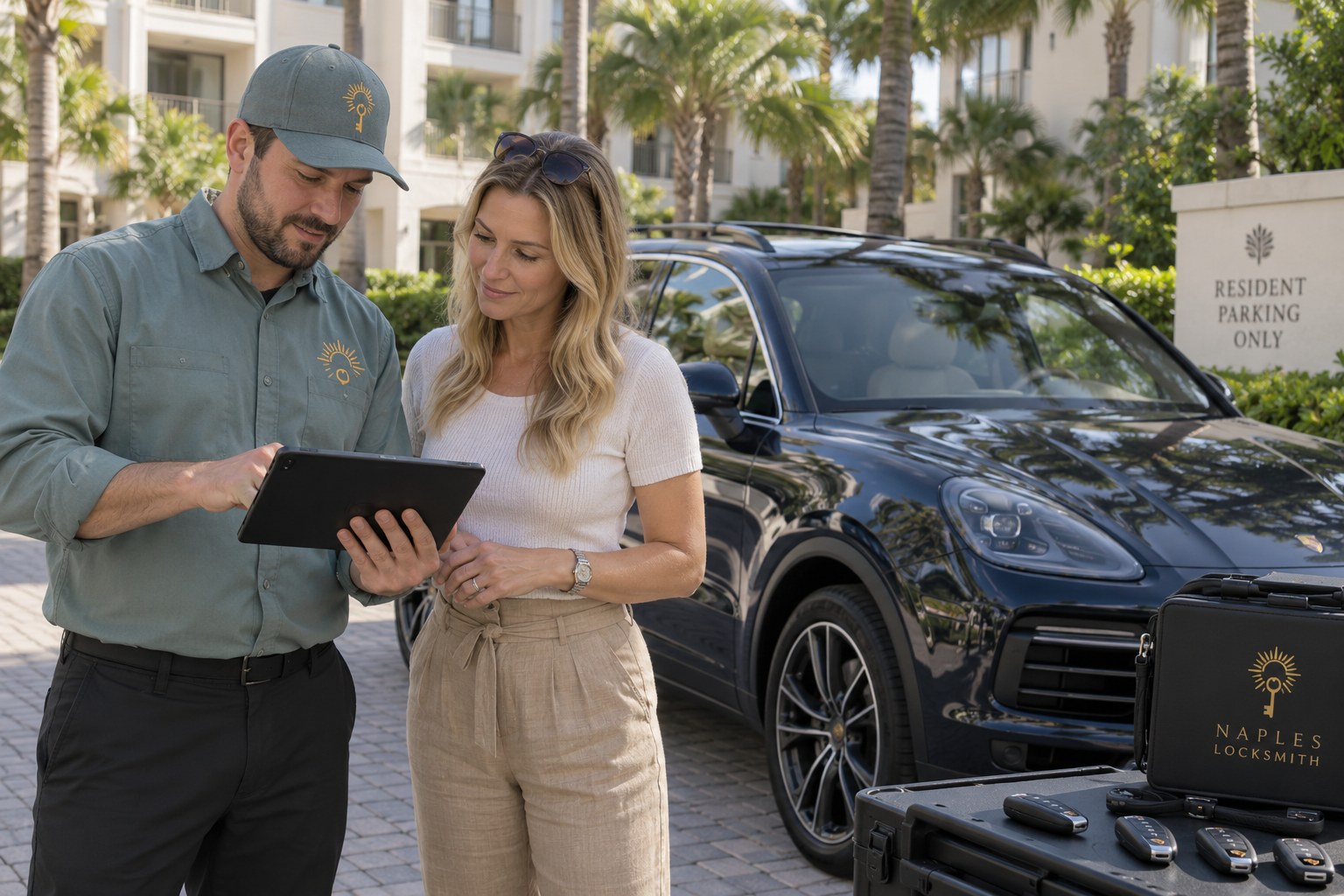
You press the start button, the dashboard shows a message that the key is not detected, and the fob is sitting right there in your pocket or bag. Proximity keys are convenient until they stop talking to the car. This page covers the usual causes, simple checks you can try, the emergency start method most cars include, and when a technician needs to program something.
How a proximity key talks to the car
A smart key, also called a proximity or keyless entry key, does not need to be inserted anywhere. The car sends out a low power signal from antennas in the doors, the cabin and sometimes the trunk. The fob hears that signal and answers with a coded reply. If the car accepts the reply, the doors unlock and the start button works.
Because this exchange happens many times a day, it depends on several things working together: a strong enough battery in the fob, a clear radio path, a healthy chip in the fob and a car that is ready to listen. If any one of these fails, the dashboard shows a message that the key is not detected.
The message does not tell you which part failed. It is the same message for a weak battery, interference, a damaged fob, a car problem or a key that has lost its connection to the car. That is why a few calm checks, in a sensible order, usually find the cause faster than repeated button pressing.
Start with the fob battery
The most common cause is a weak coin battery. The fob may still unlock the doors from close range while lacking the strength to be detected inside the cabin. Many cars show a low key battery message beforehand, and people ignore it. If your fob is a couple of years old, the battery is the first suspect.
Replacing it is usually easy. Most fobs have a small slot where a flat tool opens the shell. Note the battery code stamped on the cell, buy the same one and fit it with the same side facing up. Handle it by the edges, because skin oils can affect contact. Close the shell firmly, then try the car again.
If the new battery does not help, check the contacts for dirt or corrosion and make sure the battery sits firmly. A battery that has been loose or has leaked may leave a film on the springs. Clean gently with a dry swab. If the fob still does not work, the battery was probably not the main problem.
Interference and the surroundings
Radio interference is a real if less obvious cause. Strong signals from nearby equipment, such as transmitters, power lines, certain lights or large metal structures, can drown out the quiet conversation between key and car. Parking garages, marinas with radio equipment and areas near large electrical installations sometimes produce this.
Items in your pocket matter too. A phone, a second fob, a metal card holder or a magnetic clasp can interfere with the fob, especially when pressed against it. Try taking the fob out of the bag, holding it alone and moving it close to the start button or the steering column. See whether the message clears.
If the problem appears only in one place, such as a particular parking lot, interference is likely. Move the car a short distance, if it is safe to do so, and try again. A fob that works at home and fails in the same spot every time points to the location, not to the key.
The emergency start method
Nearly every proximity key car includes a backup way to start the engine when the fob cannot be detected. The fob contains a passive chip that does not need battery power, and the car can read it at very short range. Your owner manual shows where, but common locations are the start button itself, a marked spot on the console or a pocket in the cup holder.
The usual method is simple. Hold the fob against the marked spot, press the brake pedal and press the start button. The car reads the chip and starts. Some cars need the fob held in place for a few seconds, and some show a message confirming that they recognized it. The details vary, so look up your model.
This method gets you home but does not fix the cause. A fob that works only on the emergency spot has a weak or dead battery, a damaged antenna or a problem the car needs to sort out. Treat the emergency start as a short term fix, and arrange to deal with the underlying issue soon.
The hidden mechanical key and the door
If the car will not unlock, remember the mechanical key inside the fob. A small slider or button releases a metal blade. On many cars the driver door handle has a cap that covers a keyhole, which you can pry off gently with the blade. The door will open with the key, but the alarm may sound until the engine starts.
Using the blade is worth practicing before you need it. The keyhole is often hidden and the blade can be hard to release when you are in a hurry. Try it once at home so you know how it works. Keep the blade with the fob, and not in a drawer.
If the blade is missing, the fob may have been replaced with a shell that lacks one. A technician can cut a new blade from the car's lock, and can confirm whether the door has a keyhole at all. Some vehicles have no external keyhole, so the fob's battery is the only route to entry.
A damaged or water exposed fob
Fobs live hard lives. They fall on pavement, sit in pockets that go through the wash, and get splashed at the beach. A cracked board or a corroded contact can interrupt the signal without any visible sign. A fob that works intermittently, or only when held at a certain angle, is often a physical problem.
If the fob has been dropped or wet, remove the battery, let it dry and check for obvious damage. Look for a loose battery holder, a cracked solder joint or green deposits. Do not heat it to dry it. If a fob does not recover, replacement is the straightforward answer.
A technician can test whether the chip inside still responds. A fob whose chip is dead cannot be fixed by a new battery. In that case, a new fob is supplied and programmed to the car. We explain what is involved when you call, and we tell you plainly when repair is not worth attempting.
When the car, not the key, is the problem
Sometimes the fob is fine and the car has stopped listening. A weak car battery can cause strange electronic behavior, including a failure to detect the key. A blown fuse, a failed antenna in the door handle or a fault in the control module can also cause the message. The key is innocent, but the symptoms look identical.
A useful test is to try a second fob, if you have one. If the spare works, the first fob is the problem. If neither works, the car is the likely cause. This simple comparison saves money and time, and it tells a technician where to look.
A locksmith deals with keys and the programming that connects them to the car. Faults in the car's wiring, antennas or computer may belong to a dealership or a repair shop. We tell you honestly when the key is fine and the car needs other attention, because sending you home with the wrong fix helps nobody.
When programming is involved
A fob that has lost its connection to the car, or a brand new fob, needs to be programmed. Programming introduces the fob's identity to the car's computer so it will be recognized. Sometimes a key stops working after a battery change or a long period without use, and reprogramming restores it. This is a job for specialized equipment.
The process depends on the car. Some allow a technician to add keys using a diagnostic tool connected to the port under the dash. Others need additional steps, such as entering a security code or waiting through a timed procedure. A few require access that only a dealership has. We explain what your car needs when you call.
Ownership matters here. Before programming a key, the locksmith checks that you own the vehicle or have authority to use it. A registration, title or lease document with identification does the job. For rental or company vehicles, the owner may need to approve. This check protects you and the car's rightful owner.
Cold starts, hot cars and Florida weather
Heat is the weather problem in Naples. A fob left in a hot car, a bag on sand or a pocket in direct sun can lose battery power quickly. Batteries behave poorly at high temperatures, and a fob that worked in the morning may fail by mid afternoon. Moving it to a cooler spot and trying again sometimes helps.
Humidity affects fobs too. Moist air creeps into the shell, and salt in coastal air leaves a film on the battery contacts. A fob that has been in a damp bag after a day on the water may show the message even though it seems to be fine. Open it, dry it gently and check the contacts.
Storms and lightning can disturb car electronics, and a car that has been through a power surge or a flood may behave oddly. If the message appears after a storm, the car's own systems may be involved. A technician can test the fob so you know whether the key is at fault or whether to look elsewhere.
Rental cars, borrowed cars and fleet vehicles
Visitors in Naples often meet this message in a rental car, with a fob they have used for only a day. A rental key belongs to the rental company, and the company should be your first call. They may have roadside help, a spare fob or an arrangement with a locksmith. Following their instructions protects you from unexpected charges.
If a technician is involved, ownership or authority is checked as usual. For a rental, that means the rental agreement and identification. For a borrowed car, it means confirmation from the owner. For a company vehicle, it means someone with authority to approve the work. This applies to programming as well as opening.
Do not try to open or modify a fob that belongs to someone else. Cracking the shell can void a rental company's trust and may damage the electronics. A fresh coin battery is fine only if the owner agrees. When in doubt, call the owner, explain the message and let us know how you would like to proceed.
Aftermarket remote starts, tint and added gadgets
Some cars carry additions that interfere with the key's signal. Aftermarket remote starters, dash cameras, phone chargers and even metallic window tint near the antennas can weaken the exchange between fob and car. If the message started after something new was installed, that installation is a reasonable suspect.
Try removing or unplugging the new device and testing the key again. A wireless charging pad in the console, for instance, can sit exactly where the passive chip needs to be read. Moving the fob away from it, or switching it off, may clear the message at once.
If the problem points to a modification, the installer is the right next call, since they know how it was wired. We can still check that the fob and its programming are healthy, so you know the key is not the culprit. That narrows the search and spares you from replacing a fob that works.
Do not keep pressing and hoping
When the message appears, it is tempting to press the start button again and again, or to walk the fob around the car like a wand. Repeated attempts rarely help, and they can drain the car battery, particularly if the accessories are on. Stop, breathe and work through the checks in order.
Switch off lights, the radio and the climate control, so the car battery has its full strength. Put the fob in your hand, hold it near the start button and try once. If that fails, use the emergency method, then the spare. Each step tells you something about where the problem lives.
If you are stranded somewhere inconvenient, call us. We will walk through the checks with you and, if a visit makes sense, explain how it works. A calm conversation often solves the problem on the phone, and when it does not, we know what to bring.
What the call and the visit look like
When you call, describe the message, what the fob does and what you have tried. Tell us the make and general type of car, whether it has a spare fob and where it is parked. We will talk through simple checks, and if a visit makes sense, we explain how a quote works by phone and confirm availability in your area.
At the visit, the technician checks authority, tests the fob and the car, and explains the cause. They may replace a battery, repair a shell, program a fob or cut a new blade. They test the result with you, including the doors, the start button and the remote functions, before they leave.
If the job is complicated, a technician visit comes first and the service call charge is explained before dispatch. You should always know what is being done and why. If the problem lies with the car instead of the key, the technician tells you so plainly, and you can decide what to do next.
Keeping a smart key reliable
Replace the fob battery every year or two, or at the first low battery message. Keep spare batteries of the right type at home. Carry the fob in a pocket or bag compartment of its own, away from phones and metal items. A little separation helps the signal stay clear.
Protect the fob from heat and water. Do not leave it on the dashboard, in a hot car or in a bag at the beach. A silicone cover helps with drops, but it should not block the buttons or trap heat. If a fob is cracked, replace the shell before the electronics are exposed.
Finally, keep a working spare. A second fob, stored at home and tested once a year, gives you a way to separate a key problem from a car problem and a way back on the road. Call us if you have only one fob, and we will explain how to get a spare made.
Frequently asked questions
Why does my car say key not detected when the fob is with me?
The usual causes are a weak fob battery, interference from a phone or nearby equipment, or a damaged fob. Less often, the car itself is the problem. Try the emergency start method in your manual, replace the coin battery and test a spare fob if you have one.
How do I start the car if the fob is not detected?
Most cars let you hold the fob against the start button or a marked spot on the console or column while pressing the brake and the start button. The car reads a passive chip that needs no battery. Check your owner manual for the exact location.
Do I need a technician to change the fob battery?
Usually not. Most fobs open with a small flat tool, and the battery code is printed on the old cell. If the fob still fails with a new battery, a technician can test the chip and tell you whether it needs repair, programming or replacement.
Can you program a new smart key on site?
In many cases yes, and we come to the car. We check ownership first. Some cars need extra steps, and a complicated job may need a technician visit before work begins, with the service call charge explained before dispatch. Call us with the car details to learn what yours needs.
What if the spare key works but the main one does not?
That points to the main fob, not the car. Its battery, chip or board may have failed. A technician can test it and either repair it or supply a new fob programmed to the car. Keep using the spare carefully while the first is dealt with.