
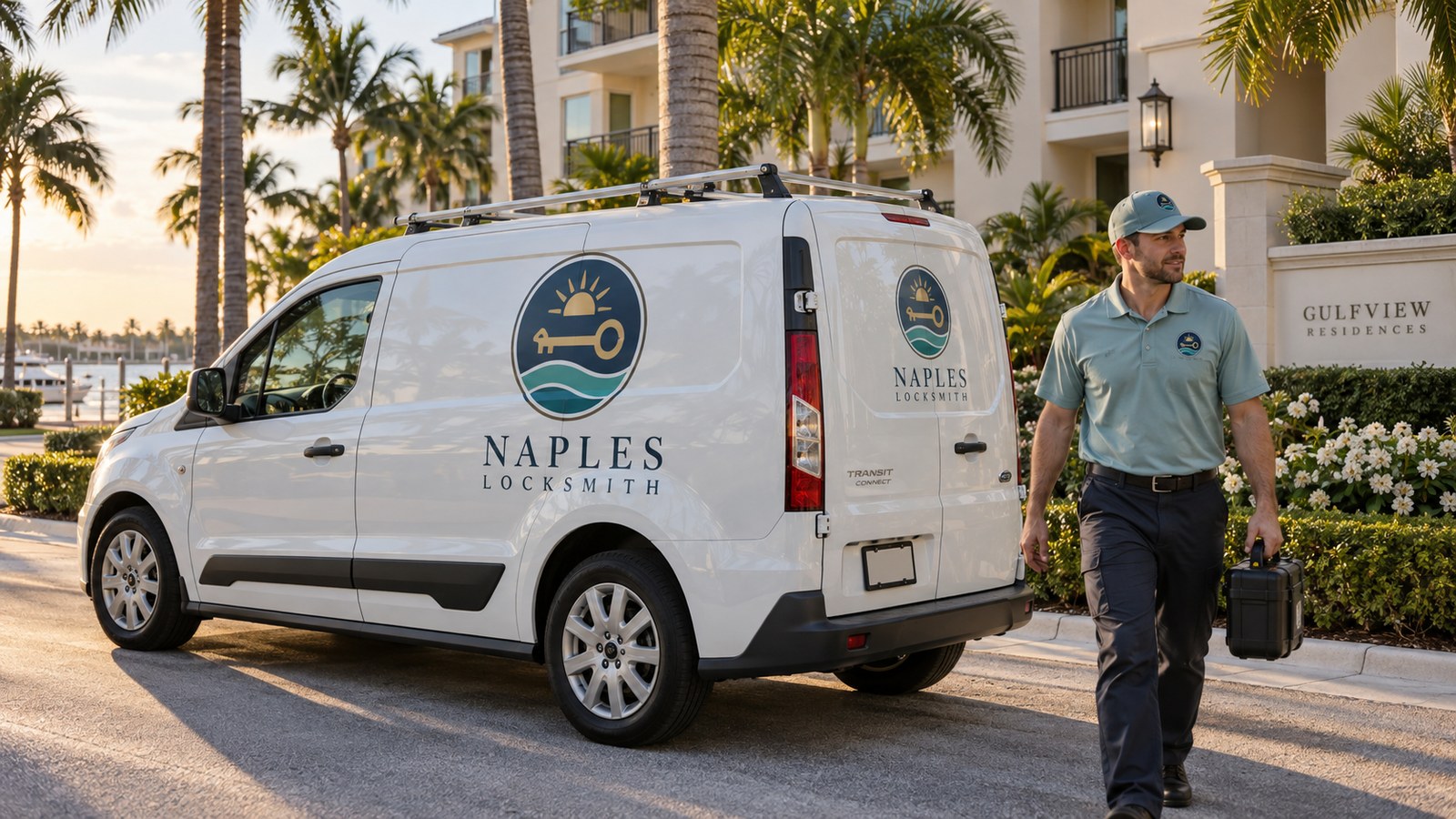
A quick stop for groceries, a pharmacy pickup or a coffee on Marco Island can end with the keys sitting on the seat and the doors locked. Because the island has a limited set of ways in and out, a locksmith plans the visit a little differently. This page explains what to expect, how to prepare, and how the work is done.
How an island changes the planning
Marco Island is a community surrounded by water, and that shapes how anyone travels to it. A technician coming from the mainland has a limited set of routes, and the approach is shared by residents, visitors, delivery trucks and beachgoers. Traffic patterns matter, especially during the winter season when the island fills with seasonal residents and guests.
That does not make a lockout complicated for you. It simply means a locksmith thinks about the trip before leaving. Which bridge or road to use, where to park once on the island, and how long the drive will realistically take are all part of the plan. We do not promise a specific arrival time, but we will tell you honestly what to expect when you call to confirm availability.
Your side of the planning is easy. Stay with the car, give a clear location, and keep your phone handy. The more precisely you can describe where you are parked, the less time is spent looking for the right lot.
If the lockout happened on the island while the rest of your day continues, it is also worth thinking about what else you need to do while you wait. A short errand on foot nearby is often possible, as long as you stay reachable.
Describing your exact spot
Island parking lots can look alike, with palm-lined rows, shared entrances and shops that blend together from a car window. When you call, give the name of the business you are visiting if you are comfortable doing so, the side of the building you are parked on, and any recognizable features such as a fountain, a sign or a particular row.
If you are at a public beach access, a marina, a condominium visitor lot or a restaurant, say so. Each setting comes with different rules about who can park, whether a gate arm needs to be passed, and whether the technician must check in with a front desk or guard.
Share your vehicle color and type so the technician can spot it quickly. A white sedan among forty white sedans is hard to find, so mention a small identifying detail like a sticker, a roof rack or a license plate frame. You do not need to read out your plate number over the phone, though you may be asked to confirm it in person.
If you are moving to a more convenient spot while you wait, tell us. A shaded corner or a bench near the entrance can make the wait more comfortable, as long as the car itself stays reachable.
Parking lot conditions and where the technician stops
A service vehicle needs room to park near the car without blocking lanes. In a crowded shopping area, that may mean using an adjacent space, a loading zone, or a spot at the end of a row. The technician will choose a position that keeps the work safe and does not obstruct other drivers.
Sun and surface matter too. Hot asphalt radiates heat, and a metal car body in direct sun can be uncomfortably hot to touch. If the car is in an open lot, shade from a building or a tree can make the wait easier. Do not move the vehicle without first checking whether that is possible, as it may be locked.
In condominium and club lots, there may be rules about outside service vehicles. A guard or manager might need to approve the visit. If you know of such a rule, mention it on the call so arrangements can be made in advance, and so the technician does not arrive and wait at a gate.
Busy times such as weekend afternoons, holiday weeks and evenings during the winter season can be crowded. A realistic expectation helps. We will tell you plainly what the timing looks like when you call.
Checks to run before you call
Go around the car and try every handle, including the rear doors and the hatch. Occasionally one door is unlocked and nobody notices. Look through the windows to see where the key actually is. A key on the seat is simple to reach, while one in the ignition or the cup holder may be under a headrest or a coat.
If your car has a mobile app or a roadside service, check whether you have an active account. Some manufacturers allow remote unlock through a phone, and some insurance policies include roadside assistance. These options exist, and it is reasonable to see whether they are available before calling a locksmith.
Think about whether a spare is close by. If you are a seasonal resident staying nearby, a spouse or a friend may be able to bring one. If it would take a long time to fetch, a locksmith may well be faster, and you can decide which route is more practical.
Tell us if you have already tried tools or force. Slim jims and wedges can damage weatherstripping or, worse, interfere with side airbags and wiring inside the door. Honest information helps the technician work around any damage.
What happens at the car
When the technician arrives, the first step is confirmation. They verify the vehicle, check your identification, and ask for something that connects you to the car, such as a registration. Once satisfied, they choose a method suited to your vehicle, since doors differ widely in how they open and what they protect.
The usual approach is to create a tiny gap at the top of the door with a protective wedge, then reach through with a long tool to press the unlock button or pull the handle. Done properly, this leaves no marks. Done roughly, it can bend the frame or scratch the paint, which is why skill and patience count.
Some newer vehicles have complex door structures or electronic systems that need a different technique. The technician adapts, and will explain if something about your vehicle means extra care or a longer visit. If a door cannot be opened without risk of damage, they will say so before proceeding.
After the door opens, the technician hands over the key or helps you locate it, checks that the locks and windows work as they should, and answers questions. The process is usually calm and short.
Ownership checks in a public place
Public settings add a layer of awareness. Anyone watching a person open a car might wonder whether it is the owner. The locksmith keeps the process professional, and the ownership check takes place right away. That protects you and anyone else who parks in the same lot.
Have your identification ready, and if possible, a registration or insurance card showing the vehicle details. If the paperwork is inside the locked car, tell the technician. There are other ways to confirm, including a photo of the registration on your phone or a call to the registered owner.
If the car belongs to a rental company, an employer or a family member, the process takes a bit more coordination. The person with authority must be reachable and willing to confirm. A locksmith will not open a vehicle without that confirmation, however sympathetic the situation.
Occasionally a bystander or security guard asks what is happening. That is normal and the technician can explain. Staying calm and cooperative keeps things simple for everyone and shows that the process is open and honest.
Keyless fobs and the car that locks itself
A growing number of lockouts involve push-button start cars. The fob is in your bag, you step away, and the car locks automatically behind you. Some vehicles are designed not to lock if they sense a fob inside, and some are not. Learning how yours behaves can prevent the whole situation.
If the fob is in the car, a locksmith opens the door as usual and the fob is retrieved. No key needs to be made. If the fob is gone, a new one must be programmed, which requires proof of ownership and a longer visit. The technician can do it on the island, in the parking lot.
Try a quick test at home. With the fob in your pocket, step away from the car, then see whether it locks. Then place the fob inside and try again. Knowing the behavior in a calm moment is better than discovering it at a store entrance.
Also consider fob battery health. A weak battery can reduce the range or reliability of the lock buttons, and replacing it is inexpensive and simple. If your fob has been acting oddly, mention it to the technician while they are there.
Salt air, sun and the toll on locks
Island life is wonderful for living and hard on hardware. Salt air works into door lock cylinders and key slots over time, leaving a thin film that attracts dust and corrosion. A lock that was smooth at purchase can feel stiff after a few seasons near the water.
Heat is another factor. Plastic key shells and rubber button covers soften and crack when exposed to long hours in a hot car. A key left on a dashboard in summer can warp, and a fob left in a beach bag can pick up moisture. These small problems accumulate quietly.
If your door lock feels gritty, a technician can clean and lubricate the cylinder with the right product, because the wrong spray can gum up the works. Never pour oil into a keyway, as it collects grime. Ask what is appropriate for your vehicle.
Rinse salt from your car regularly and keep keys dry when possible. A simple silicone pouch for the fob on beach days is cheap protection. These habits extend the life of keys and locks and reduce surprise failures.
If the key is lost rather than locked inside
Sometimes the key is not on the seat at all. It could be in the water, in a bag left at a restaurant, or fallen out of a pocket on the beach. In that case, opening the door is only the first step. A new key must be created and programmed to the car.
The locksmith can make a key on the spot if the equipment and blanks are on the vehicle. For a transponder key, the programming tool connects to the car's diagnostic port and teaches the engine system to accept the new key. Any remote buttons are paired afterward.
If the lost key might be found by someone else, discuss whether to disable it. Many cars allow the old key to be removed from the system, so it will no longer start the engine. That is a sensible precaution after a loss in a public place like a beach or a marina.
If the vehicle is unusual or a rare key type, the technician may need to visit first to inspect and bring the right parts. In that case, the service call charge is explained before dispatch, and quotes for standard work are given by phone.
Time of year and the island's rhythm
The island changes with the seasons. Winter and spring bring crowds, full lots and slower traffic. Summer is quieter, with fewer visitors but stormy afternoons. Each season affects how easy it is to find a place to park a service vehicle and how comfortable it is to wait outdoors.
In peak season, give yourself a little patience. Lots fill early, and the drive on and off the island can slow down. In summer, watch for thunderstorms, which can make working outside unsafe. If lightning is close, the technician may pause until it passes.
Holiday weekends and events bring extra traffic and closures. If something is happening near your location, such as a festival or a boat show, mention it on the call. It helps us plan the route and the parking.
No matter the season, call to confirm availability. We will tell you what we can do and describe the process in simple terms so you know what to expect before anyone is on the road.
Making the next errand easier
The simplest fix is a routine. Whenever you step out of the car, touch your pocket or bag and say to yourself that the key is with you. It sounds silly, but a verbal check is surprisingly effective. Many lockouts happen when we are distracted by phones, groceries or children.
Keep a spare key somewhere accessible but secure. A trusted friend, a family member or a lockbox at home all work. Seasonal residents might leave one with a property manager. The point is to have a second option that does not depend on you being in two places at once.
Consider a key with a built-in finder, like a tracker that attaches to a ring. It will not open a door, but it will tell you where the key is if you lose it. A small device on the key ring can save hours of searching.
If you are tired of worrying about keys, ask about options for spare fobs and key shells that suit island living. A technician can explain what makes sense for your car and your habits.
Visitors, rentals and borrowed cars on the island
Marco Island hosts many visitors who arrive in rental cars or borrow a vehicle from a friend with a place on the island. A lockout in someone else's car adds a layer, since the person asking for help is not the registered owner. The locksmith needs the owner's confirmation, and for a rental, the rental company must approve any key work.
If you are in that position, start by contacting the owner or the company. Many rental agreements include a roadside service line that handles lockouts directly. If the owner is a friend, have them ready to answer a call from the technician and to confirm that they authorize the work. A clear yes from the right person keeps things moving.
Vacation guests often lock keys inside because they are unfamiliar with a car's behavior. Take a few minutes at the start of any trip to learn how the doors lock, whether the car locks itself, and where the spare is kept. That small bit of attention, shared with every driver in the group, prevents most holiday lockouts.
Frequently asked questions
Do you travel to Marco Island for a lockout?
Yes, we serve Marco Island as part of Collier County. Because the island has limited ways in and out, the technician plans the route before leaving. We do not promise a specific arrival time. Call to confirm availability, and give a clear description of where your car is parked so the technician finds it quickly.
What if my car is in a condo or club parking lot?
Tell us when you call. Some lots require approval from a guard or manager before an outside service vehicle can enter. If we know in advance, arrangements can be made at the gate. Having the right person ready to authorize the visit keeps the technician from waiting at the entrance.
Will the lockout damage my car?
Properly done, no. Technicians use protective wedges and long reach tools to press the unlock button or pull the handle without leaving marks. Some vehicles need extra care. If a door cannot be opened safely, the technician tells you before continuing. Let us know if you already tried tools, because that affects the approach.
Do I need to prove the car is mine in a public parking lot?
Yes. The locksmith checks ownership or authority before opening any vehicle, wherever it is parked. A photo identification and registration usually do the job. If the papers are inside the car, the technician will explain other ways to confirm, such as a photo on your phone or a call to the registered owner.
How is the cost for an island lockout determined?
Quotes for standard lockouts are given by phone after you describe the car and where you are. If a job is complicated and a technician needs to visit to assess, the service call charge is explained before dispatch. Call us to confirm availability and ask about anything specific to your location.