
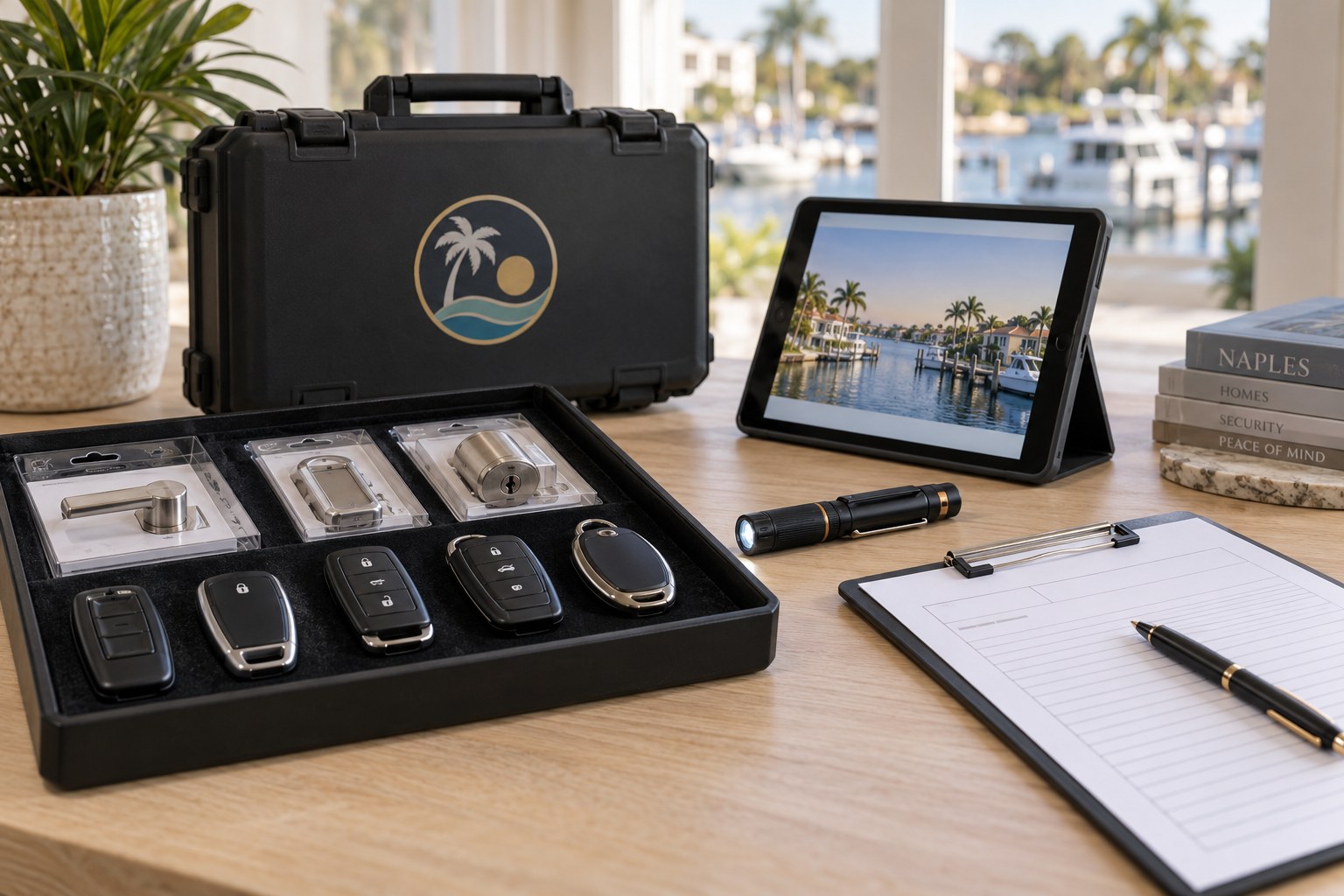
It happens in every household. Someone empties the pockets in a hurry, and a few minutes later you hear a faint clunk inside the drum. A remote that has been through a full wash cycle is not always finished, but the next hour matters. This page explains what to do right away, why trouble can show up weeks later, and how a shell swap or new fob fits in.
The first ten minutes after you find it
Stop the washer if it is still running, take the fob out, and resist the urge to press any buttons. Every press while the board is wet can send current through damp contacts, and that is how a recoverable fob becomes a dead one. If you can see the battery compartment, open it and remove the coin cell right away. Cutting the power removes the main way that water does harm while the parts are still soaked, and it costs you nothing but a minute.
Next, shake out the loose water gently and pat the case dry with a clean cloth. Do not blow into the openings with your mouth, since breath is warm and humid, and do not use a hair dryer on a hot setting. Heat can warp the plastic, loosen the glue holding the case, and cook the small chip that your car relies on to recognize the key. Cool, still air is far kinder to a wet circuit board than anything with a heating element.
If the case can be opened without force, open it and lay the pieces apart on a towel so air reaches the board. Take a photo of the layout first, because the battery orientation and the button pad are easy to forget. If the fob is sealed tight or the screws are hidden, leave it closed and carry on with the drying advice in the next section. Wet, small parts are fragile, so slow and careful is better than fast.
One more detail is worth remembering. If the fob was attached to a metal ring with a few other keys, check those too. Loose keys tumbling in a drum can bend, chip, or scratch, and a house key that has been knocked about may no longer turn smoothly in the lock. Look over each blade for burrs and rough spots, and try them in the lock gently before relying on them. A bent key forced into a door cylinder can cause a bigger problem than the wash itself.
Drying it the sensible way
The tempting answer is a bag of uncooked rice, and while it is better than nothing, it is not the best tool. Rice absorbs moisture slowly and leaves dust and starch that can settle into switches. A far better approach is to place the open fob in a container with a sealed packet of silica gel, the little desiccant sachets that come in shoe boxes and electronics packaging. They draw humidity out of the air around the board without touching it.
Whichever method you choose, patience matters more than the material. Give the fob at least two full days, and longer in a humid house. Southwest Florida air holds a lot of moisture, so a closed room with the air conditioning running is a much better spot than a screened porch or a garage. A laundry day is a bad time to also have an open window letting in warm, damp air from outside, and that hidden detail slows drying more than people expect.
While it dries, resist testing it every few hours. Each attempt reconnects the battery and can send a small current through any trapped droplets. Wait until you are confident everything is dry, put in a fresh coin cell, and then press a button while standing near the car. A blinking indicator light on the fob is a good early sign, but the real test is whether the doors respond from a normal distance. If anything seems off, stop and reassess.
Why corrosion shows up weeks later
The scary thing about a washed fob is that it can seem perfectly fine for a while. The reason is that water does not do all of its damage while the board is wet. Detergent, minerals in the tap water, and any salt or sweat on the fob stay behind as a thin film when the water evaporates. That residue draws moisture from the air, and over days or weeks it begins to eat the thin copper traces on the board.
In coastal Florida this slow process speeds up. Humid air supplies a steady source of moisture, and salt in the air gives the residue even more reason to cling. A fob that was working on Monday can start missing button presses by the next month, and then fail on a morning when you are already late. Because the fault arrives so long after the event, many people never connect it to the wash cycle they had forgotten about.
Signs to watch for include buttons that need several presses, a range that has shrunk to a few feet, an indicator light that flickers, or a new need to hold the fob against the start button. A faint green or white crust around the battery contacts is a clear warning. If you see any of these in a fob that took a swim, treat it as an unreliable key and plan a replacement before it fails on you.
Seasonal residents face a particular version of this problem. A fob that was damp when you closed up the house in spring may sit through a hot, sealed summer and be badly corroded by the time you return in the fall. If you cannot test your key before leaving, take the battery out for storage and keep the fob in a dry container with a desiccant packet. It is a small step, and it often decides whether the first morning back starts smoothly or with a call for help.
What a technician can learn by looking inside
A technician can open a fob that you cannot and look at things you would never notice. Under magnification, the board shows whether corrosion has started, whether the solder joints are intact, and whether the contacts that the buttons press are clean or coated. A quick cleaning with a suitable solvent and a soft brush can sometimes bring a lightly affected board back to a stable condition, and that is far cheaper in effort than a full replacement.
The chip inside the fob is the part your car actually trusts. It is separate from the remote buttons, and it often survives a wash even when the remote portion has failed. A diagnostic tool can read the chip and confirm whether the car still recognizes it. If the chip is alive, the fob can still start the engine, and you may only need a different way to lock and unlock the doors.
Whatever the finding, you will hear it described in plain language before any work begins. A technician will explain what is salvageable and what is not, and which option fits how you use the car. Ownership or authority over the vehicle is confirmed before programming, as with all of our work. If the situation is more than a quick check, a technician visits and the service call charge is explained before dispatch, so you can decide with the facts.
When a new shell is the right answer
Sometimes the circuit board is fine but the plastic case has been damaged. The wash cycle can crack seams, loosen the rubber button pad, or leave the case warped and unable to seal. In that situation, a replacement shell is a sensible and economical idea. The board, with its chip and its programming, moves into a new case, and the fob goes back to being sealed against moisture and sweat.
A shell swap works best when the original board is clean and responsive. The technician transfers the board carefully, checks the contacts, installs a fresh battery, and tests the buttons. Because the chip stays with the board, the car continues to recognize it, and in most cases no reprogramming is needed. You also keep the original fob feel, which matters to people who have carried the same key for years.
There is a catch worth knowing. The cut blade inside the fob is part of the key, and shell designs differ between vehicles, so the new shell has to match the old one exactly. A technician can check that the blade fits your door lock and ignition after the swap. If the old blade is worn smooth, it is also a good time to talk about cutting a fresh one from the vehicle code.
When a new fob is the better choice
There are cases where repair simply is not worth the effort. If corrosion has spread across the board, if the chip does not respond to the reader, or if the fob has been through several wet events already, a new unit is the more dependable choice. A fob is something you rely on when you are tired, in a hurry, or standing in the rain, and uncertainty in that moment is the real cost.
A new fob has to be matched to your vehicle, which involves the correct frequency, the right chip type, and programming that the car accepts. A technician can supply and program a fob for many makes and models, and the process involves confirming that you own the car or have authority over it. If your car has a limited number of keys already stored, the process also lets you decide whether to keep or remove the older, damaged one.
Removing the old fob from the car's memory is a smart security step. A key that has gone missing, been dropped in a lake, or simply stopped working should not remain a valid key for the vehicle. During programming, a technician can erase the old key so only the new ones start the engine. It is a sensible detail that many owners do not know to ask about, and it takes only a few moments.
Protecting a fob from the next laundry day
Prevention is mostly habit. Keep a hook, a bowl, or a small tray by the door where the fob always lands when you walk in, and make it a habit to check pockets before anything goes into the hamper. Households with children or several drivers benefit from a family rule, because the person who loads the machine is rarely the person who wore the pants. A quick pat of each pocket takes only a few seconds.
A silicone cover adds a modest layer of protection against moisture and drops, though it is not waterproof and should never be treated as a reason to go swimming with the fob. Fobs on a lanyard are easier to spot and harder to forget in a pocket. If you spend time at the beach, on a boat, or at the pool, a small waterproof pouch is worth considering for days when the key has to come along.
It is also worth having a spare. A second fob that stays safely at home means that a ruined key is an annoyance and not an emergency. If you only have one working key, it is better to get a spare made while the original still works than after it has failed. The process is more straightforward and less stressful when the car is still starting normally.
What to do if the car will not respond at all
If the fob has stopped working completely and you are locked out, start with the mechanical key. Most fobs hide a small blade that releases from the case, and that blade still opens the driver door on many vehicles, even when the electronics are gone. Look for a small slider or button on the edge of the fob. The door handle may have a cover over the keyhole, and the blade can usually lift it gently.
Starting the car may still be possible. Push button vehicles usually have a backup reading position, such as a pocket in the console or a spot near the start button, where the car can read the chip at close range without needing the battery. Hold the fob there, press the brake firmly, and try the start button. If the chip survived the wash, the engine may start normally, which at least gets you home or to a safe place.
If neither approach works, do not keep trying. Repeated attempts can wear down the car battery and create a second problem. Call us, describe the vehicle and where you are, and we will explain what is likely happening. Quotes are given by phone, and we ask you to call to confirm availability. A technician can then come to you, test the chip, and decide whether the fob can be repaired or needs to be replaced.
Keeping expectations realistic
It helps to be honest about what a washed fob can and cannot do. Some survive entirely, especially if the battery was removed quickly, the fob was dried slowly, and the chip was undamaged. Others fail within the hour. Most land somewhere in the middle, working for a while and then becoming unreliable. Because there is no way to predict which group yours belongs to, it makes sense to plan for a backup either way.
If your fob works after drying, treat it as borrowed time. Keep the mechanical key somewhere you can reach, consider a spare, and watch for the early warning signs described above. A fob that has been soaked is not a bad key, but it is a key with an unknown future, and a cheap precaution now can spare you a stranded morning later.
If you are unsure what to do, call us. Describe what happened, how long the fob was in the water, and what it does now. We will tell you whether a repair, a shell swap, or a new fob is likely, and we will explain the process in plain language. No pressure and no rush. The goal is a key you can trust again, not a bigger job than your situation calls for.
Finally, think about timing. A fob that fails at home on a quiet afternoon is a nuisance, while one that fails at a marina, a hospital lot, or a condo garage after dark is a real problem. If your key has been through the wash, decide now, while nothing is urgent, whether you want to repair it, replace it, or add a spare. Scheduling that work at a calm moment keeps the cost of the decision low and the stress lower still.
Frequently asked questions
Is rice really the best way to dry a wet key fob?
Rice is better than nothing but not the best option. It dries slowly and can leave starch dust. Silica gel packets in a sealed container pull humidity away more effectively. Remove the battery first, keep the fob out of heat, and allow at least two days in a cool, air conditioned room before testing.
My fob works again after the wash. Is it safe to keep using it?
It may be fine, but treat it as less reliable. Residue can corrode the board slowly, so problems often appear weeks later. Keep the mechanical key within reach, consider a spare, and watch for weak range or buttons needing repeated presses. If those signs show up, plan a replacement.
Can a locksmith just move my old chip into a new case?
Often, yes. If the board and chip are clean and respond to a reader, a technician can transfer them into a new shell and fit a fresh battery. The car usually keeps recognizing it without reprogramming. The new shell has to match your model, and the blade must fit the locks.
Do you need proof I own the car before programming a new fob?
Yes. Before programming or cutting keys, we confirm that the vehicle is yours or that you have authority from the owner. A registration or title and matching photo identification are typically enough. It is a short step that protects you and keeps the car from being programmed for someone else.
How do I find out what it will take to fix or replace the fob?
Call us with the make and general type of vehicle and what happened. Quotes are given by phone. If the job is complicated, a technician visits and the service call charge is explained before dispatch. Please call to confirm availability, and have your ownership documents ready.