
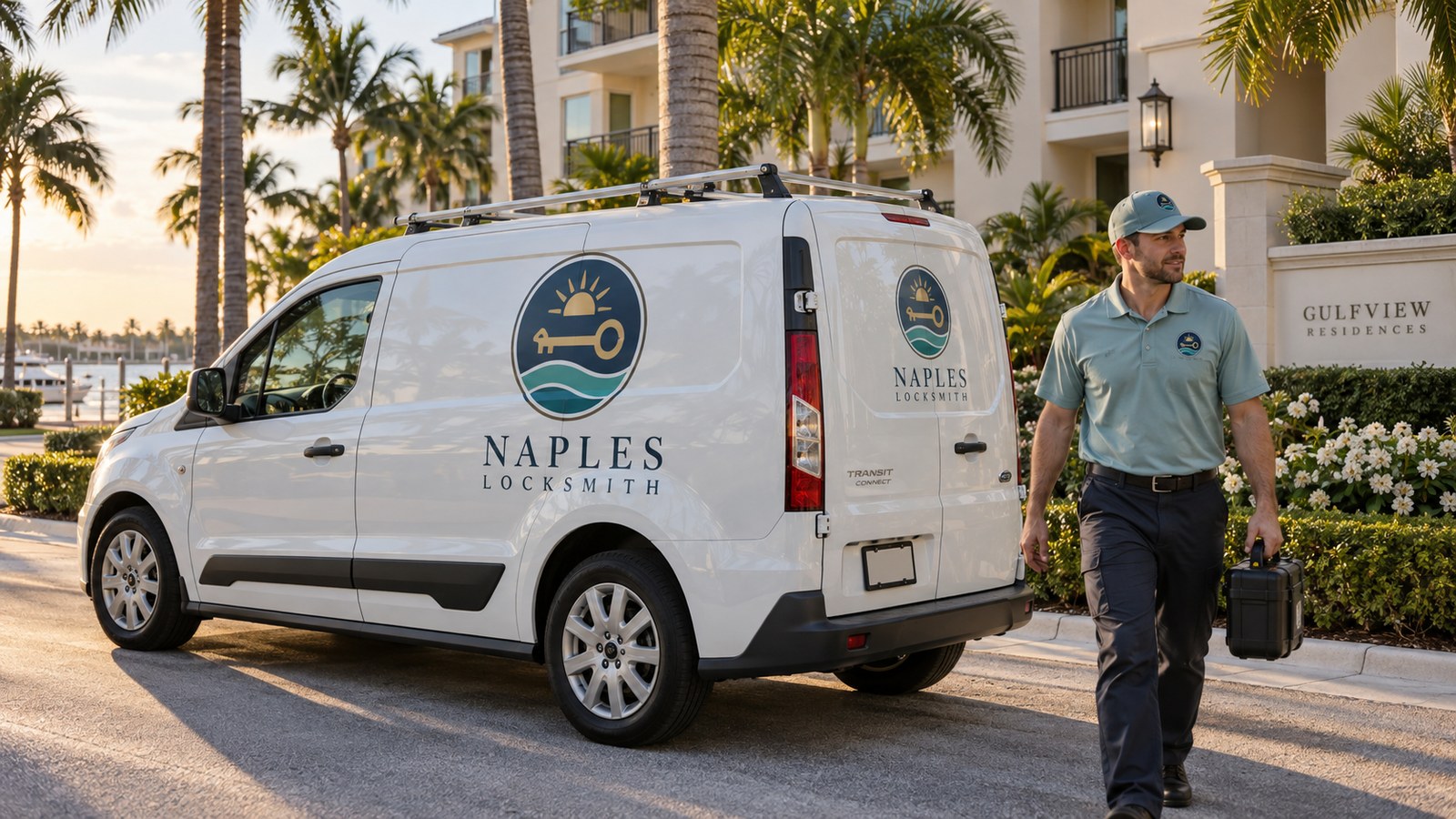
Golden Gate Estates is a patchwork of large lots, canals, culverts and unpaved roads, where the nearest neighbor may be out of earshot. A lockout there feels different from one in a town parking lot. This page explains how to give useful directions, how to stay safe while waiting, and how the terrain shapes the way a locksmith plans the visit.
What makes a rural lockout different
In a city, a locked car is an inconvenience with plenty of escape routes. A shop is across the road, a neighbor is a short walk away, and a rideshare can arrive in minutes. On a large Estates lot, the same mistake can leave you standing at the end of a driveway with a house locked behind you and nobody within shouting distance.
Distance changes everything about the planning. The technician has to find the property, get a service vehicle down the road, and reach the car. Road surface, gates, culverts and swales all affect how long that takes and where the vehicle can safely park.
It also changes what you should do while you wait. Instead of wandering into traffic or setting off on a long walk in the heat, you want a calm plan that keeps you comfortable and visible. A little preparation turns a stressful afternoon into a manageable one.
None of this is unusual for people who live on acreage. Residents tend to be self-reliant, and a lockout is just another puzzle to solve. The goal here is to give you a clear set of steps so the visit goes smoothly from the first phone call.
Giving directions that actually work
Street names in the Estates can be confusing to outsiders, because many roads look alike and numbering follows its own logic. When you call, begin with the address if you have it, but add landmarks. Mention the nearest cross road, a canal bridge, a mailbox color, a gate style, or a distinctive tree. The more you describe, the less time anyone spends guessing at a turn.
A map pin from your phone is extremely helpful. Share your location the way we ask, and read back the nearest intersection. If the property has a long drive, say how far the house or the car sits from the road, and whether the driveway is paved, shell, sand or grass.
If there is a gate, tell us the type and whether it needs a code. A gate you cannot open from the outside because your phone is locked in the car is a surprisingly common problem. Think about who can open it for the technician, and have that person ready by phone.
Finally, stay near the road at the agreed spot if it is safe to do so. A person visible at a driveway entrance is far easier to find than a house hidden behind palmettos and pines.
Staying safe while you wait
Heat is the biggest practical concern. Southwest Florida afternoons can be punishing, and a car that has been closed up in the sun becomes uncomfortable quickly. Find shade, preferably under a tree or a carport, and keep water with you if you have access to it. If anyone with you is a child, an older adult or a pet, their comfort comes before everything else.
Wildlife is part of life in the Estates. Snakes, insects and the occasional larger animal share the land. Stay on cleared ground, avoid reaching into brush or dark corners, and watch where you step when you walk the driveway. In the evening, insects get worse, so cover up if you can.
If the car is on a public road or a shoulder, keep away from passing traffic. Gravel roads kick up dust and vehicles may not expect a person at the edge. Stand well clear and let drivers see you. If the lockout has happened at night, light matters too, so use your phone flashlight when someone approaches.
If you feel unsafe for any reason, call emergency services. A lockout can usually wait for a locksmith, but your health and safety cannot.
Is anyone inside the car?
The most serious version of a lockout is when a child or a pet is locked inside. In that case, do not wait for a locksmith while the temperature climbs. A closed car in Florida sun can become dangerous within minutes. Call emergency services first, then call us. Rescuers are trained for this and have authority to act immediately.
A locksmith can still help in many cases and will treat it as urgent, but you should never delay an emergency call because you are waiting for us. We ask about this at the start of every lockout call, because the answer changes the plan completely.
If the person or animal inside is calm and the car is shaded and cool, you have a little breathing room. Stay near the vehicle, talk to them through the window if possible, and keep the doors, trunk and any open windows in mind. Do not break glass unless emergency responders tell you to.
For an empty car, a lockout is still worth treating quickly, but you can approach it without panic. Take a moment, check all doors and the trunk, and look for any spare key or app that might unlock the car before you call.
Quick checks before you call
Check every door on the vehicle, including the rear doors and the hatch. It is common for one door to be unlocked without anyone noticing. Try the trunk release from outside if the car has one. Run your hand around a loose window to see whether it sits tight. These simple tests take a minute and sometimes end the problem.
If your car came with a smartphone app, try it now. Many manufacturers offer a feature that can lock and unlock from a distance, though it needs a working account and a connection. In a remote part of the county, cell signal can be weak, so you may need to walk to an area with better coverage.
Think about spare keys. Is there one in the house? Does someone else have one who could bring it? A family member nearby can sometimes solve the problem faster than anyone else. If the spare is far away or locked in the same house you cannot enter, move on to calling us.
Be honest about what you tried. If you used a coat hanger, a wedge, or a tool, tell the technician. Forced entry attempts can damage weatherstripping or interfere with side airbags, and knowing what has already been done helps the technician avoid trouble.
How access conditions shape the visit
A technician plans the trip using everything you tell them. Road surface matters most. A well-packed shell road is fine for a service vehicle in dry weather. After heavy rain it can become slick or rutted, and low spots may hold water. If the road is questionable, the technician may need to park farther out and carry equipment to the car, which takes more time.
Gates, locked chains and cattle guards can all change the route. If a gate is locked, someone with the code must be reachable. If a culvert crossing is narrow, tell us so the vehicle can be chosen sensibly. Honest information at the start prevents a stuck vehicle and a wasted trip.
Distance also matters for the arrival, but we do not promise a particular time. Call to confirm availability, and we will explain what we can based on where you are and what the day looks like. In rural areas, the technician may need extra time to find the property, so patience helps.
If the access looks truly difficult, it is better to talk it through early. Sometimes meeting at a more accessible point, such as a paved road near your driveway, is easier than driving all the way in.
What the technician actually does at the car
Once on site, the technician confirms the vehicle and your authority, which we cover below. Then they assess the door. Most modern cars can be opened without damage using specialized tools that gently create a gap in the door frame and reach the interior handle or lock button. The approach depends on the vehicle design.
Care matters because modern doors hold wiring, airbags and electronic modules. A careless pry can bend a frame or damage a seal. A skilled locksmith works slowly, protects the paint, and keeps the tools clear of components that should not be touched. Expect a few minutes of quiet concentration instead of a dramatic moment.
After the door opens, check that nothing was disturbed. Lock and unlock it once, test the windows if they were involved, and make sure the alarm system behaves normally. If the alarm sounds, the technician will help you reset it.
If the key is inside the car, retrieve it before they leave. Consider making a spare if you do not already have one, since a lockout in a remote area is exactly the kind of event a second key prevents.
Ownership and authority on your own land
It may feel strange to be asked for proof at your own driveway, but the check is standard. The locksmith needs to confirm you own the car or are authorized by the owner before opening it. A license, a registration and a matching address are usually enough. If you are borrowing the vehicle, the owner should be reachable by phone to confirm.
In rural areas, vehicles often belong to a family member, an employer or a business. A truck might be registered to a company, or a car might be in a parent's name. Have the documents handy if you can, and be ready to explain how the car came to be in your hands.
If your documents are locked inside the car or the house, the technician will talk through other ways to confirm. Sometimes a utility bill, a photo on your phone or a call to the registered owner works. If there is real doubt, the work waits until the question is settled.
This approach is not meant to slow you down. It is the reason a locksmith can be trusted when the car is yours, and why the same process protects you if your own car were ever the target.
When a lockout turns into a key problem
Sometimes the lockout is only the first symptom. If the key is lost, not locked inside, the car must be opened and a new key made. On a transponder vehicle, that means programming a replacement to the engine system, which is a longer visit with special tools. A technician can do it at your property, which is a major advantage on acreage.
Other times the lock itself is the problem. A worn door cylinder, a stuck handle, or a failed actuator can leave a door that will not respond even with the right key. In that case the technician looks at the mechanism and explains whether it can be repaired on site or needs a shop.
Complicated situations may require a technician to visit and assess, and the service call charge is explained before dispatch. Standard lockout work is quoted by phone, based on your description. If conditions turn out differently than expected, the change is explained before work continues.
You remain in control throughout. If a proposed approach does not feel right, you can stop and choose another path. A good locksmith lays out options and lets you decide.
Preventing the next lockout on a big lot
The easiest prevention is a habit. Before you shut a car door, touch your pocket for the key. On acreage, where the nearest help is far away, that two-second check is worth the effort. Hang a hook by the back door for keys and train yourself to use it, and keep a spare in a safe spot that is not on the vehicle.
A lockbox mounted somewhere secure can hold a spare for family members. Choose a spot out of sight, with a code that you change from time to time. Avoid obvious hiding places such as a magnetic box under the bumper or a rock by the door. Thieves know all of them.
If your car has keyless entry, remember that the car can lock itself in some conditions with the fob inside. Learn how your vehicle behaves. Some models will refuse to lock when the fob is detected inside, others will not. Test it in a safe moment so you are not surprised on a bad day.
A spare key in the house, one with a trusted neighbor, and one in a lockbox covers almost every scenario. It is a small investment of time that removes most of the stress from a future mistake.
Hurricane season and storm-time lockouts
Storms change the landscape quickly in the Estates. Heavy rain floods swales, wind drops branches across driveways, and outages knock out gate openers. If a storm is approaching or has just passed, tell us what the road looks like, because it affects whether a service vehicle can reach you at all.
During evacuations or preparations, people move cars and boats in a rush, and keys end up in the wrong places. If you are packing a car and lock yourself out, take a breath. Standing in a storm is not worth the risk. Move indoors if you can, and call us when conditions allow a safe visit.
After a storm, vehicles sometimes show electrical trouble, particularly if water reached the cabin. A lockout may be a symptom of a battery that has died or an alarm system that has gone haywire. The technician can often tell the difference and advise on the next step.
Keep your phone charged, your spare key accessible, and a list of important numbers on paper. A few minutes of preparation before the season starts can save a long wait afterward.
Planning for neighbors who are far away
Distance between homes is part of why people choose the Estates, but it does mean that the helpful neighbor you would rely on in a subdivision may not be around. Think ahead about who could help. A friend two roads over, a family member in Naples, or a trusted caretaker can all serve as a backup contact.
Share your location with someone you trust when you head out on a long errand or a solo project on the property. A quick text that says where you are and when you expect to be back means somebody will notice if you go quiet. It is a small habit that helps in many situations beyond locked cars.
Keep a printed card in your wallet or a note in your phone with the number of a person who holds a spare key. When you are stuck and your phone is the only thing in your pocket, that single line of information may be the fastest solution. Preparing it now takes a minute and gives you real options later.
Frequently asked questions
Will you be able to find my property in the Estates?
Usually, if you give good directions. Share the address, the nearest cross road, a map pin and any landmarks such as gates, canals or distinctive trees. Having someone wait at the driveway entrance helps a lot. Call to confirm availability, and stay reachable by phone while the technician navigates the final turns.
What if there is a child or pet locked in the car?
Call emergency services first. A closed car in Florida heat becomes dangerous quickly, and responders are trained and authorized to act at once. Then call us. Do not wait for a locksmith while the situation worsens. We ask about this on every lockout call because it changes the plan completely.
Does the condition of my driveway matter?
Yes. Soft sand, deep ruts, standing water, narrow culverts and locked gates all affect where the service vehicle can go. Describe the surface honestly when you call. If access is difficult, the technician may suggest meeting at a firmer point or may carry equipment the last stretch to your car.
Do I need to prove the car is mine?
Yes. The locksmith checks ownership or authority before opening any vehicle. A license and registration usually do the job. If the papers are locked inside, tell the technician and they will explain other ways to confirm, such as a call to the registered owner. If doubt remains, the work waits.
How do I find out the cost for a rural lockout?
Quotes for standard lockouts are given by phone after you describe the car and your location. If the job is complicated and a technician needs to visit to assess, the service call charge is explained before dispatch. Call us to confirm availability and talk through what to expect on your road.