
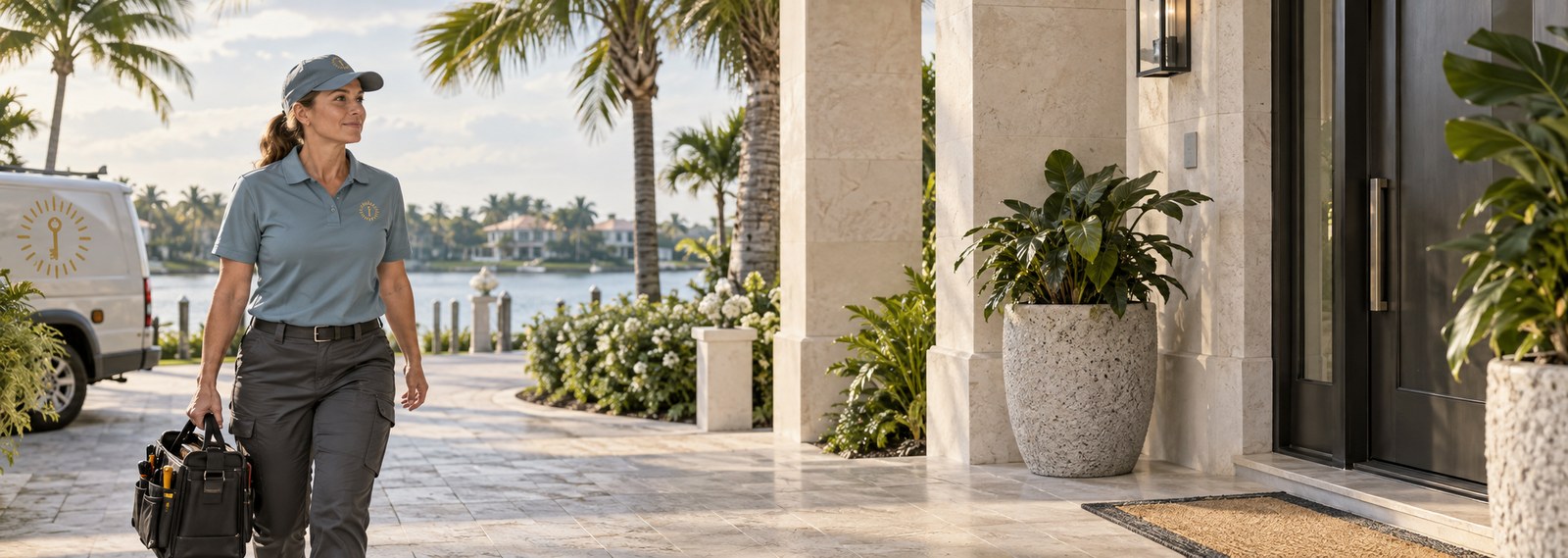
Moving out is a pile of small jobs, and the keys are easy to leave for last. Yet the way you hand over a home's locks affects your deposit, your reputation with a landlord and your own security. This checklist walks through every key, code and fob, whether you are leaving a rental, selling a house or closing out a condo.
Why the key handoff deserves its own plan
On moving day, attention goes to boxes, trucks and furniture. Keys come up at the very end, often when everyone is tired and the building is half empty. That is exactly the moment mistakes happen: a garage remote left in a car, a spare key in a drawer, a code that is never cleared. These small gaps cause surprisingly large headaches later.
For tenants, an incomplete handoff can lead to a deduction from the deposit, a rekeying charge or a dispute about whether the home was returned properly. For sellers, a stray key or code means someone you no longer know can still enter a home that now belongs to a stranger. For everyone, a clean handoff is simply good manners and good security.
The fix is to treat keys like any other item on the move: list them, collect them, hand them over and record it. An hour of planning, done a few days before the truck arrives, turns the last day into a check-off rather than a scramble. This guide gives you the list, in the order that tends to work best.
It also helps to decide who is responsible. In a family move, one person should own the key list so nothing is assumed. In a shared house, agree who collects keys from each roommate. Ambiguity is what lets keys slip away, and a single named person keeps everything accountable.
Start with an inventory a week ahead
A week before leaving, walk through the home and list every lock. Count front, back and side doors, the garage entry, sliders, gates, mailbox, storage room, pool gate and any shed or cabinet. Beside each, note what opens it: a key, a keypad code, a fob or a remote. This list becomes the backbone of your handoff.
Next, gather every key you can find. Check the usual hiding places: junk drawers, coat pockets, key hooks, car consoles, the kitchen counter bowl and any envelope marked spare. Ask each person in the household to bring theirs. Compare what you found with your list and with the number you were given at move-in, if you know it.
If keys are missing, say so early. Telling a landlord or manager before the final day gives them time to decide what to do, and it demonstrates good faith. Hiding the problem tends to turn a small matter into a bigger one. A missing key is usually solved by rekeying, which the landlord can arrange as part of turnover.
Check for keys that belong to others. Some households hold a neighbor's spare, a relative's key or a pet sitter's copy. Return them or tell the owner. Equally, think about who holds yours: a cleaner, a friend, a dog walker. Collect those keys now, since they are easy to forget once you have left the area.
- List every door, gate, mailbox and storage lock
- Note whether each uses a key, code, fob or remote
- Collect keys from every household member and helper
- Report missing keys early rather than on the last day
Codes, keypads and smart locks
Keypad and smart locks need special attention, because the access they grant is invisible. A code you gave to a cleaner or a friend remains valid until someone removes it. Before you leave, delete every user code you created, including temporary ones, and note which codes you leave in place for the landlord or the new owner.
If you installed a smart lock yourself, find out whether it belongs to you or to the property. In a rental, a lock you added generally needs the landlord's approval to stay, and you may be expected to restore the original. In a sale, a smart lock may be included or excluded in the contract. Clarify this before moving day, not after.
Disconnect your phone app and accounts from any lock that stays. Remove yourself as a user, delete the lock from your account and note the process in a message to the new occupant. Leaving a lock tied to your phone is both a privacy and a security risk, since it could allow you to open the door long after you have gone.
Gate codes and garage keypads count too. Tell the community office or management that your access should be removed, and reset any keypad that you personally control. Write down the codes you leave behind, and give them only to the person taking over. If you are unsure how to reset a keypad, call us, and a technician can help.
Garage remotes, gate clickers and fobs
Remote controls are among the most commonly forgotten items. A garage remote clipped to a visor, a gate clicker on a key ring and a building fob in a bag can all leave with you by accident. Each opens something that belongs to the home, and keeping them leaves a quiet gap in the security of the new occupant.
Gather them all. Check every vehicle, including those that are being sold or are already at a dealership. Look in beach bags, golf bags and drawers. If you have lost one, report it so the opener memory can be cleared, otherwise the missing device keeps working. This step is easy to skip and is genuinely important.
For community access cards and pool fobs, follow the association's process. Some require returning the item to the office and receiving a receipt, while others deactivate it remotely. Ask what is needed, and keep your receipt. If your building charges for unreturned items, a written note will help you contest any charge.
If you are the seller, include remotes in your closing checklist and hand them over with the keys. Buyers appreciate having everything in one envelope, labeled by door. It prevents the first week in the new home from being spent hunting for what opens what, and it reflects well on you.
The walk-through and the condition of the locks
Before you hand back the home, check the locks as the next person will. Does each key turn smoothly? Does each door latch properly? Do deadbolts throw fully? Are handles tight? Problems with ordinary wear belong to the landlord in most cases, but damage you caused may be your responsibility. Knowing the difference helps.
Humidity and salt air cause sticking and corrosion even in well-kept homes. A little dry lubricant on a sticky lock, a tightened handle screw or a cleaned track can bring a tired door back to working order. Do these small things if you can. They do not take long, and they reduce the chance of a deduction.
Photograph the condition of the doors, locks and frames on the day you leave. Wide shots of each door, plus close-ups of any scratches or damage, create a record. Date-stamped photos help if a disagreement about condition arises later. Take them before you hand over keys, since you may not have access afterward.
If a lock has failed during your stay, make sure the landlord knows and that the repair is documented. A lock that has been sticking for months and was reported is a different matter from damage found on the last day. Keep copies of messages about repairs, and mention them in the walk-through.
Handing keys to a landlord, manager or buyer
Return keys in person where you can, and get a written acknowledgment of what you handed over. A simple note that lists the number of keys, remotes and fobs returned, signed or sent by message by the landlord or manager, is enough. Without it, you may later be asked to prove that you returned them.
Do not leave keys in a mailbox, under a mat or inside the unit unless the landlord explicitly instructs you to, and then take a photo and get a message confirming. Keys left unattended can be taken by anyone, and the responsibility for that may fall on you. Direct handoff protects you as much as the owner.
If you are selling, the closing agent or real estate agent usually coordinates the key transfer. Confirm who will receive the keys and when. Remove any lockbox you installed and return its key to your agent. If the buyer plans to rekey, you can help by providing a full set and noting which door each key opens.
Provide useful notes alongside the keys: how a tricky lock works, where the spare is, which gate code applies. A page of tips saves the next occupant trouble. Keep it factual and short. Do not include codes in writing unless you are handing the page directly to the new owner or manager.
Ask for the new occupant's perspective if you can. A buyer or incoming tenant who intends to add a keypad, change a deadbolt or install a smart lock may appreciate knowing the make and age of the existing hardware, and the locksmith they call will too. A single sentence about the brand can save a lot of guesswork.
Should the locks be rekeyed after you leave?
In most cases yes, and it is normal practice. After tenants leave, a landlord who rekeys protects the next occupant from keys that may have been copied. As a departing tenant, you should welcome this, since it ends your responsibility for unknown copies. Do not be offended if a landlord rekeys, because it is a courtesy to the next person and a protection for you.
If you are a seller, the buyer will often rekey on closing day. You can make that easier by not holding back keys or hiding spares. A buyer who gets all keys and codes can rekey with confidence, knowing nobody else holds access. If you hold a copy after closing, return it or destroy it.
If you are the one staying, for example the roommate who remains after others leave, rekey as soon as the others have gone. It protects you from copies you do not know about. The technician will confirm you have the authority to approve the work, such as being named on the lease or owning the property.
Rekeying changes the inside of the cylinder so old keys no longer work, while the hardware stays in place. It is usually faster than replacing the lock, and the new keys fit the same door. For homes with several locks, you can have them all keyed alike, so one key opens everything.
Moving out of a condo, community or vacation property
Condos and planned communities add steps. Many require a move-out reservation for elevators, a deposit refund request and a return of every access device. Ask the management office for their checklist and follow it carefully, since buildings in busy areas often schedule moves tightly. Missing a step can delay your deposit refund.
Seasonal residents leaving for the summer are in a similar position without actually moving out. Before you go, secure doors and sliders, remove or reset codes you gave to temporary helpers and tell your property manager how to reach you. If a storm approaches, make sure someone can enter to check the property.
Vacation property owners ending a rental season should rekey or reset codes between seasons, collect fobs and update the house guide. Tell cleaners and maintenance workers about changes. A tidy transition keeps the next set of guests from receiving outdated information, and keeps your property from being accessible to people who no longer have a reason to be there.
Remember storage units, boat slips and parking permits. These often have separate keys, locks and access cards, and they are easy to forget because they live outside the home. Add them to your list, and return or cancel them according to the rules of each facility.
If something goes wrong on the last day
Even a careful plan can hit a snag: a key breaks in a lock, a deadbolt will not turn, a door is stuck after a damp week or a remote fails to clear. Do not force anything. Forcing a stuck key or a swollen door can turn a small repair into damage that affects your deposit. Pause and ask for help.
If you are locked out of the place while finishing up, a technician can open the door, subject to proof that you have authority. Bring identification and your lease or closing documents. If the home is not yours, we will check with the owner or manager first. This protects them and you.
If a lock fails and the landlord cannot be reached, document the problem with photos and messages. A locksmith can repair or replace a failing lock so you can leave the home secure. The technician explains the work, and quotes are given by phone for straightforward jobs. If a job is complicated, a technician visits and the service call charge is explained before dispatch.
Whatever happens, keep calm and keep records. Calls and messages with dates, a written receipt for returned keys and photos on the day of leaving give you a clear account of what you did. Please call us to confirm availability if you need help close to your move-out date.
One last thought about mail and deliveries. Forward your mail, update addresses with banks and delivery services, and remove the old address from any account that ships packages. A package left on a porch of a home you no longer occupy tells strangers the place is changing hands, and sometimes tempts a stranger to look around.
Final checklist, in order
Here is the sequence in short form. Inventory every lock and access item a week ahead. Collect all keys, remotes and fobs from every person. Clear user codes and disconnect apps. Lubricate and test the locks. Photograph doors and locks. Return everything in person and obtain written acknowledgment. Confirm rekey plans with the landlord or buyer.
On the last morning, walk the home once more with the list in hand, check each box and lock up in the order the landlord requests. Test that the final door locks properly behind you. Keep one photo of the closed door, and send your acknowledgment request right away so there is a record dated the day you left.
Afterward, update your own security. If you kept a key by accident, return it promptly, with a note. If your new place needs rekeying, schedule it before the first night. We confirm ownership or authority before any rekey, then test every key with you. A fresh start in a new home should begin with keys that only you hold.
Frequently asked questions
Do I have to return every copy of my key?
Yes. Return all copies, including spares given to friends, cleaners or relatives, and any remotes and fobs. Ask for a written note of what you handed back. If you cannot find a key, tell the landlord or manager early so they can decide whether to rekey.
Should I remove my smart lock when I move out of a rental?
Only with the landlord's agreement. A lock you added may need to be restored to the original hardware. Disconnect your phone app and delete your user codes in either case, so the lock no longer responds to your account.
What if I lost a garage remote or gate fob?
Report it as soon as possible so the opener or building system can clear it from memory. Otherwise the missing device keeps working. Follow your management office or landlord's process, and keep a written record of the report.
Will the landlord rekey after I leave?
Usually, yes, and it protects both of you. Rekeying makes old keys useless without replacing the hardware. It also ends your responsibility for any copies you may not know about, so it is a normal and welcome step.
What if a lock sticks on moving day?
Do not force it. Try a dry lubricant and gentle movement, and photograph the problem. If it still sticks, call us. A technician confirms your authority, repairs or replaces the part, and explains the work so you can leave the home secure.