
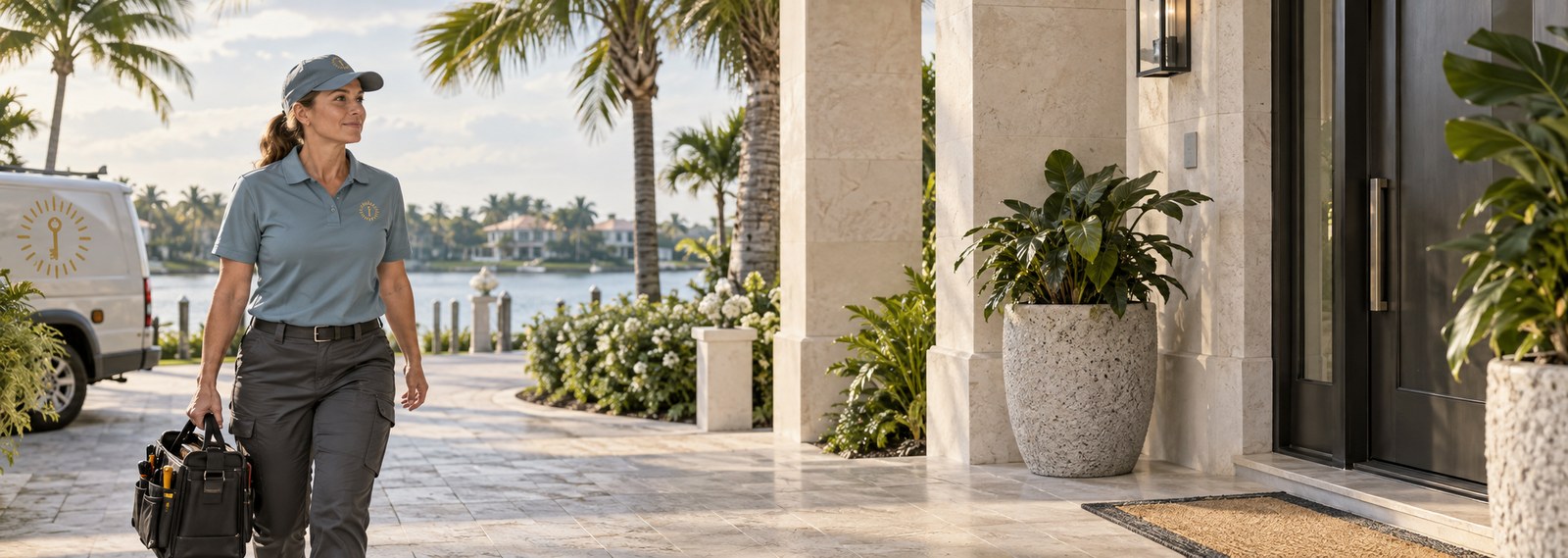
Townhome and villa clusters bring their own locksmith questions. Walls are shared, exteriors are often managed by an association, parking for a service van can be tight, and neighbors are close enough to hear a drill. This guide explains how we plan visits to attached homes, what rules usually apply, and how to get the most from rekeying and hardware updates.
How attached homes change the locksmith conversation
When houses stand apart on their own lots, the owner decides almost everything about the exterior. In a townhome row, that freedom narrows. The front door may be a specific color, the hardware may need to match, and the building envelope may belong to the association rather than to you. Before changing anything visible from the street, it is wise to read your community documents or ask the manager.
This is why rekeying is so popular in attached communities. It changes how the lock works without changing how it looks. Old keys stop working, new keys are issued, and the building appears untouched. A resident who just bought a unit, or who suspects a former tenant kept a key, gets a clean slate without involving a design review committee or altering a single visible part.
When you call, tell us whether you live in a townhome, a villa or a duplex style unit, and whether you own or rent. These facts affect who may authorize the work. We ask for proof of ownership or authority before opening, rekeying or replacing anything. Please call to confirm availability, and we will go over the plan by phone before a technician is sent.
Parking, carrying tools and being a considerate visitor
Tight parking is a regular feature of clustered housing. Streets are narrow, guest spots are limited, and some communities restrict where service vehicles may stop. A technician needs to carry a tool bag, a key machine in some cases, and replacement parts, so the nearer the vehicle can park, the more smoothly things go. Sharing parking details when you call helps us avoid circling the block.
If you have a reserved spot, a visitor spot or a spot on the street, mention it. If a gate or an access code controls the entrance to the community, let us know, and let the gate know a service visitor is expected. We will not block driveways, and we ask that residents not let a technician park in a fire lane. A bit of planning keeps neighbors comfortable and the visit short.
Noise is another consideration. Some work is quiet, like picking a lock or programming a key. Other tasks, like drilling a stuck cylinder or installing a new deadbolt, make more sound. Shared walls carry that sound. If you have neighbors with infants or shift workers, a mention up front lets us plan the order of work and finish loud steps quickly.
Lockouts in townhomes
A lockout at a townhome usually involves a front door, a back patio door or a garage entry. The technician starts by identifying the lock and the way the door is hung. Many townhome front doors are metal or fiberglass with a standard deadbolt and a handle set, and these can usually be opened without damage using the right picks or bypass tools.
Rear doors often open to a small enclosed patio or lanai, and these tend to be sliding glass or French style doors. A sliding door is opened with different tools, and care is needed to avoid scratching the glass or bending the frame. If you still have a way in through a different door, tell us. Sometimes a spare key held by a neighbor solves the whole problem.
Before we open anything, we confirm your authority. For an owner, an identification with the address works. For a tenant, a lease or a message from the owner or manager is needed. For a guest or a family member, the owner usually has to confirm by phone. This takes only a few minutes and ensures that every opening is legitimate, which protects residents and neighbors alike.
Rekeying a unit after you buy, rent or sell
Turnover is the most common reason to rekey a townhome. A new owner has no idea how many keys the previous owner handed out. A landlord between tenants wants to know that the last renter cannot return. A seller preparing a unit for showings wants a simple key arrangement for agents. Each of these is a clean case for rekeying, and each can be done quickly.
The technician removes each cylinder, replaces the internal pins to match a new key, and reinstalls it. Front door, back door, garage entry and any side lock can all be keyed alike so one key does everything. If a lock is badly worn or damaged, the technician will tell you and offer a replacement in a matching finish. You decide what to do before work starts.
Keep in mind that mailbox locks and community amenity keys are typically controlled by the association or the post office, not by you or by us. We do not change those. We focus on the locks that belong to your unit. If you are not sure whether a particular lock is yours, ask your manager, and we will gladly help with the ones that are.
Garage entries and shared driveways
Many townhomes have a garage on the ground level that opens straight onto a shared drive or a short apron. The overhead door may have a keypad, a remote or both, and the door from the garage into the house may be the real entrance used every day. As with other homes, this interior door deserves a solid deadbolt, since a person who gets into the garage has reached it directly.
A common weakness in clustered communities is the shared code or the shared remote. Remotes get passed along when units are sold, and keypad codes are rarely changed. Resetting the code and reprogramming remotes ends that exposure. The details depend on the opener model, and we can help you with the lock side while a garage door company handles the opener itself if it needs repair.
If your garage has a manual side door, check its lock and its strike. These doors are often secured with a simple knob lock that has been in place since the building was constructed. A better deadbolt with a reinforced strike makes a visible difference. We can also rekey it to match the rest of your unit so you carry fewer keys.
Patio and lanai doors in attached villas
Many villas include a screened lanai, a small courtyard or a private patio. Doors to those spaces are often sliding glass, and they tend to be the most overlooked entrance in the unit. A hook latch alone is not much of a barrier, and a track full of debris gives the door a little play that undermines it further. Fortunately this is one of the easiest areas to improve.
A technician can clean the track, replace tired rollers and adjust the door so the latch seats properly. For extra protection, a secondary lock, a pin or a track bar can be fitted without changing the look of the door from the street. These additions are inexpensive compared with the cost of a break in and give you a second layer of resistance.
Screen doors and enclosures matter too, especially for privacy and for keeping out insects. A screen door latch that no longer catches leaves the screen banging in the wind. It can usually be repaired or replaced quickly. Check each latch occasionally, especially after a summer storm, and call if any door rubs, sticks or fails to hold. Small repairs are almost always simpler than emergency fixes.
Working with associations and property managers
Associations exist to keep communities consistent and well maintained, and most are reasonable about security improvements when asked politely. Typical rules cover exterior colors, door styles, hardware finishes and sometimes the timing of work. Before replacing a visible lockset, find out what your documents say. A short email to your manager often settles it, and it prevents awkward letters later.
If a manager or a board member calls us on behalf of a resident or of the association, we ask who is authorizing the work. For common area doors, authorization comes from the association. For individual units, it comes from the owner. We keep the two clearly separate. A manager cannot give consent to rekey your private unit unless you have granted that right, and we will not assume it.
Landlords with units in these communities have an additional point to consider. Tenants have a right to reasonable privacy, and a lock change during a tenancy should follow your lease and local rules. We ask for lease details when relevant. If a tenant is moving out, rekeying after they return the keys is the standard approach. The paperwork is simple, and a thoughtful process avoids disputes.
Vehicles parked on the street or in the driveway
In townhome communities, cars are often parked in tight spaces, on the street or in a short driveway that leaves little room to work. Vehicle lockouts and key replacement still happen on site, but the technician needs to reach the doors and, for programming, sometimes sit inside the vehicle. If you can, make a little room around the car before we arrive.
Tell us the make and general key type when you call. Some vehicles use plain cut keys, many use chip keys, and others use smart fobs. The more you can tell us, the better we can plan. We check ownership or authority by looking at your identification and a registration, a title or a rental agreement that matches the vehicle. Without that link, we cannot proceed.
Spare keys are worth making before you need them. In a household that shares a car, one lost key can strand several people. A spare stored at home and a second copy given to a trusted person gives you options when something goes wrong. If your key has become worn or its buttons no longer respond, mention it, since a replacement now is easier than later.
Humidity, sun and the wear on exterior hardware
Townhome entries are often shaded by overhangs or by the neighboring unit, but the humidity still finds them. Door hardware near the coast experiences constant moisture, and metal finishes can darken, flake or pit. The inside of the lock is affected too. Pins and springs gather corrosion, and the key begins to feel rough, which is a signal to act before it fails.
A simple routine can extend the life of your locks. Wipe handles with a damp cloth to remove salt and dust. Use a dry lock lubricant now and then. Avoid heavy oils and household sprays that leave a film. If a key does not enter smoothly or turns with effort, do not force it. A technician can service the cylinder or replace it before the key breaks inside.
The door itself deserves attention. Sun and heat cause doors to expand and contract, and a door that fit well last winter may rub in summer. Check that the latch lines up with the strike and that the deadbolt moves freely. If you have to push or pull to lock it, tell us. Adjusting a strike plate or a hinge is a modest job that restores smooth operation.
Security habits that fit close quarters
Living close to neighbors has benefits for security, since more eyes are around. It also means people know when you are away, and a unit with a stack of packages or a dark porch light stands out. Simple habits help: a timer on a lamp, a neighbor who collects mail, and a clear view of the front door from the street. These cost little and improve safety.
For keys, avoid hiding one in an obvious place. Neighbors, guests and workers see where you put it. Give a spare to someone you trust, or use a small lockbox with a code that you change after each use. Keep a short list of who has keys, and rekey when the list becomes unclear. A tidy key plan beats an expensive lock bought and forgotten.
If you travel, consider a keypad or smart lock on one door so guests, cleaners or family can enter with individual codes. Remove codes when they are no longer needed. We can discuss the tradeoffs, including battery care and a mechanical backup. As always, quotes are given by phone, and if a job is complicated, a technician visits and the service call charge is explained before dispatch.
Front door hardware that suits a row of homes
When choosing a new lockset for a townhome front door, the decision is a mix of looks, security and convenience. Because a row of homes tends to share a style, many owners pick a finish close to what their neighbors use, such as a dark bronze, a satin nickel or a polished brass. Matching keeps the association happy and the street looking tidy, and a quality finish rated for outdoor use lasts longer in humid air.
On the security side, the deadbolt matters more than the handle. A solid deadbolt with a full inch throw into a reinforced strike is the part that resists force. The handle set is mostly for opening and closing. A technician can check how far the bolt extends, whether the screws reach the framing, and whether the door itself is solid. Often the best improvement is a longer strike screw, a small and inexpensive step.
For convenience, keypad deadbolts and smart locks suit busy households, since no one needs to find a key while carrying groceries. They are worth considering for the door you use most. Choose a model that offers a physical key backup and replace batteries on a regular schedule. We can install the lock, set the first codes and show you how to add or remove codes later.
What happens during a typical visit
A visit starts with a call where we ask about your address, the door or vehicle, the problem, and who is authorizing the work. We then give a quote by phone for straightforward jobs. For larger jobs, a technician visits first and the service call charge is explained before dispatch. You decide whether to proceed, and nothing begins without your agreement.
On arrival, the technician checks identification and authority, looks at the lock or vehicle, and explains the plan. The work is done with attention to the finish of your door and the comfort of your neighbors. For a rekey, expect to see cylinders removed and returned. For a lockout, expect a quiet opening with minimal marks. For vehicles, expect a short programming sequence.
When the work is done, test everything. Use each key in each lock, open and close the doors, and make sure latches seat properly. Ask any final questions about care or spares. We want you to feel confident that your home is secure and that you understand what was changed. If anything does not feel right, tell the technician right away and we will address it.
Frequently asked questions
Can you rekey a townhome without changing the look of the door?
Yes. Rekeying changes only the internal pins of each cylinder, so the handle, deadbolt and finish remain the same. That is ideal where an association controls exterior appearance. You receive new keys, and any old keys stop working. We confirm ownership or authority before starting the work.
Where will the technician park in a tight community?
Tell us about visitor spots, guest parking or street rules when you call, and let the gate know a service visitor is coming if there is one. We avoid blocking driveways and fire lanes. The closer we can park to your unit, the faster and quieter the visit goes.
I rent my unit. Can I have the locks rekeyed?
That depends on your lease and your landlord. We ask for a lease or a message from the owner or manager showing that the work is authorized. If the owner approves, rekeying is straightforward. We cannot change locks on a unit without a clear right to do so.
Will drilling or lock work disturb my neighbors?
Many tasks, such as picking, key cutting and programming, are quiet. Louder work like drilling a damaged cylinder or installing a new deadbolt takes a short time. Mention neighbors who are sensitive to noise, and we will plan the order of work to keep the loud steps brief.
How do I get a quote for a larger job?
Simple jobs are quoted by phone once you describe the lock and the door. For complicated work, a technician visits and the service call charge is explained before dispatch. You will have the details before deciding. Please call to confirm availability for the time that suits you.