
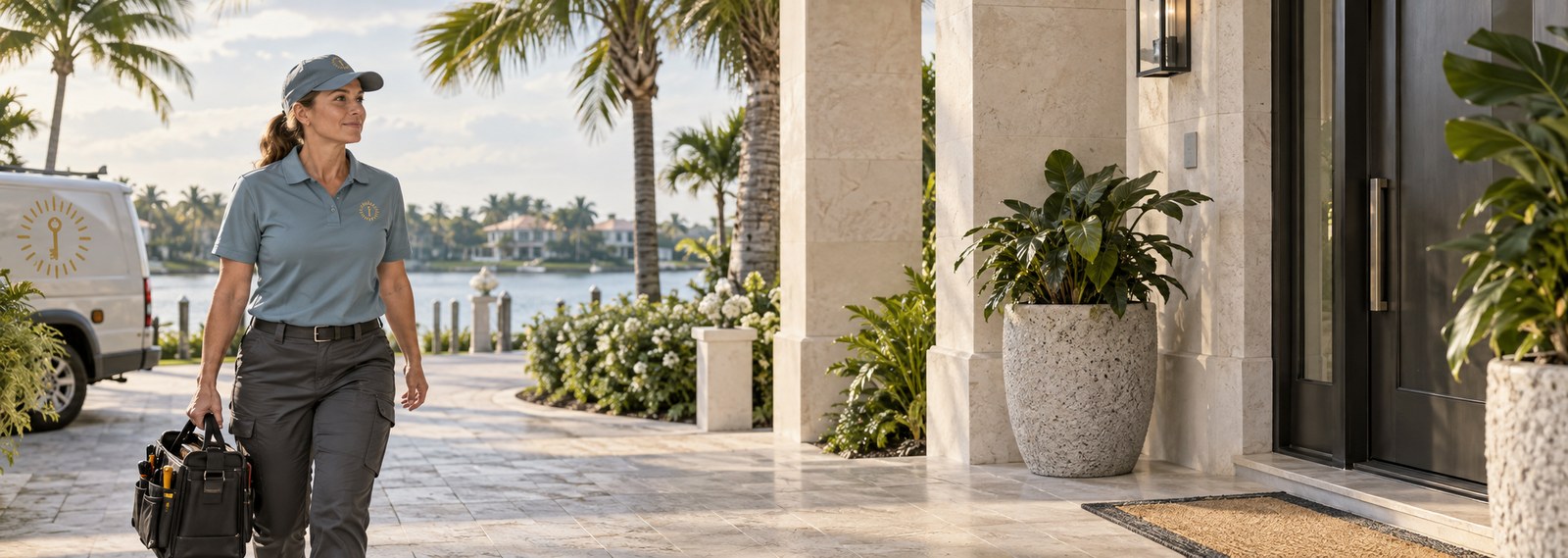
Golf villas with cart garages, screened lanais and owners who spend months elsewhere create a distinct set of lock needs. Keys get shared with managers and guests, electronic locks sit unattended, and the garage often holds more than a car. Here is how a mobile locksmith approaches these homes, what we check, and how to prepare before the season turns.
What makes a golf villa different from an ordinary house
A villa in a resort-style golf community usually sits close to its neighbors, shares walls or landscaping with them, and is surrounded by shared amenities. The residents may live there year round, but many are seasonal owners or renters who arrive in winter and leave once the heat settles in. That pattern of coming and going shapes everything about how the locks should be set up, from who holds keys to how often codes are changed.
The architecture also matters. Many villas have a front entry door under a covered porch, a garage with a wide opening for a vehicle and a golf cart, a lanai with sliding glass doors, and perhaps a side door to the garage. Each opening has a different kind of lock and a different level of exposure, and a good security plan treats them as a connected set instead of five separate problems.
When we visit, we try to see the whole picture first. We ask how the home is used, who has access, how long it sits empty and whether a management company or neighbor holds a key. That conversation guides our recommendations more than any single lock does. A thoughtful setup for a villa that stands empty for months looks quite different from a family home that is always occupied.
The cart garage and its side door
Cart garages are a special feature of golf communities. They hold the cart, its charger, perhaps a bicycle, beach gear and sometimes the family overflow of paint cans and holiday boxes. Because the space feels like storage, the access doors are often treated casually. Yet it connects directly to the house, so the garage door and its service door deserve the same respect as the front entry.
The side service door to a garage usually carries a basic latch. A technician can fit a solid deadbolt, add a protective plate around the edge of the door where the bolt passes through, and check that the door has no gap wide enough for a thin tool to slip in. These small additions make a noticeable difference and are well within the scope of a normal visit.
The cart itself is another consideration. Cart keys are small and easy to lose, and many carts share the same common key pattern across the community. We do not claim to handle every golf cart ignition, but we can talk about securing the cart in its garage, locking the interior door, and keeping the cart key apart from the house keys so a lost fob does not open everything at once.
- A deadbolt on the side service door of the garage
- A protective plate where the bolt passes through the door edge
- Cart keys stored apart from house keys
- A solid interior door between garage and living space
Lanai doors and screened enclosures
A screened lanai is one of the great pleasures of Florida living, and it is also one of the most overlooked security zones. The screen itself is not a barrier, only an insect shield. The real barrier is the sliding glass door behind it and the door that leads from the lanai to the screened enclosure. If the screen door has only a thumb latch, anyone can open it with a simple tool.
Better screen enclosure doors use a keyed latch or a heavy-duty deadbolt rated for lightweight frames. These are made for aluminum screen doors and sit neatly in the frame. A technician measures the door, chooses a compatible lock and installs it so that the latch lines up with the strike without rubbing. Salt air attacks cheap latches quickly, so we favor coated or stainless hardware.
Behind the screen, the glass slider needs its own attention. Roller wear, a dirty track and a weak factory latch all reduce security. We can adjust the door, add a keyed secondary lock, and fit a bar or pin to prevent sliding. Everyone in the household should still be able to open the door from inside quickly, which is why we keep the inside operation straightforward and intuitive.
Owners who leave for months
If you leave for the summer, your lock plan needs to work without you. Before you go, test every key in every lock and make sure each cylinder turns smoothly. A key that sticks in March will feel worse in October after months of humidity. A little graphite or a dry lubricant applied before you leave helps keep the pins moving, and it takes a minute.
Decide who will have access and why. A property manager, a neighbor, a pool service and a cleaner each need some kind of entry, but not all of them need a permanent key. Consider giving separate codes on an electronic lock so you can see and remove them individually. If you use physical keys, keep track of who has which copy and write it down.
We recommend a quick check before departure and again on return. If a lock has become stiff or a latch is out of line, a technician can fix it before it becomes a problem during a storm check or an emergency. Call us to confirm availability a little before your travel date, since the weeks before the summer exodus are often busy.
Property managers, cleaners and guest access
Many golf villas are rented to seasonal guests, and the access plan for guests is different from the plan for owners. A rental lock sees constant use and constant turnover. Keys disappear, codes get passed around, and the hardware takes more abuse than a private home would. Choosing the right equipment up front prevents repeated calls later.
Keypad deadbolts and smart locks are popular for rentals because codes can be changed between stays without cutting keys. A technician can set up the lock, program the codes and explain how to change them. Where a community or management company has rules for lock types or for providing master access, we follow those requirements and recommend checking with them before replacing hardware.
We confirm authority before we rekey or reprogram anything. A property manager can show a management agreement, and an owner can show ownership paperwork. If you are a guest locked out of a rental, the first call should be to the manager or owner, because they are the ones who can authorize entry. We are glad to help once the right person gives permission.
Community rules and exterior appearance
Planned communities often have architectural standards that cover exterior hardware. The color of a door handle, the finish of a deadbolt and even the style of a keypad can fall under association rules. Before installing anything visible from the street, check the community guidelines or ask the management office. A lock that does not match the rules can create trouble even if it works perfectly.
We cannot speak for any specific association, since rules differ and change. What we can do is recommend hardware in a range of finishes, such as brushed nickel, oil-rubbed bronze or polished brass, so you can choose one that fits the community standard. A technician can also advise which finishes stand up best to salt air and which tend to tarnish.
If your association requires a master key or keeps an emergency key on file, mention that when you call. Some communities hold keys for emergency access, and changing the lock without updating them could cause a problem. Good communication up front keeps everything simple and avoids a second visit to correct the paperwork or the hardware.
Humidity, irrigation spray and salt in the air
Even though a golf community sits a few miles from the beach, moisture still finds the hardware. Sprinklers throw water across walkways, mist settles on front doors in the early morning, and the Gulf of Mexico humidity never really leaves. Locks on exterior doors are exposed to this every single day, and the effect shows up as stiffness, corrosion and slowly weakening springs.
A lock facing an irrigation head will wear faster than one under a covered porch. If sprinklers hit a door, ask your landscaper to adjust the angle. The lock will thank you. When replacing hardware, choose finishes designed for outdoor exposure, and ask the technician about sealed cylinders, which resist moisture better than open ones.
Maintenance is simple. Twice a year, clean the keyway with a dry spray, work the key a few times, and wipe the latch face. If a key feels rough, do not force it. A broken key in a deadbolt is a frustrating job for everyone. If something starts to stick, call early and let a technician handle it before it fails entirely.
Electronic locks, batteries and the mechanical backup
Electronic locks are popular in villas because they give owners control without keys. Yet every battery-powered lock will eventually need new batteries, and a lock in a house nobody is visiting may run down unnoticed. The fix is a habit: change the batteries on a schedule, and keep a physical key in a safe place as a backup.
When we install an electronic lock, we confirm that the mechanical override works and that the owner knows where the key is. We also test the lock with the door open and closed, and set the codes with the owner present. A lock that only works when you remember an app password is a lock waiting to cause trouble at the worst time.
If the lock stops responding while you are away, a caretaker with a physical key can still get in. If nobody has one, you may need a technician to open the door, and we will check ownership or authority first. It is far easier to plan the backup in advance than to scramble from another state, so we encourage a simple, tested fallback.
Lockouts, lost keys and replacement cylinders
Villa lockouts often involve guests, spouses or visitors who do not have the right code. The calm approach is to contact the owner or manager first, since they can verify who should be inside. If you are the owner and have lost the only key, tell us where you are and what lock you have, and we will help you plan the entry.
We open most residential locks without damage, using picks or bypass tools. We check identification and some link to the address before opening. If a key has broken inside a cylinder, we extract the fragment with specialized tools and often rekey the cylinder at the same visit so the new key works smoothly and any other copies of the old one become useless.
For lost keys, rekeying is usually the safest answer. It changes the pin pattern inside the cylinder so any missing key stops working, and you get fresh keys cut to the new pattern. The existing hardware stays on the door, which keeps the appearance consistent with community rules and avoids replacing parts that still work well.
Hurricane season preparation for locks and doors
Every Southwest Florida resident thinks about hurricane season, and owners of seasonal homes think about it from afar. Before you leave, make sure the doors latch firmly and the strikes are tight. A door that rattles in its frame is under stress already. A technician can tighten hinge screws, replace short strike screws and check that the bolt engages fully.
We do not install shutters or certify products for wind ratings, and we make no claims about storm outcomes. What we can do is make sure the hardware on your doors is in good order, so that a caretaker can enter quickly after a storm and so that your keys and codes will work when you return. These are modest steps that can reduce stress.
After a storm, swollen frames and shifted doors may bind. If a deadbolt will not throw or a latch will not catch, do not force it. A technician can adjust the strike or the hinges and restore normal operation. Keep your key set organized and labeled before storm season so that anyone helping you can find the right key quickly.
Mailbox, pool gate and the small locks people forget
Beyond the doors, a villa has a handful of small locks that are easy to ignore until they fail. The mailbox is the first. A cluster mailbox lock or a private box on the street holds bank letters, replacement cards and other items that identity thieves love. If the key is lost or the lock is stiff, it deserves prompt attention, though some communal boxes are controlled by the postal service and not by us.
Pool and spa access is the next. Where a private pool has a fence or a gate, the latch needs to close and lock on its own, and it has to hold up against chlorine, sun and moisture. A technician can install or service a self-closing gate latch with a key or code, and explain what features matter. Rules about pool barriers exist for good reasons, so we encourage owners to confirm current requirements.
Storage cabinets, outdoor shower enclosures, and equipment closets round out the list. These often use inexpensive cam locks or padlocks that corrode in a season. Replacing them with weather-resistant options is a small job, and keying several of them alike cuts down the number of keys you carry. A short list of every small lock you own is a useful thing to bring to your next lock service visit.
Preparing for a call and getting a quote
When you call, describe the lock, the door and what is happening. If it is an electronic lock, mention the model if you know it. If you want rekeying, tell us how many locks and whether they should share a key. A few specifics help the technician arrive with the right parts and give you a more accurate quote over the phone.
For straightforward jobs, we give a quote by phone. If the situation is complicated, a technician visits first, and the service call charge is explained before dispatch. You will not be surprised at the door. We also ask you to call to confirm availability, since our schedule shifts through the day and we would rather be honest than make a promise we cannot keep.
Have identification ready and, if you are not the owner, a letter or document from the owner or manager. This is a standard step for all residences. After the work, we test every key and every code, show you how the lock operates, and leave you with a clear idea of what was done and how to maintain it.
Frequently asked questions
Can you secure the side door of my cart garage?
Yes. A technician can fit a deadbolt, add a protective plate on the door edge and check the gap around the door. We also advise on keeping cart keys apart from house keys. We confirm ownership or authority before installing new hardware on a home.
I leave for the summer. What should I do with my locks before I go?
Test every key, lubricate lightly with a dry product, change electronic lock batteries and decide who holds access. Consider separate codes for each person on an electronic lock. A technician can also check strikes and hinges. Call to confirm availability before your departure date.
Do you work with community or association rules?
We recommend checking your association guidelines before changing visible hardware. We offer several finishes so you can match the standard, and we can rekey without changing the exterior look at all. If the association holds an emergency key, tell us when you call.
Can you rekey a villa that guests have used?
Yes. Rekeying changes the internal pin pattern so previous keys stop working. We confirm that the person asking is the owner or an authorized manager first. Keypad locks can instead have their codes changed, which can be simpler between stays.
How will I know what a visit costs?
For straightforward jobs we give a quote by phone. When the work is complicated, a technician visits first and the service call charge is explained before dispatch. Please call us to confirm availability and to describe the job in as much detail as you can.