
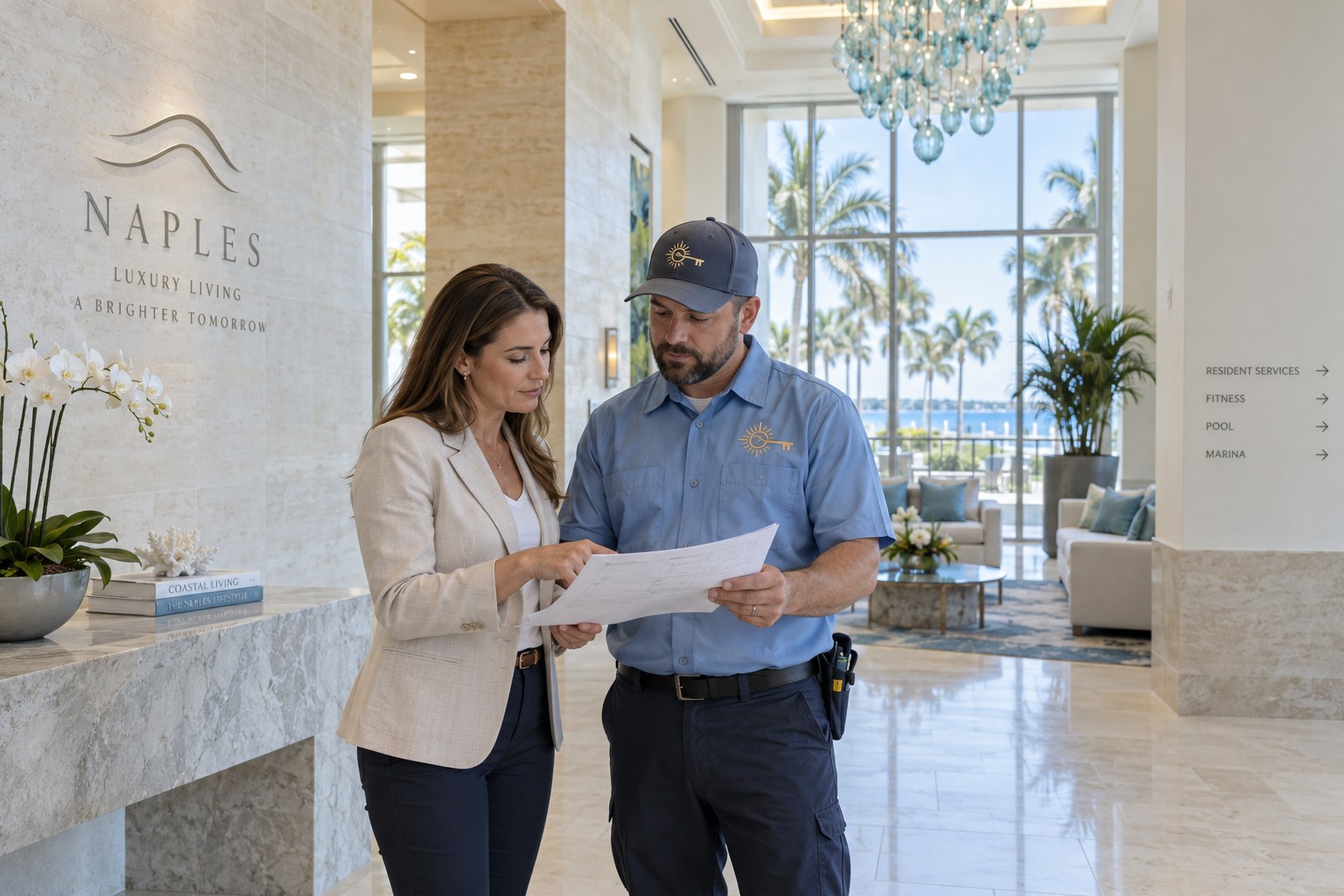
Wherever new homes, townhomes and commercial space are going up, locks are being installed for the first time and keys are being handed to people who do not yet know who else holds copies. This page explains what a locksmith does for new construction along Collier Boulevard: rekeying builder locks, setting up key systems, adding smart hardware and fixing the small problems new doors sometimes have.
Why a brand new lock still deserves attention
It is natural to assume a new house has secure locks. In reality, a home under construction passes through many hands. Framers, electricians, plumbers, painters, flooring crews, inspectors and salespeople all need access at different times, and the door hardware is frequently keyed to a construction key that circulates widely. By the time a family closes on the property, there may be more working keys in the world than anyone can count.
That is the reason rekeying after closing is one of the most sensible first projects for a new owner. The locksmith changes the internal pins of the existing locks so the builder keys no longer work, and new keys are issued to the household. The hardware stays in place and the result is a home where you actually know who can enter.
The same logic applies to a townhome or a commercial suite. Whether the space is residential or business, the people who built it do not need ongoing access, and removing it is a simple step that gives real peace of mind. Authority is confirmed before the work, which means the person requesting the rekey should be the owner or tenant.
What happens during a first-time rekey
A first-time rekey is a calm, orderly visit. The technician walks through the home with you, noting every exterior door, the garage entry, any side gates or storage doors, and any lock that needs to be keyed the same as the rest. The aim is to decide how many different keys you want and which doors share them before any work begins.
Each lock is then taken apart on the spot. The old pins are removed, new ones matched to a fresh key are installed and the lock is reassembled and tested. For most homes this is a quick process per lock, and when all exterior doors are keyed alike you end up with one key for the front, the back and the garage entry instead of a ring of identical-looking ones.
Before leaving, the technician tests every key on every lock and checks that deadbolts throw fully into the frame. This is also the moment to point out anything that needs attention, such as a strike plate set with short screws or a door that does not close squarely. New houses settle, and small adjustments early on are far easier than repairs later.
- Decide which doors should share one key before work begins
- Ask how many copies of the new key you will want
- Keep the old construction keys away from new ones
- Test every lock together before the technician leaves
Builder-grade hardware and when to upgrade it
Most production homes are fitted with serviceable but basic hardware, chosen for cost and appearance rather than long-term security. That does not make it unsafe, but it does mean there is room for improvement. Many owners choose to upgrade the front door deadbolt, the strike plates and sometimes the handle set during their first year of ownership.
The most valuable upgrade is often invisible. Replacing the short screws in a strike plate with long ones that reach the framing makes a door much harder to kick in. A reinforced strike, a quality deadbolt with a solid bolt and a door that closes tightly are the foundation of home security, and they can be improved in a single visit.
A locksmith can explain which upgrades are worth the effort for your home and which are matters of taste. If the existing hardware is adequate, the technician will say so and focus on rekeying and adjustment rather than selling something unnecessary. The tradeoff is simple: spend where it matters, and leave alone what already works.
Smart locks and keypads on new doors
New homeowners frequently want smart locks, and a growing community of families, rental hosts and busy professionals find them useful. A keypad or app-controlled deadbolt allows entry codes for family, guests and service providers, and codes can be cancelled when no longer needed. For a household with children or a regular cleaner, this can be more practical than handing out physical keys.
Installation is not just a matter of swapping hardware. The technician checks that the door and frame are aligned, that the bolt throws smoothly and that the lock fits the bore in the door. A smart lock on a door that sticks will be unreliable, so the physical fit comes first. Batteries, a backup key and a plan for outages are also discussed.
It helps to remember that electronics fail in ways keys do not. Keep a mechanical backup, change batteries on a regular schedule and understand how the lock behaves when power is low. Many owners keep one conventional entry in addition to the smart lock, so a dead battery never leaves anyone locked out. The locksmith can explain the choices without pushing any particular approach.
Townhomes, shared walls and community rules
Townhomes along a growing corridor share walls, parking and often an association. The front door and any rear patio door belong to the owner, but gates, common doors and exterior finishes may be controlled by the community. Before changing visible hardware, it is worth checking whether the association has rules about color, style or type, so that a lock upgrade does not run into a compliance letter.
Inside the townhome, the owner has far more freedom. Rekeying, smart locks and interior upgrades are generally a personal choice, and the locksmith can carry them out on the owner's authority. If the unit is rented, the tenant and the owner may need to agree on who can authorize changes.
Townhomes also have a tight garage and entry layout, which can create lockout situations. A door from the garage into the house, a patio door that closes behind you or a side gate that latches on its own are all common causes of being shut out. A locksmith can adjust or replace those latches to behave more predictably.
New commercial space and first tenants
Where homes grow, shops, clinics and service businesses follow. New commercial suites usually come with builder-installed locks on the storefront and rear door, and the keys may have been handled by many contractors. A new tenant should treat the suite as having unknown keys outstanding and rekey before opening the door to the public.
A locksmith visiting a new suite walks through the space with the tenant to plan a sensible key layout. The front door may be keyed to the staff, an office to a manager, and a storage room to a smaller group. Hardware that is lighter than the use requires can be upgraded at the same visit, saving a second trip.
Landlord authority often applies to exterior doors in a shopping area, so it helps to confirm who may approve changes before the technician arrives. The locksmith checks ownership or authority before rekeying, and where a landlord controls the door, coordination with the property manager keeps everyone's keys working.
Doors that settle, stick or fail to latch
New construction settles over its first year. Wood framing dries, concrete cures and soils adjust, and doors that hung perfectly at handover begin to stick, rub or fail to latch. In a humid Gulf climate, the effect is stronger, because swelling and shrinking add to the movement of a building that is still finding its position.
A common symptom is a deadbolt that does not quite line up with its hole in the frame. Owners push or lift the door to get it to lock, which wears the bolt and the strike. The proper fix is to adjust the strike plate, shim or tighten the hinges, or sometimes to adjust the door itself, so the bolt slides into the frame without resistance.
These repairs are usually modest and do not require new locks. Cleaning, adjusting and tightening is enough in most cases, and a locksmith can handle it alongside rekeying or other work. It is worth getting it done early, because a lock forced daily into a misaligned door is much more likely to fail unexpectedly.
Garage entries, side gates and outbuildings
A new property rarely has just one door. The garage may have a service entry, a side gate may lead to the back, and a shed, pool equipment room or storage closet may need securing. These secondary doors are often fitted with the weakest hardware, since they are not on the front elevation, yet they are as important to the security of the home as the front entrance.
A locksmith can review these entries and recommend appropriate locks for each. A garage service door benefits from a solid deadbolt and a reinforced strike, a gate from a latch suited to outdoor use, and a shed from a sturdy hasp and lock that resists moisture. Using weather-tolerant hardware keeps these from seizing in the humid air.
Keying these doors to the main house key, where appropriate, reduces key clutter. Where separate keys are better, such as for a pool service or a landscape crew, a different key limits what each person can reach. That small distinction can be the difference between a convenient system and an uncomfortable one.
Hurricane season, humidity and new hardware
Southwest Florida homeowners think about hurricane season each year, and doors are part of that thinking. A new door should close firmly, latch fully and have a deadbolt that engages into solid framing. Before the season, it makes sense to confirm that all doors are in good order and that storm shutters or protective panels operate smoothly with their hardware.
Humidity is a daily factor. New locks can handle it, but cleaning the keyway occasionally and using the right lubricant keeps them smooth. Salt air near the coast adds corrosion, so coated or stainless hardware serves better than plain steel, particularly on exterior doors and gates.
It also pays to know what to do if a lock jams during a storm warning. Do not force it, and call to confirm availability so a technician can advise. Having spare keys stored securely, not just in a pocket or a vehicle, means a lost key never becomes an emergency at the wrong moment.
Rental hosts and investors buying new homes
New homes and townhomes attract investors and owners who plan to rent them out, whether to seasonal visitors or long-term tenants. In both cases, key control becomes a business question. Each turnover means a new set of people with access, and the safest habit is to rekey or change codes between guests or tenants.
For short-term stays, a smart lock with unique codes for each guest is often easier than managing physical keys, as codes can be set to expire. A locksmith can install and configure such a lock and explain how it behaves when the battery is low, so the host is never surprised on arrival day.
For longer leases, rekeying at the start of each tenancy gives a clean slate. A locksmith can also set up the property so the owner, manager and cleaner each hold the access they need and nothing more. Authority is confirmed before any lock is changed, so both owner and manager should be ready to identify themselves.
Getting started: what to say on the phone
Calling a locksmith about a new property is straightforward. Say what the property is, how many exterior doors it has, whether you want them keyed alike and whether any are smart locks or have special hardware. Mention if the home is within a gated community or a building with access rules, since that can affect when and how the technician arrives.
For a rekey or a standard lock replacement, a quote is given by phone before dispatch. If the project is more involved, such as retrofitting many doors or solving a persistent alignment issue, a technician visits to assess it first, and the service call charge is explained before anyone is sent. Call to confirm availability for the day you prefer.
On the visit, expect to be asked to confirm that you are the owner, tenant or authorized agent. The technician then does the work, tests each lock and keys, and explains anything else worth knowing about the doors. You leave with working keys, a clear idea of who holds what and a home that is truly yours from the first day.
Model homes, sales offices and construction handover
Growth areas include temporary spaces such as model homes, sales trailers and lockboxes on unfinished houses. These places have unusual key needs: many different people must enter, often on short notice, and the keys change hands constantly. The builder or sales team needs a system that is convenient and still accountable.
When a model home is sold or converted, the locks should be rekeyed before the new owner takes over. Otherwise, sales staff, cleaners, designers and maintenance crews retain working keys to what has become a private residence. A locksmith can rekey the whole house in one visit, and the new owner receives a fresh set that no one else has.
At handover, a final check of every door is wise. Doors that were opened and closed hundreds of times by visitors often have loose hinges, worn latches or misaligned strikes. Tightening and adjusting these before the family moves in prevents the first weeks of ownership from being spent fighting a door that will not close properly.
Phasing upgrades over the first year
New owners often face a long list of things to do, and security upgrades can feel like one more expense. A sensible way to approach it is in stages. Rekey first, since it removes the largest unknown, then address the weakest entry, then add convenience features such as a keypad or smart lock as budget and need allow.
A locksmith can help prioritize. The garage entry, a sliding door and the back door often matter as much as the front door, and a short list of strike plates, deadbolts and latches can be done in one visit. The order depends on how the household lives, and a technician who listens will suggest something practical rather than a catalog of products.
Keeping a simple record helps too. Note which locks were rekeyed, how many keys were made and where the spares are kept. When something changes later, such as a new family member or a tenant, you can see at a glance what needs to be updated, and the next service call is faster.
Frequently asked questions
Why rekey a brand new home if the locks are new?
Builder and contractor keys often circulate during construction, and you cannot know how many copies exist. Rekeying changes the internal pins so those keys no longer work, while keeping your hardware. It is a quick, sensible first step for any new owner. The locksmith confirms your ownership or authority before starting.
Can all my exterior doors use one key?
In most cases, yes. Locks can be keyed alike so one key opens the front door, back door and garage entry. If you prefer separate keys for certain doors, such as a pool room or shed, that can be arranged too. The technician helps you decide before any lock is opened.
Is a smart lock a good idea on a new door?
It can be, if the door fits well and you keep a mechanical backup. A smart lock lets you issue and cancel codes without handing out keys. The technician checks door alignment first, because a sticking door makes any lock unreliable, and explains battery care and what happens when power is low.
My new door sticks after a few months. Is the lock bad?
Usually not. New buildings settle and humid air swells wood, so doors drift out of alignment. The fix is often adjusting the strike plate or hinges rather than replacing the lock. A locksmith can examine the door, correct the alignment and test that the bolt moves freely.
How do I know what a visit will involve before booking?
Call us and describe the property and doors. Standard jobs such as rekeying are quoted by phone before dispatch. If the job is complicated, a technician visits to assess it, and the service call charge is explained before anyone is sent. Call to confirm availability for your preferred day.