
The key goes in but does not want to turn. You jiggle it, lift the door handle, try again, and eventually it gives. That slow stiffening is a familiar story for vehicles parked near the Gulf, where warm moist air carries a fine layer of salt. This page explains what is happening inside the lock, what is safe to try, which lubricants help, and when the key is the real culprit.
What salt air does inside a small lock
A vehicle door lock is a tiny, precise machine. Inside the cylinder sit a handful of spring loaded wafers or pins that must rise to exactly the right height for the key to turn. Each of those parts is small, and each slides in a narrow channel. When moisture and salt creep in through the keyway, they leave a thin, gritty film that increases friction in every channel at once. No single part looks damaged, yet the lock as a whole feels rough.
Salt also encourages corrosion on metals that would otherwise last a long time. Brass, steel, and zinc alloys all react differently, and where two different metals touch in a damp environment, one of them tends to deteriorate faster. The result is a powdery white or greenish deposit that you may see on the key or around the keyway. That deposit is not just cosmetic. It takes up space and roughens the surface on which every moving part depends.
The slow pace of this process is what makes it easy to ignore. A lock that is slightly stiff in March is only a little worse in April, so the change never feels urgent until the morning the key will not turn at all. Catching the problem early, while the lock only feels rough, is much kinder to your wallet and your schedule than waiting for the day it seizes completely.
Why vehicles near the water suffer more
Naples sits beside the Gulf of Mexico, and the air here stays humid for most of the year. Salt travels inland on the breeze, which means cars parked in condo garages near the beach, on Marco Island, or beside a canal collect more deposit than cars parked well inland. Residents of waterfront homes often notice the effect on mailbox locks, gate padlocks, and boat hardware long before they notice it on the car, but the same chemistry applies to door cylinders.
Daily habits matter as well. A car that is washed regularly rinses away salt from the paint but may push water into the keyway at the same time. A car that spends the day at the beach collects spray, sand, and sunscreen on the door handle, and the key picks up some of that residue each time it goes into the lock. Vehicles that sit parked for weeks, such as those belonging to seasonal residents, develop corrosion quietly with no use to wear it smooth.
Even the interior is not safe. Humidity inside a parked car in a Florida summer can rise sharply, and ignition cylinders and trunk locks share the same environment. If your door lock is feeling rough, it is worth thinking about the ignition and the trunk as well. They often show similar symptoms, just a little later, because the door sees more weather than the rest of the car.
Signs the lock is wearing, not just dirty
It helps to tell a dirty lock from a worn one, because the fixes are different. A dirty lock usually feels gritty or sticky. The key goes in with some resistance and turns with a rough, scratchy feel, and it often improves for a while after you work the key in and out a few times. A worn lock tends to feel loose or inconsistent. The key may turn in one position and not another, or you may have to wiggle it to the exact angle.
Look at the key too. A shiny, polished area along the blade shows where metal is rubbing. A key whose cuts look rounded, smoothed, or shallower than a fresh copy is a worn key, and a worn key can behave like a dirty lock. Try your spare key if you have one. If the spare turns smoothly and the everyday key does not, the lock is probably fine and the daily key has lost its profile.
Other clues include a key that needs to be pulled out slightly before it turns, a lock that works better when it is cold in the morning than when it is hot in the afternoon, and a door that opens only on the second try. These point to a mix of wear and residue. They are also signs that you are close to a tipping point, so it is wise to deal with the lock before it fails on a day when you cannot afford the delay.
Cleaning a stiff vehicle lock safely
The safest first step is to clean the key itself. Wipe the blade with a clean cloth lightly dampened with rubbing alcohol, and use a soft toothbrush on the cuts to remove built up residue. Dry it thoroughly. A clean key may be enough to restore a smoother feel, and it costs nothing but a minute of effort. Do not use sandpaper or a file on the key, since removing even a little metal changes the cut and can make the problem worse.
For the lock itself, an electronics contact cleaner or a dedicated lock cleaner is the right tool, because these evaporate without leaving an oily film. Apply a short burst into the keyway, insert and remove the key several times, and wipe away anything that comes out. Protect the paint around the lock with a cloth, since some solvents can mark clear coat. Avoid soaking the area, and never flood the keyway with liquid.
Resist the urge to force a sticky key. Pushing hard, leaning on the handle, or using pliers on the key head can bend the blade or snap it, leaving a piece inside the cylinder. A broken key is a much larger problem than a stiff lock. If a key refuses to turn after gentle attempts and a cleaning, stop and call for help. A technician can often loosen a stiff cylinder in a few minutes and without damage when it is approached patiently.
It also helps to know which lock is acting up. If only the driver door resists, the cause is usually that door's heavy daily use. If every lock on the car feels rough, humidity is the more likely culprit. Passing this detail along when you call lets a technician arrive with the right cleaners and a plan, instead of discovering the pattern on site.
Choosing the right lubricant, and the wrong ones
Lubricant choice is where well meaning owners often cause trouble. Many people reach for a common spray lubricant that is wet and oily. It works for a week, then the oil attracts dust, sand, and salt, and the lock becomes gummy and worse than before. In a place with this much airborne grit, an oily film is a magnet for the exact material you are trying to keep out.
A dry lubricant is a better choice for most door locks. Graphite powder and PTFE based dry sprays leave a thin slippery layer that does not hold dirt. Apply a very small amount, work the key a few times, and wipe off the excess. Graphite is messy on light colored keys and surfaces, so a PTFE spray designed for locks is often cleaner for everyday use. Read the label for plastic safe wording, since some modern locks include plastic parts.
Quantity matters as much as type. A short puff is enough, and more is not better. Over lubricating pushes residue deeper into the cylinder and can reach the door latch or the electric lock actuator. If you are not sure which product suits your vehicle, ask before you spray. Using the wrong substance can make a later cleaning harder, and a technician has to remove it first before doing the real work.
When the key itself is the problem
Many sticky locks are actually caused by worn keys. Every time a key goes into a lock, a tiny amount of metal wears away, and over the years the cuts become shallower and rounder. A key that has been copied from a copy carries any earlier wear along with it, and each duplicate adds small errors. After a few generations, the blade no longer lifts the internal parts to the exact heights the lock expects.
Salt air accelerates this wear. A corroded key surface is rougher, which grinds against the internal parts and removes even more metal. Meanwhile, the lock itself is being worn by the same key. The two parts wear each other down together, and the result is a pair that no longer fits as designed. Replacing only one of them may not solve the problem if the other has also changed.
The remedy is often a fresh key cut from the vehicle code or from the lock itself, not from the worn one. A new key cut to the original specification will lift the internal parts correctly, and in many cases the lock feels better immediately. If the lock is also worn, it may be better to rekey or replace the cylinder. A technician can test both and tell you plainly which is the weak link.
A practical note for households with several drivers: the key everyone grabs first is the one that wears out first. Rotating to the spare occasionally spreads the wear, and it also confirms that the spare still works, which is worth knowing before you need it. A spare that has sat in a drawer through a humid summer can be as corroded as the daily key, so test it now and then.
Cutting a fresh key from the code
Every vehicle key is based on a code that describes the depth of each cut. When a locksmith has the code, a new key can be produced as it was meant to be, with no inherited wear. The code can often be found through the vehicle identification number with proof of ownership, or read directly from the lock by a technician with the right tools. Ownership is checked before any key is cut for a vehicle.
A key cut from the code tends to be noticeably more precise than a copy of a worn key. The blade slides in smoothly, turns without a fight, and releases easily. Owners often say the car feels newer after the change. That is not magic. It is just a key that matches the lock again, with no accumulated error in the cuts.
Many modern keys also contain a transponder chip, and a new blade alone will not start the engine. Cutting the blade and programming the chip are two separate steps, and a technician can do both at your location. Because Naples has many seasonal residents and second vehicles, it makes sense to have a clean spare cut before the main key wears out completely, rather than after.
When the cylinder itself should be serviced
If cleaning and a fresh key do not restore smooth operation, the cylinder may be worn or corroded inside. At that point, a technician can remove it, take it apart, and inspect each part. Light corrosion can sometimes be cleaned and the parts reassembled. Heavier damage may call for new internal parts or a replacement cylinder, matched to your key so you do not end up carrying extra keys.
Rekeying is another option when a cylinder is physically sound but the key has become unreliable. The pins or wafers are changed to match a new key, which also invalidates old copies. It is a practical solution if a key has been lost, or if you simply want a clean slate with a fresh set of working keys. The vehicle must be yours, or you must have authority to act for the owner.
Every case is a little different, and the right fix depends on what is actually worn. A technician will usually test the lock with a known good key first, then explain what they find. If the job is more than a quick visit, the service call charge is explained before dispatch, so you know the situation before anyone arrives. Quotes are given by phone, and we ask you to call to confirm availability.
Keeping the locks smooth through the humid months
A little routine care goes a long way in coastal Florida. Once or twice a year, clean your keys and lightly treat the locks with a dry lubricant. Many owners pick the start of hurricane season, and others choose the end of summer. Doing it on a schedule keeps small buildup from turning into a stuck lock.
Avoid habits that push moisture into the keyway. A pressure washer aimed at the door handle can force water deep into the lock. Wipe the handle area instead. Keep keys out of damp pockets and off wet counters, and rinse away beach salt before you handle them. Small changes like these reduce the amount of residue that ever reaches the lock.
Finally, treat the first signs of stiffness as a prompt for action, not a quirk of the car. A lock that begins to resist is telling you something. Responding early with a clean key, a dry lubricant, and a fresh cut if needed costs much less than waiting for a failure. If you would like a second opinion, call us and describe what you are noticing, and we will tell you plainly whether it sounds like a simple cleaning or a worn part.
What to expect when you call us
Tell us the make and general type of the vehicle, how the lock behaves, and whether the problem is on one door or all of them. Mention if the key feels rough, if it has been copied several times, and if you have a spare that works better. These details help a technician guess what is wrong before arriving, which saves time on the visit.
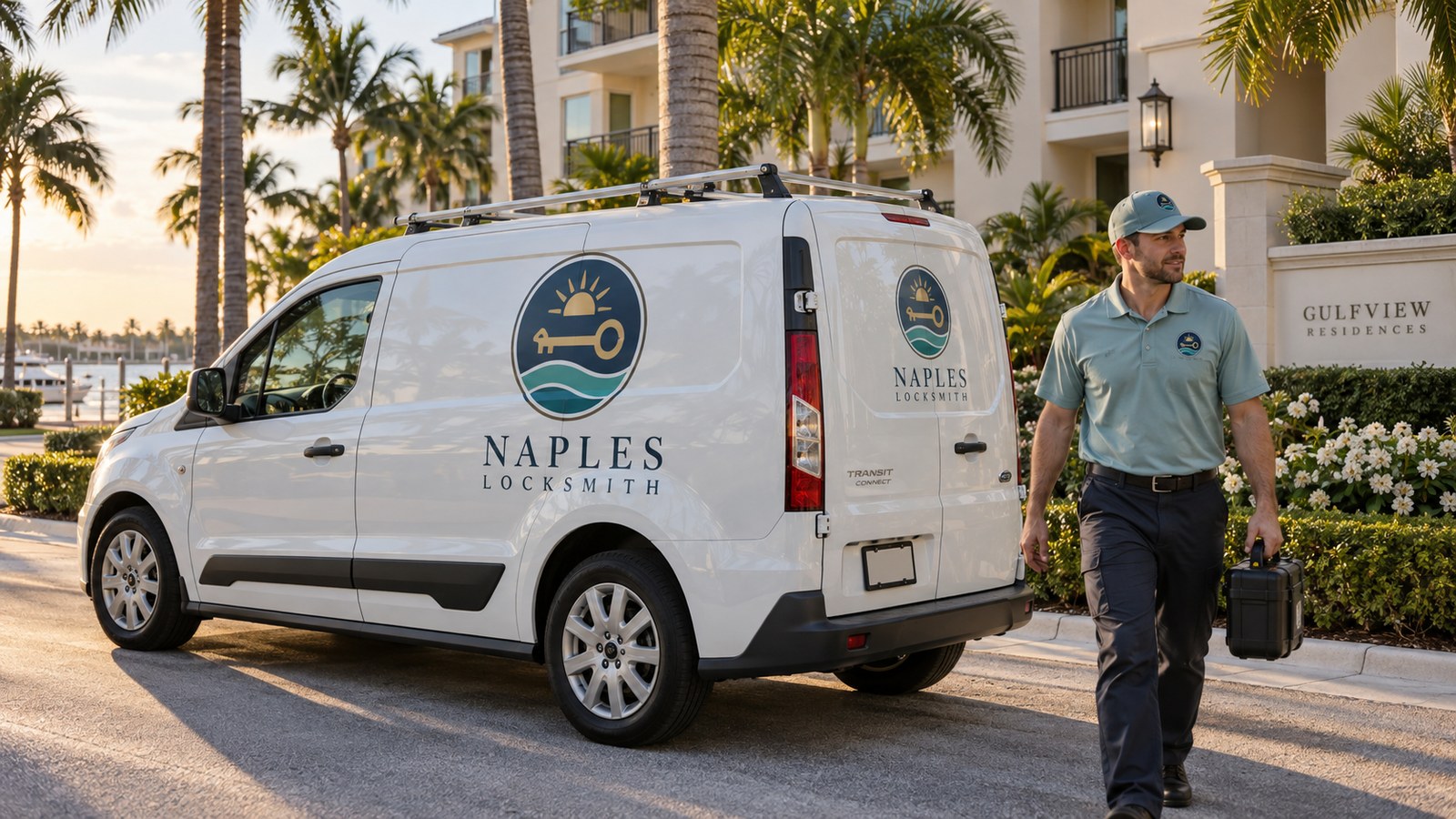
A mobile technician works at your location, whether that is a driveway, a condo garage, or a parking lot. The first step is to try your key and a known good one to compare. After that comes cleaning, lubrication where appropriate, and an honest recommendation on the next step. Before any key is cut or any lock is rekeyed, ownership or authority is confirmed.
You are never pushed to do more than the situation requires. Sometimes the answer is just a cleaning and a new key. Other times it is a cylinder replacement. Either way, you will hear what we found and what it involves before the work begins. Please call to confirm availability, and have your registration or title and a photo identification handy.
Frequently asked questions
Can I use a common spray oil on my sticky car door lock?
It is not the best idea. Wet oils attract sand, dust, and salt, and the lock can become gummy within weeks. A dry lubricant such as a PTFE lock spray or a little graphite is a better choice. Use only a short puff and wipe off the excess.
How can I tell if my key is worn instead of my lock?
Try a spare key. If the spare turns smoothly while your daily key sticks, the key has probably lost its profile. Look for shiny, rounded cuts along the blade. A fresh key cut from the vehicle code often restores a smooth feel.
Is it safe to clean a car lock myself?
Yes, if you are gentle. Clean the key with a cloth and rubbing alcohol, use a contact cleaner in the keyway, and wipe away residue. Do not force the key, sand it, or flood the lock with liquid. If it still sticks, stop and call for help.
Do I need a new lock, or can the old cylinder be saved?
Often the cylinder can be cleaned or rekeyed. A technician inspects it, tests it with a known good key, and explains whether it needs new parts or replacement. The vehicle must be yours, or you must have authority to act for the owner.
How do I get a price for this kind of service?
Call us with the vehicle type and what the lock is doing. Quotes are given by phone. If the job is more involved, a technician visits and the service call charge is explained before dispatch. Please call to confirm availability.