
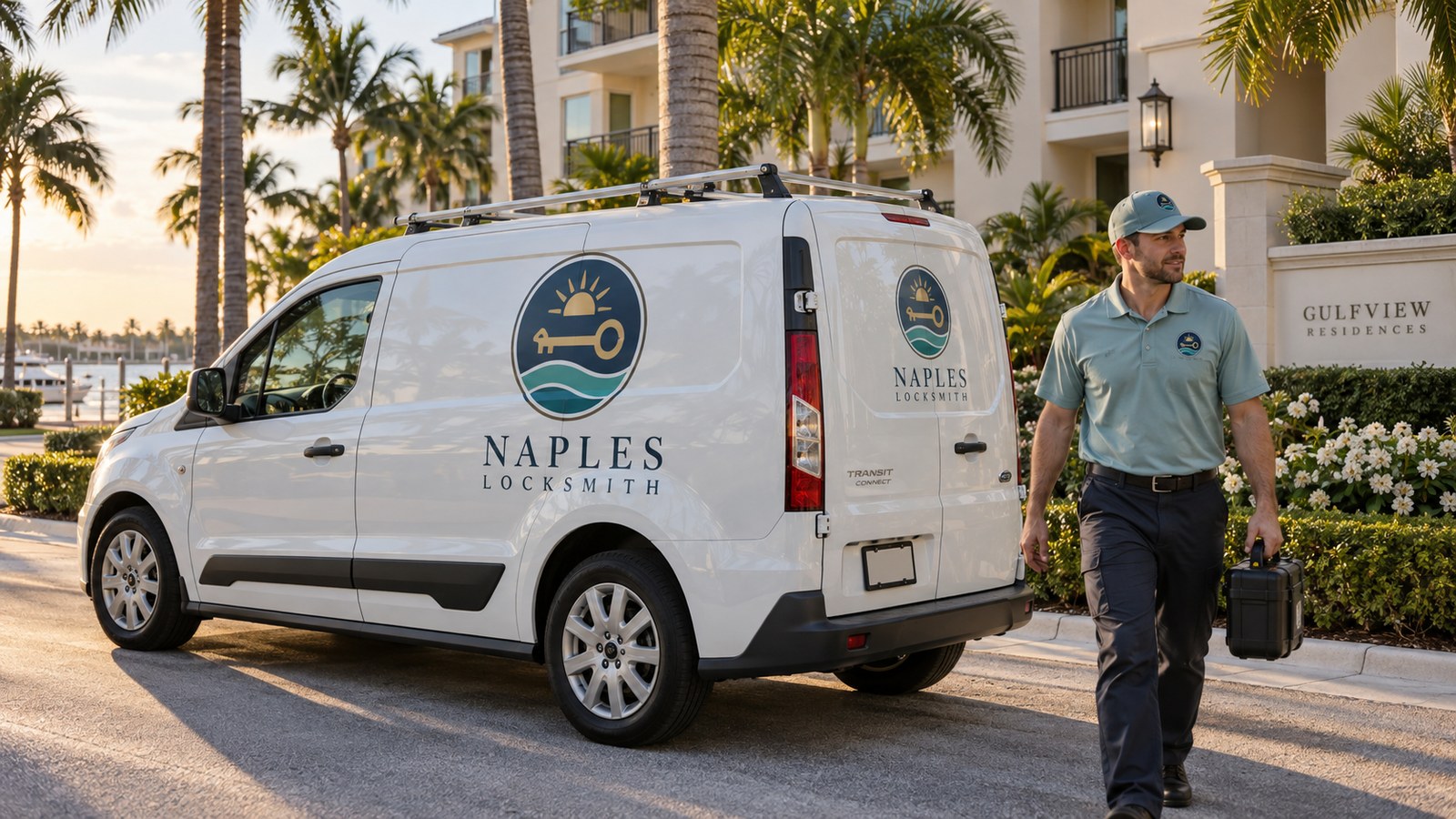
A brokerage in Southwest Florida handles a lot of other people's front doors. Vacant listings, seasonal homes closed for the summer, condos with strict access rules and new buyers waiting for their keys all pass through the office. This page covers tidy habits for lockboxes and showing keys, what to do after a sale closes and how a mobile locksmith supports the process.
Why showing access is a locksmith question
It is easy to treat a lockbox as a convenience and forget that it is a security device. A lockbox is a small safe holding a house key, hung on a door handle or gate, and opened by agents using a code or an electronic credential. Its job is to give the right person access at the right time without anyone physically handing over a key. When the process is orderly, that works well. When it is not, it gives away more than anyone intended.
The trouble usually builds quietly. Several copies of a key exist, held by the seller, a cleaner, a property manager, the listing agent and a stager. A lockbox is placed, moved and sometimes forgotten on a fence. Codes are shared by text and never changed. Nobody can say precisely who could enter the house last month, and the seller assumes the agents have it handled.
A locksmith helps in practical places: making sure the keys in the box work well, that the lock the box opens is in good shape, that copies are controlled and that the home is rekeyed when ownership changes. We do not manage showings, and we do not replace an office's own policies. We help make the physical side match the policy, so a promise of control is backed up by actual hardware.
Types of lockboxes and what they are good for
Lockboxes come in several types. Mechanical combination boxes open with a code that anyone can use if they know it. Electronic boxes open with a credential issued to a specific agent and can record who opened them and when. Some are shackle-style, hung on a doorknob, while others mount to a wall or post. Each has a role, and each carries tradeoffs in cost, convenience and traceability.
A mechanical box is simple and does not need batteries, but a leaked code stays valid until someone changes it. An electronic box gives a record and can disable lost credentials, though it depends on battery health and on the brokerage keeping its system current. Neither is perfect, and neither should be hung from a loose handle or an unsecured railing. How and where the box is attached matters as much as its type.
For a home in a gated community, there may be separate rules for the gate, the building and the unit. Condo associations commonly limit lockboxes and may require a specific arrangement or an on-site key. Always check community rules before placing a box. We can talk with you about the physical side, including secure mounting points, and the office remains responsible for compliance with association and market rules.
- Mechanical boxes: simple, no record of who opened them.
- Electronic boxes: traceable, but reliant on batteries and a managed system.
- Mounting: use a solid anchor point, not a loose or rotted rail.
- Community rules: check association requirements before placing a box.
The key inside the box has to work every time
An agent standing in the heat with a client at the door does not want to wrestle a stiff lock. Yet many listing keys are poor copies, cut from worn originals at a hardware counter without much care. A fuzzy copy can bind in the lock, jam half-turned or break. Keys that have been duplicated several times each lose a little accuracy, and the result can be a lock that works for one person and not for another.
Before a key goes into the box, test it a few times, in both directions and with the door open and closed. If it drags, the lock may need attention. Humid coastal air stiffens cylinders and dirty tracks, and a quick clean and lubricate often cures the problem. If the key is a poor copy, cut a fresh one from the original code or a clean original key, and discard the old one.
If the lock itself is worn out, tell the owner. A cylinder that is past its life can fail at the worst time, leaving a buyer standing on the porch and an agent making calls. A locksmith can replace or rekey it quickly, subject to confirming ownership or authority, which we always do. The home owner or authorized representative approves the work, and we explain the quote by phone beforehand.
Vacant and seasonal homes
Southwest Florida has many second homes, closed up for part of the year. Their owners are often out of state and rely on a property manager or an agent to open and check the house. Keys may be spread across a manager, a pool service, a lawn crew, a housekeeper and a family member. That creates a long tail of people with access, and no one has the complete picture.
Before a seasonal home is listed, review who holds keys and codes. Ask the owner to account for every copy. If the list is long or uncertain, rekey the locks and issue a small, labeled set of keys. This is not a sign of mistrust, but ordinary housekeeping. It also means that when the listing ends, the key situation is not worse than when it began.
Vacant houses draw attention. A lockbox on the front door tells a passerby that the property is empty and open to agents. Consider placing the box discreetly, and check the house between showings. Make sure doors are locked and windows are secure at the end of every visit. Our role is the hardware: working deadbolts, strikes that hold and keys that behave. The office handles the schedule and the people.
Tracking who has entered
Tracking works at two levels. The first is the lockbox record, if the box is electronic. It shows which credential opened it and when. The second is the office's own log, whether a spreadsheet or a showing system, listing every visit by agent, date and purpose. When the two are matched, any gap becomes easy to spot. A mechanical lockbox cannot provide the first level, so the second becomes essential.
Keys that exist outside the lockbox deserve their own tracking. A key sitting in a drawer is not logged by any box. Give each key a code instead of an address, store them in a locking cabinet and record each time one leaves and returns. If a key goes missing, flag it at once. We can advise on cabinet locks and the practicalities of key tags, and we are happy to discuss what suits an office your size.
When something does go wrong, a clear record shortens the conversation. Whether a seller reports a missing item or a neighbor reports an open door, the office can respond calmly with facts. It protects agents as well as owners. Many of these systems are not complicated, and they can be started in an afternoon with a notebook, a labeled cabinet and a short written procedure that everyone follows.
Rekeying after a sale closes
Closing day brings new owners, and they inherit every key that was ever cut for the property. Previous owners, tenants, contractors, agents and neighbors may all have copies. The most dependable answer is to rekey the exterior locks, so old keys stop working. It is quick, much less costly than replacing hardware, and gives the buyer a clear starting point.
Rekeying changes the internal pattern of the cylinder to match a new key, and it can usually be done on site in a short visit, with existing hardware kept. A technician will check ownership or authority before starting, which at closing normally means the new owner or their representative. A buyer's agent who suggests rekeying as a standard step is giving sound advice, and many new owners are glad to be asked.
Remember secondary locks. Garage entry doors, side gates, storage closets, pool gates, mailbox keys and any smart-lock codes all need review. A new owner may also want the keys in a single system, so that one key opens every exterior door. We can discuss that by phone. If the property is complicated, a technician visits first and the service call charge is explained before dispatch.
Condos, associations and building access
Condominium towers and managed communities add another layer. A buyer may need fobs for the lobby, elevator access, a garage tag and a mailbox key, alongside the unit key. Showings may require front desk coordination or an escort. Keys and fobs for a unit often belong to the association's system and cannot be duplicated by an outside party without approval.
When the unit door lock is a standard residential deadbolt, a locksmith can usually rekey it on request from the owner. Some associations control the unit lock as well, to maintain fire safety and emergency access. In those cases the board or manager decides what can be changed. We ask early about those rules so that nobody changes something that must be left alone.
Offices serving condo markets can save time by keeping a simple sheet for each building: front desk hours, fob rules, lockbox policy, rekeying permission and who to call. A shared document, kept current, is more useful than any individual agent's memory. We are glad to add what we know about hardware, but the rules themselves belong to the associations, and those should be followed carefully.
Lockouts during a showing
A lockout during a showing is embarrassing and avoidable. Common causes include a lockbox that will not open, a key left inside, a lock that binds or a deadbolt that someone locked from inside by mistake. The immediate steps are to stay calm, check other entrances with the owner's permission and call the listing agent or owner to confirm access.
If a locksmith is needed, the same ownership check applies. Whoever calls must show authority to approve entry, which could be the listing agent with the owner's consent, the owner or the property manager. We do not open a property because someone claims to be a buyer or an agent. We confirm with the responsible party first, and that protects the owner as well as the agent.
Describe the problem clearly. Tell us whether the lockbox is stuck, the key is jammed, or the door will not unlock. Complicated jobs begin with a technician visit, and the service call charge is explained before dispatch. Please call to confirm availability. Afterward, ask the technician what failed and whether the lock should be repaired, so the next showing goes more smoothly.
Hardware that suits a rental or listing property
Some listings benefit from a hardware refresh before going on the market. A tired deadbolt, a loose handle or a sticky sliding door lock can make a house feel neglected even when the rest is in excellent condition. Buyers often test doors without thinking about it, and a smooth latch gives a quiet impression of care. These are small items, usually inexpensive in relation to the sale.
Smart locks are increasingly common. Some sellers want a keypad lock that allows codes to be issued to agents and removed afterward. This can reduce the use of lockboxes, but it brings its own considerations: battery management, code control and compatibility with the door. We discuss these tradeoffs honestly and match the product to the door, not the other way around.
Before any hardware is changed in a home that is under contract, check with the owner and read the contract. Buyers sometimes expect certain items to remain. Replacement hardware should be similar in finish and quality. If the home is part of an association, confirm that exterior changes are allowed. We make no assumptions on those points, and we ask for confirmation before beginning.
Setting up a simple office procedure
A short written procedure is worth more than a long manual. It should say who may place and remove lockboxes, where keys are stored, how codes are changed, who is told when a key is lost and what happens at closing. One page is enough. Agents should know it, and new staff should see it on their first day.
Review the procedure each season, especially before the winter market when many seasonal owners return. Check that stored keys are labeled by code, that the cabinet locks and that departed agents no longer hold credentials. If staff turnover is high, change codes whenever someone leaves. These steps take little time, and they spare the office awkward conversations later.
When you want a second pair of eyes, call us. We can walk through your cabinet, your most-used lockboxes and your common listing locks, and point out what could be tidier. We confirm authority before any change to a property, and we give quotes by phone. It is a modest, steady kind of support, and it helps the office look as organized as it hopes to be.
Working with a mobile locksmith before and after listings
The best time to call a locksmith is before there is a problem. Add a quick hardware check to the pre-listing routine: test every exterior lock, look at the strikes, check garage and side doors, and test the keys that will go into the box. A short visit can catch the lock that is about to fail, and it removes one of the common causes of a failed showing.
Think about hurricane season as well. Many Naples listings sit through summer storms, and a house that has taken on moisture can leave doors swollen and locks stiff by the time a showing is booked. After any named storm, send someone to open each exterior door with the actual listing key, watch the bolt travel and note anything that drags. Salt air, wet frames and shifting soil all change how a door sits, and a quick check beats a surprise in front of a buyer.
Afterward, a locksmith can help at closing, with rekeying, new keys and a tidy handover. Many offices find it useful to keep a standing arrangement, so a single phone call starts the process. We confirm ownership or authority each time, give the quote by phone and explain the service call charge before dispatch when a technician visit is needed.
None of this needs to be heavy or formal. A listing office wants doors that open easily for the right people and stay shut for everyone else. With a few good habits and sound hardware, that is quite achievable. Call us to talk through your situation, confirm availability for your preferred time and describe the properties involved, and we will suggest practical next steps.
Frequently asked questions
Should a home be rekeyed after every sale?
It is a sound habit. Previous owners, tenants, agents and contractors may all hold copies of old keys. Rekeying makes those keys useless without replacing hardware. We confirm that the caller is the new owner or an authorized representative before starting, and we explain the quote by phone beforehand.
Can you open a house for an agent who says they are the buyer's agent?
Not on that basis alone. We check ownership or authority first, which means the owner, the listing agent with the owner's consent, or the property manager. This protects the owner and the agent. If we cannot confirm, we do not open the door.
Are electronic lockboxes better than mechanical ones?
They offer traceability and the ability to disable lost credentials, but they rely on batteries and a managed system. Mechanical boxes are simple but leave no record, and a leaked code stays valid until changed. Neither is perfect. Mounting and office procedure matter as much as the type.
What if the key in the lockbox does not work smoothly?
Test it in the lock several times. If it binds, the key may be a poor copy or the lock may need cleaning. A technician can cut a fresh key or repair the cylinder, with the owner's approval. A reliable key prevents most showing-day problems.
Do condo rules affect lockbox use?
Often, yes. Many associations restrict lockboxes, require front desk coordination or control the unit lock for fire safety. Check the building rules before placing a box or changing hardware. We ask about association requirements before working on a unit.