
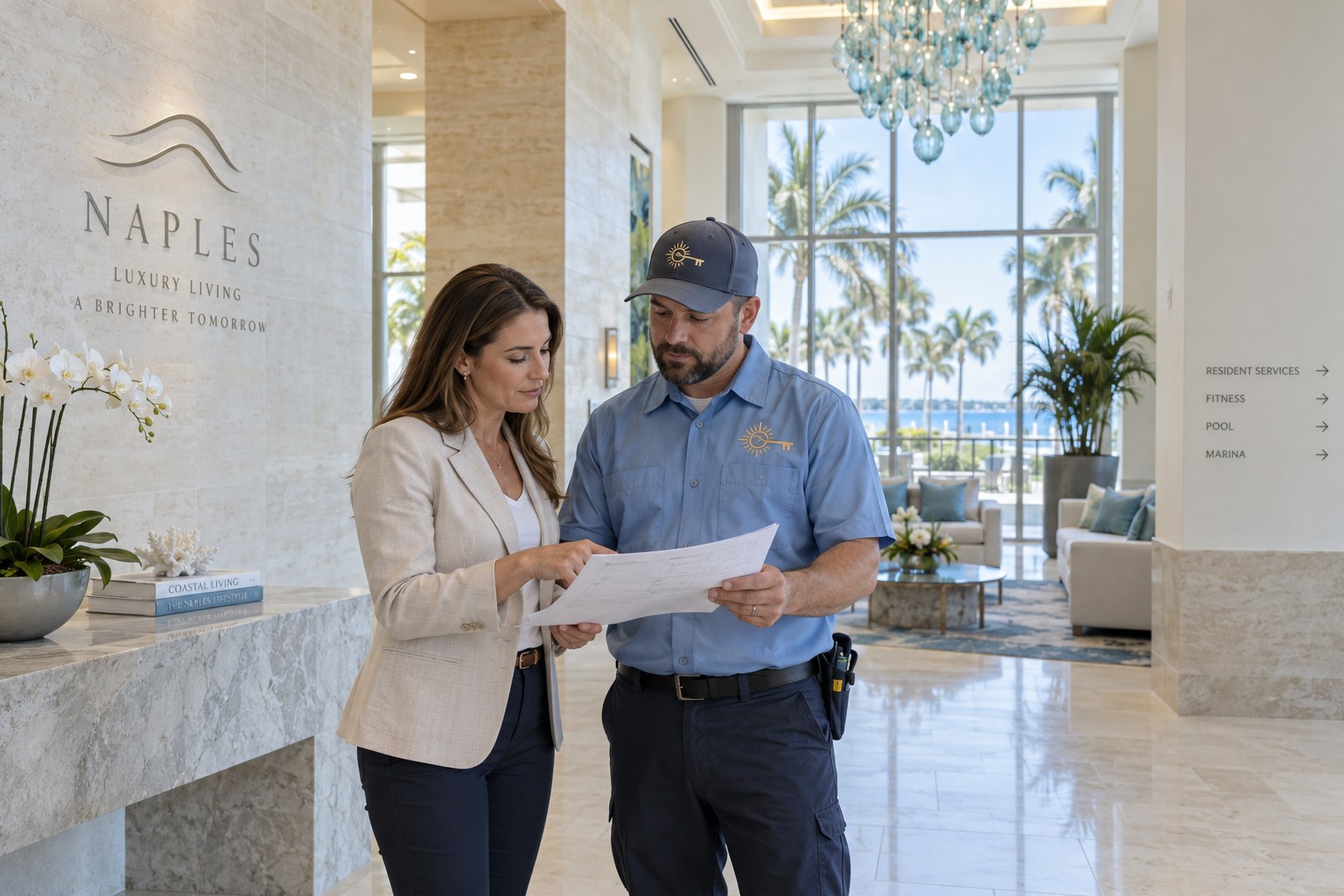
Homes that back onto preserve land offer quiet and a wide view, and they usually have big lanai openings to enjoy it. Those same openings are where lock concerns collect. Sliders, pocket doors and multi-panel walls of glass need sound latches and thoughtful secondary locks. Here is how a mobile locksmith approaches them, and what to do before and after a problem.
The appeal and the exposure of a preserve backdrop
A home that backs onto protected land has no neighbor behind it. The view stays green, the evenings stay quiet, and the lanai becomes the real living room. For many households this is exactly the point of choosing the area. The tradeoff is that the back of the house faces open ground rather than another yard, and that makes the back doors the ones to think about most carefully.
Nobody needs to feel anxious about this. The view cuts both ways, and the same openness that gives you privacy from neighbors also means fewer eyes on the back of the house. Good locks, a well maintained sliding door and a few sensible habits provide a calm and practical answer. The goal is a lanai that feels as safe as it looks beautiful.
Wildlife also plays a part. Preserve edges bring birds, raccoons, the occasional alligator near water and plenty of insects. Latches and screens that fail to close properly let in more than a draft. A door that does not latch is both a security issue and a comfort issue. When you call us, tell us how the door behaves, and we will look at both aspects of the problem.
How a sliding glass door lock actually works
Most sliding doors lock with a small hook that rotates out of the moving panel and catches a keeper on the frame. A lever on the inside turns the hook. Some doors add a keyed cylinder on the handle so the door can be secured from outside. The hook is strong when properly engaged, but only a few millimeters of overlap hold the panel in place, so alignment is everything.
Over time, the rollers under the door wear, the track collects grit, and the panel drops slightly. The hook may now sit lower than the keeper, engaging only a thin edge. The door looks locked but can be lifted out of its track or jolted loose. That is why a slider that feels loose, rattles or needs a shove to close should be inspected rather than ignored.
A technician checks the roller height, the track condition, the hook and the keeper. Often the fix is to adjust the rollers, clean the track and replace a worn hook or keeper. For doors that have been through years of use, a full roller replacement may be needed. After the repair, the panel should glide smoothly and the lock should engage firmly with a clear click.
Secondary locks that make a real difference
Because the factory hook is a small part, adding a second line of defense is the most useful upgrade for any slider. Options include a track bar that sits in the channel and blocks the panel, a pin lock that passes through the frame, a surface mounted keyed lock on the stationary panel, and a security bolt that locks the two panels together. Each has strengths.
A track bar is simple to use, though it needs to be placed each time. A pin or screw lock is fixed in place and takes a moment to set. A keyed surface lock offers the most security but requires you to keep a key handy. Some households prefer a mix: a track bar for daily use and a keyed lock for nights away. We help you pick something you will actually use.
Placement matters. A secondary lock should be installed where it resists levering and where it does not interfere with the screen door or the tracks. The technician measures carefully and drills only where necessary. For doors that face the preserve, we recommend corrosion resistant parts, since humidity will test them over the seasons. Ownership or authority is confirmed before we work on any door.
Multi-panel walls of glass and pocket doors
Some homes feature multi-panel sliding walls that open the lanai almost completely to the outdoors. These systems have several moving panels, sometimes stacking into pockets in the wall. Each panel may have its own lock, and often only one or two are meant to be the active locking points. Understanding which panel locks and which simply follows is the first step in any repair.
These heavy panels demand strong hardware. Rollers carry a large weight, and the lock mechanisms are more complex than on a basic slider. Repairs may require a technician to lift a panel from its track, which is awkward and risky without the right tools and a second person. For that reason, we recommend not attempting a heavy panel repair yourself. Call, describe the issue, and let us plan it properly.
Pocket doors that slide into the wall are quiet and attractive but can jam when debris falls into the pocket or the track warps. A locksmith can often adjust the latch and clear the obstruction. If a pocket door is stuck closed, avoid forcing it. A door forced out of line may damage the glass, the frame or the pocket itself. We approach these with care and a plan.
Lockouts on the lanai side
A common scenario is stepping onto the lanai to enjoy an evening and finding the slider locked behind you. If someone engaged the lock from the inside, you are stuck outside, perhaps without a phone or shoes. Another common version is a key that turns freely in the exterior handle cylinder but does not engage, because the lock mechanism is broken or the key is worn.
A technician can usually open a standard slider without damage using a bypass method. The details depend on the lock, and we avoid prying or lifting methods that can bend the frame or crack the glass. We ask about the lock type, whether the door has a secondary lock engaged, and whether the screen is closed. That helps us choose the right approach.
If you can reach your phone, stay somewhere comfortable and safe, and keep an eye out for insects and sudden showers. Have identification ready for the technician. If a child or pet is inside, let us know immediately. After the door opens, we discuss ways to avoid a repeat, such as a keyed outside handle, a lanai keypad or a spare key stored discreetly.
Screen doors, enclosures and pool cage entries
Many lanai spaces are enclosed with screening and have a screen door of their own, sometimes leading to a pool. The latch on a screen door is rarely a security feature, but it keeps insects out, keeps children in a safe area, and preserves the enclosure. Pool code rules in many places call for self closing and self latching gates and doors, and keeping those working matters.
Humidity, sun and chlorine in the air attack screen door hardware quickly. Latches stick, springs weaken, and door closers lose tension. We can service or replace a screen door latch and adjust a closer so that the door shuts reliably. A latch placed too low or too high can be an issue for safety, and we discuss options when children are involved.
If you have a pool cage, check its door each month. It should close firmly on its own and latch without a push. If it does not, repair it promptly. A cage door that stays open or cannot be latched is both a nuisance and a hazard. We can fit a keyed or keyless lock on the cage door if you want to restrict access when you are away.
Front entries and the rest of the house
While the lanai draws attention, the front door and garage entry still deserve a proper look. Inside a quiet residential community, it is easy to relax about the front. Yet an unlocked or poorly secured front entry is the easiest way into a house. Check that your deadbolt turns fully, that the strike plate is anchored, and that the door sits squarely in its frame.
Garage entries are the other main path. A keypad or remote can be misused if codes are not changed. The door from the garage to the house should have a solid deadbolt. We can review all of these in one visit, noting small improvements without trying to sell unnecessary parts. Honest advice is the point, and if your hardware is fine, we say so.
Windows also matter, particularly those on the preserve side. Window latches wear and can be stiff, and some window styles have no lock at all. A technician can advise on simple window locks or pins. The aim is a layered approach where no single door or window is the only barrier between the preserve and the inside of the house.
Hurricane season and large openings
Large glass openings are a prominent concern each storm season. Many homeowners install impact glass, shutters or panels to protect them. These systems often rely on locks and fasteners that must be maintained, and storm preparation includes confirming that you can secure every opening quickly. Check that shutter hardware turns easily and that any keys or tools are where you can find them.
After a storm, sliders can pick up sand, leaves and moisture, and tracks may be bent. Clear debris gently and test each door. If a panel binds or the lock does not catch, avoid forcing it. Call for an inspection. A door that is damaged but still closed can mislead you into thinking everything is fine when the latch is not seating properly.
In the weeks before the season, we suggest a quick review of every exterior lock. Replace weak latches, lubricate with a dry product, and update your key plan. Decide where spare keys will be during an evacuation and who needs access to the house while you are gone. A calm review in advance is better than rushing as a storm approaches.
Rekeying, spare keys and who has access
Over time, a home collects keys. Contractors, pool services, cleaners, relatives and previous owners may all have a copy. If you are unsure how many exist, rekeying is the sensible reset. It changes the internal parts of each lock so that old keys no longer work, without altering the look of the hardware. All your exterior doors can be keyed alike if you wish.
For sliders with keyed handles, the same idea applies. The cylinder in the handle can be rekeyed to match the rest of the house, so a single key opens the front door, the garage and the lanai. If the handle is worn or corroded, replacing it with a new handle set is a sound option, and the new one can be keyed to match.
Before any rekey or lock change, we confirm that you own the property or have authority to act for the owner. Seasonal owners or those who rent out part of the year may wish to rekey at the start of each season. A quote is given by phone for straightforward jobs. For complicated ones, a technician visits and the service call charge is explained before dispatch.
Vehicles at a quiet address
Quiet residential streets hide the same vehicle key problems as any other area. Fobs run out of battery, keys disappear into golf bags and beach totes, and a car locks itself with the key in the console. We deal with lockouts and spare keys at your driveway, without the need to tow. If you have a smart key, we can often program a replacement on site.
To prepare, locate your registration or title, and have your identification handy. We check ownership or authority before opening or programming any vehicle. Tell us the make, the general key type and what has gone wrong. A fob that works only some of the time can often be saved with a new battery or a repair, which is simpler than a full replacement.
Plan for spares. A second key kept at home is a safeguard against loss and a convenience when two people share a vehicle. If your only key is worn, programmed from a long time ago or has a cracked case, consider getting a fresh one before it fails. We can walk through the options and help you choose what is practical for your situation.
Privacy, glare and the habits of living on a lanai
Life on a preserve-facing lanai tends to be relaxed and open. Doors stay unlocked while someone is out by the pool, the slider is left ajar for a breeze, and the family drifts in and out all afternoon. Those habits are perfectly natural, but they are also when a door is most likely to be left unlocked at bedtime or when everyone leaves. A simple nightly routine of checking the lanai first solves most of it.
Some homeowners add a small indicator, such as a bright strip of tape or a simple reminder on the door frame, so everyone can see whether the lock is engaged. Others choose a keypad lock that locks itself after a short time. An automatic option removes the human factor, though it can cause lockouts when people step outside without a key. Weigh your household's patterns before picking.
Window film, blinds and curtains also play a role. Glare and privacy needs change through the day, and a door covered by thick drapes can hide the lock position from view. Make sure the lock handle is easy to reach and see. If you have mobility concerns in the household, tell us, and we can suggest lever style handles or locks that are easy to operate without hard twisting or gripping.
What a visit looks like
A visit starts with your call, in which we ask about the address, the door or vehicle, and the problem. We provide a quote by phone for simple work. If the job is more involved, a technician visits first and the service call charge is explained before dispatch. You make the decision once you have the information, and we do not begin without your agreement.
On arrival, the technician confirms your identity and authority, examines the door or lock, and describes the plan. The work is careful and tidy. For sliders, that includes protecting the glass and cleaning the track. For lockouts, it means a quiet opening with no damage. For rekeys, it means returning every lock to perfect working order.
At the end, you test every lock and every key. Open and close each door, try the secondary locks and ask any lingering questions. We recommend a short routine of cleaning tracks and wiping hardware a few times a year. Done regularly, it keeps a lanai door gliding smoothly and a lock turning cleanly for a long time, and it makes any future service call simpler.
Frequently asked questions
My sliding door looks locked but feels loose. Is that a problem?
It can be. A worn roller or dirty track can let the panel drop so the hook only barely catches the keeper. A technician can adjust or replace the rollers, clean the track and renew the latch parts. Describe how the door moves when you call, and call to confirm availability.
What secondary lock works best on a slider?
It depends on how you live. A track bar is simple, a pin lock is fixed and quick, and a keyed surface lock is the strongest. We explain the tradeoffs and install whichever you will actually use each day. Corrosion resistant parts are best for doors facing humid outdoor air.
Can you open a lanai door without breaking the glass?
In most cases yes. We use bypass methods suited to the lock, avoiding prying or lifting that can damage the frame or glass. Tell us the type of door and whether any secondary lock is engaged. We confirm your authority over the property before we begin.
Do you service pool cage and screen door latches?
Yes. We repair or replace latches and adjust closers so screen and pool cage doors shut and latch reliably. If children are in the household, we talk about latch height and self closing action. We can also fit a lock on the cage door if you want to restrict access when away.
How is a larger lanai project priced?
Quotes for simple work are given by phone. For complicated jobs such as multi panel walls, a technician visits and the service call charge is explained before dispatch. You decide with the full picture in hand. Nothing starts until you agree to the plan.