
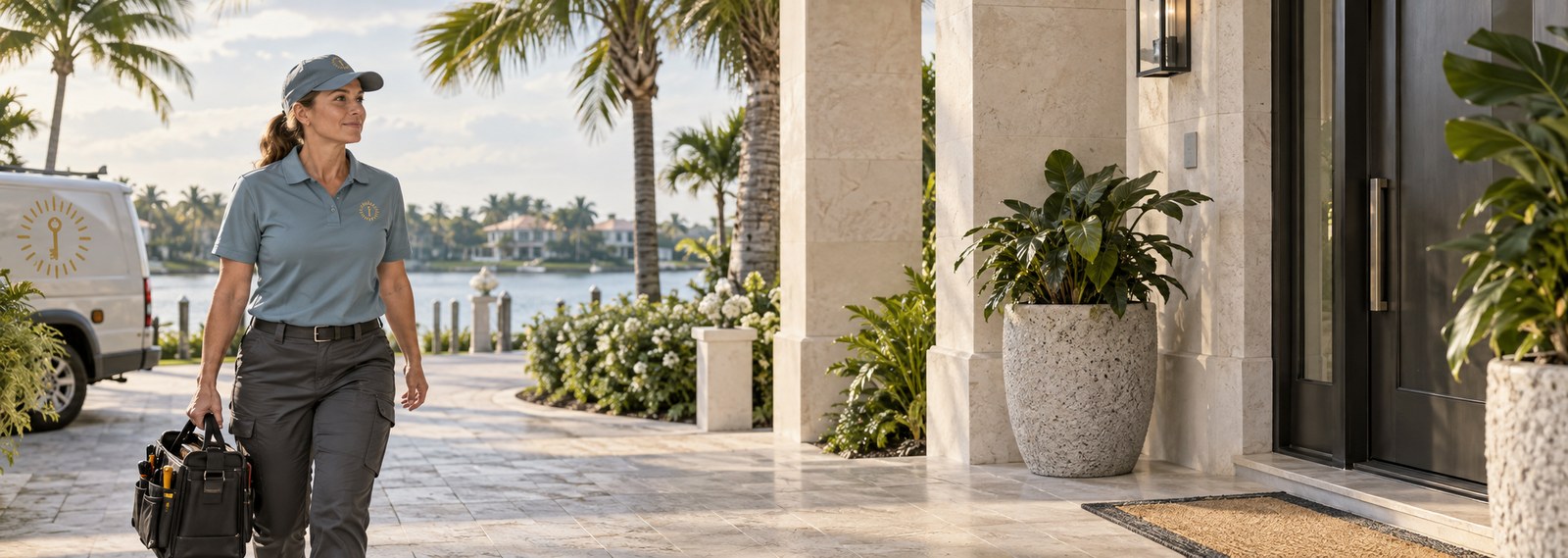
Toward the edge of town, properties get larger, driveways get longer and the buildings multiply. A house, a barn, a workshop, a pump house and a farm gate each need their own lock, and each can fail in its own way. This page explains how a mobile locksmith approaches rural and semi-rural properties, what makes outbuilding hardware different and how to plan for a visit down a long approach drive.
What rural property security really involves
A suburban home has one front door, one back door and a garage. A rural property has many more openings and much more distance between them. The house may sit far from the road, the barn may be behind it, and a gate at the entrance may be the only barrier to the whole parcel. Securing such a place means thinking in layers, from the gate to each building to each door.
Distance changes how problems unfold. A neighbor may not hear anything, a passing car may not see anything and a property owner may not notice a failed lock until much later. For that reason, durable hardware and sensible habits matter more than on a tight suburban lot, and it is worth investing a little time in getting the basics right.
A locksmith can walk the property with the owner and talk through each building. Which ones hold valuable equipment, which ones are used daily, which ones are rarely opened and which ones are shared with tenants or workers. Starting with a clear picture of the layout helps decide where to spend effort, and where simple hardware is enough.
Farm gates, entrance gates and chain locks
The entrance gate is the first line of defense. Rural gates range from simple pipe gates with a chain and padlock to powered iron gates with keypads. Most failures come from weather. Rust seizes padlocks, chains stretch, hinges sag and the latch no longer lines up when the gate drops under its own weight.
For a chain-and-padlock gate, the choice of padlock is important. A weather-resistant lock with a shielded shackle is far better than a plain one, because it resists both corrosion and cutting tools. Positioning the lock so the shackle is protected, and using a chain of suitable thickness, strengthens the whole arrangement. A locksmith can recommend a combination suited to your gate.
If several people need access, such as family, farriers, delivery drivers and contractors, keyed-alike padlocks or a system with separate keys help control access. Combination locks are convenient but easy to share, and codes should be changed when workers change. A locksmith can rekey padlocks to match, so one key serves several gates.
- Choose weather-resistant padlocks with a shielded shackle
- Check that gate hinges are tight and the gate does not sag
- Position the lock so the shackle is hard to reach with tools
- Change codes or rekey when workers or tenants change
Barn doors, sliding tracks and hasps
Barns and large outbuildings often use sliding or swinging doors secured by a hasp, a bar or a lock set into the door. These are heavy doors that sag over time, and the lock may no longer reach its strike. A door that must be lifted or pulled to lock is a door that will eventually be left unlocked.
A locksmith can adjust the track, rehang the door or reposition the latch so it works smoothly. Installing a heavy-duty hasp with hidden screws, so the fasteners cannot be removed from the outside, improves security significantly. Pairing it with a good padlock gives a solid combination without changing the look of the barn.
Wood doors in a humid climate swell and shrink, and a latch that fits in the dry season may bind in the wet. Allowing for that movement during installation, and choosing hardware that tolerates it, keeps the door working all year. Rust-resistant screws and fasteners help too, as ordinary ones corrode quickly.
Workshops, pump houses and storage sheds
Smaller outbuildings often hold the most valuable items: tools, equipment, fuel, chemicals or supplies. They are also frequently the least protected. A flimsy hasp and a cheap padlock on a metal shed door can be defeated in seconds, and the contents are exposed. A locksmith can help upgrade these to something appropriate without turning the property into a fortress.
For a workshop, a solid deadbolt in a reinforced door frame is a good start. Adding a strike plate with long screws and considering a door that opens outward, so hinge pins are not exposed, makes the entry much harder to attack. A small alarm or motion light is also useful, though outside the locksmith's scope, and complements the lock.
Pump houses and utility sheds deserve attention because losing access to water or power systems is a serious inconvenience. Locking them against casual tampering, while keeping a key accessible to those who need it, is a balance. A keyed-alike system makes sure the same key opens the house, the shed and the pump house without carrying a heavy ring.
The main house: doors, garage and lanai
The house on a rural parcel deserves the same attention as any other. Front and back doors should have solid deadbolts, strong strikes and doors that close squarely. Garage entries, sliding doors onto patios and any side doors are common weak points. A locksmith can review each one and propose small improvements that add up.
Because the house may be far from neighbors, the risk of a lockout is also higher. Being shut out on a large lot, with no neighbor nearby, means waiting for help in sun or rain. Hiding a spare key in an obvious place is a poor solution, but giving a spare to a trusted person nearby or using a keypad lock is a sensible one.
Rural homes often have a well-used back door or mudroom entry, where boots, tools and animals pass through. That door gets harder wear than the front, and its hardware may be tired. A quick inspection of this entry, and a replacement of a worn lock or latch, prevents a later failure when you are standing outside with muddy hands.
Long drives, locked gates and getting the technician in
A visit to a rural property starts at the gate. If it is locked, the technician cannot reach the house unless someone opens it or provides a code. When you call, explain how the gate works, give the code or arrange for someone to meet the technician. A locked gate with no one to open it is the most common reason for a delayed visit.
Directions matter. Rural roads may be unpaved, house numbers may be small or hidden and the property may be set back behind trees. Give clear directions, such as the nearest named road, a recognizable landmark and a description of the entrance. Mention if the surface is soft after rain, since that can affect the approach.
Cell coverage can be patchy in some rural spots. Let the dispatcher know the best number to reach you and where you will be waiting. If you are locked out, wait near the main entrance or the gate so the technician can find you. Call to confirm availability, since distance and road conditions affect scheduling.
Tenants, farm workers and shared access
Many rural properties have more than one person coming and going: a tenant in a guest cottage, a caretaker, a farrier, a landscaping crew or a hired hand. Each of them may need access to part of the property, and none of them should have access to everything. Planning access carefully avoids confusion and reduces risk.
A locksmith can set up a key system with different levels. The owner holds a master key, a tenant holds a key to the cottage and gate, and a worker holds a key to the barn and equipment shed. When someone leaves, only their key level needs to be changed, not the whole property.
Records help. Writing down who holds each key and when it was issued takes a few minutes and avoids guesswork later. When a worker or tenant leaves, collecting the key and rekeying the lock they used is a clean, simple step. Authority is checked before any lock is changed, so be ready to explain your ownership.
Weather, humidity and rural hardware
Rural hardware is exposed to everything: sun, rain, humidity, dust, insects and the occasional storm. Cheap locks fail quickly in these conditions, and plated steel rusts in a season. Choosing stainless, brass or well-coated hardware makes a visible difference to how long it lasts, and it is worth paying attention to when buying or replacing.
Dust and grit are particular enemies of locks. Sand in a keyway wears the pins and makes the lock stiff, and heavy oil makes it worse by collecting dirt. A dry lubricant designed for locks, used lightly, is a better choice. Wiping the keyway and checking the lock twice a year is a small effort that avoids many service calls.
Hurricane season is a reminder to check gates, barn doors and outbuildings. A door that blows open in wind can be damaged and let weather inside. Making sure latches engage, hinges are secure and locks work freely before the season begins is part of preparing a rural property. A locksmith can help with that review.
Animals, vehicles and equipment storage
Rural properties often hold animals, vehicles and equipment that need protection of different kinds. A stall door must latch so an animal cannot open it, a tool shed must keep equipment safe and a vehicle shelter needs reliable access. Each of these has its own requirements, and a one-size lock rarely fits all.
For animal enclosures, latches should be easy for people to operate with gloves but difficult for animals to manipulate. Spring-loaded latches and double-action designs are common. A locksmith can suggest suitable hardware, and can also advise on keeping a lock out of reach of curious horses or goats that learn to lift simple catches.
Vehicles and equipment, such as tractors, utility vehicles and trailers, often use keys that are easy to copy and easy to lose. Keeping a record of keys, having spares made and storing them securely in the house helps. If a key is lost, a locksmith can often make a new one on site, after checking ownership or authority.
Planning a visit and what to say on the phone
To plan a visit to a rural property, call and describe it. Mention how many buildings need attention, what type of locks you have, whether there is a gate and how to find the entrance. If there are several tasks, say so, as combining them in one visit saves time and effort.
For simple jobs, a quote is given by phone before dispatch. For larger projects, such as upgrading several outbuildings or solving a recurring gate problem, a technician visits to assess the work first, and the service call charge is explained before anyone is sent. Call to confirm availability, since distance affects scheduling.
On arrival, the technician confirms your authority, walks the property with you and explains the plan. After the work, you should have locks that operate smoothly, keys that fit and a clear understanding of any further improvements worth considering. The goal is a property that is secure, practical and easy to manage.
Keypad gates, electric operators and manual overrides
Many rural properties have a powered entrance gate with a keypad, a remote or an intercom. These systems are convenient, but they depend on electricity, batteries and moving parts that fail in a storm or after years of sun and moisture. When the power goes out or a motor fails, the gate may stay shut or, worse, stay open.
Most operators include a manual release that allows the gate to be moved by hand. Knowing where it is and how it works is essential, and the key to the release should be kept somewhere accessible but not obvious. A locksmith can help with the lock on the release box, rekeying it or replacing it when it has seized with corrosion.
The gate system itself is typically serviced by a specialist, but the physical locks, hasps and manual overrides are well within a locksmith's work. If a gate is stuck, do not force it, as that can bend the track or break the operator. Call and describe what happens, and the technician will tell you what can be handled on a single visit.
Hunting seasons, visitors and absent owners
Rural land attracts visitors who have no connection to the owner: trespassers, curious drivers, and sometimes people looking for a quiet place to leave unwanted items. Owners who are away for long stretches worry most, because nobody is around to notice. A sturdy gate lock, a locked barn and visible hardware tell visitors the property is looked after.
If you are away, arrange for someone to check the property periodically. Give them a key to the gate and the house, and consider whether they need access to the outbuildings. Keeping that key separate from your main ring, and changing it when the arrangement ends, keeps your risk contained.
A locksmith can help set up a sensible key plan before you travel. Rekeying locks, adding a keypad on the main entry or installing a lockbox for a caretaker are all options. Each has tradeoffs in convenience and control, and the technician explains them so you can choose what fits your situation and your comfort level.
Emergency access and being locked out far from help
A lockout on a suburban street is an inconvenience. A lockout on a long rural drive, with the nearest neighbor out of sight, is more serious. If you step out to feed animals or check a gate and the door shuts behind you, your phone and keys may be inside. Planning for that possibility is a small effort that pays off.
Simple habits help. Keep a spare key with a trusted neighbor or relative, not hidden near the door. Carry your phone when you go outside. Consider a keypad lock on the main entry so you can get in without a key. If you are locked out, find shade, stay near the house and use any neighbor's phone or a vehicle to call.
When the locksmith arrives, they confirm your authority before opening the door. Having a driver's license with a matching address or any document connecting you to the property helps. If you are a guest or caretaker, the owner can confirm by phone. Once inside, a quick review of your locks and spare keys avoids a repeat.
Frequently asked questions
Can one key open my house, barn and gate padlock?
Often, yes. Padlocks and door locks can be rekeyed to match, so a single key serves several places. If you prefer separate access for workers or tenants, a layered system gives each person only the keys they need. The technician helps you plan before any lock is changed.
What if my property gate is locked when the technician arrives?
Tell us how the gate works when you call. Give a code, arrange for someone to open it or meet the technician at the entrance. A locked gate with nobody to open it is the most common reason a rural visit is delayed.
How can I make a sagging barn door lock properly?
Usually the door has dropped, and the latch no longer reaches its strike. A locksmith can adjust the track, rehang the door or reposition the latch. A heavy-duty hasp with concealed screws and a weather-resistant padlock improves security without changing the look of the barn.
Do you check that I own the property before changing locks?
Yes. The locksmith checks ownership or authority before opening, rekeying or changing any lock. For a rural property, that might mean explaining your role and showing something that connects you to it. If a tenant or caretaker calls, the owner may be asked to confirm.
How is the visit priced for a large property with several buildings?
Simple jobs are quoted by phone before dispatch. For larger projects, a technician visits to assess the work, and the service call charge is explained before anyone is sent. Describe the buildings, locks and gate when you call, and we will confirm availability.