
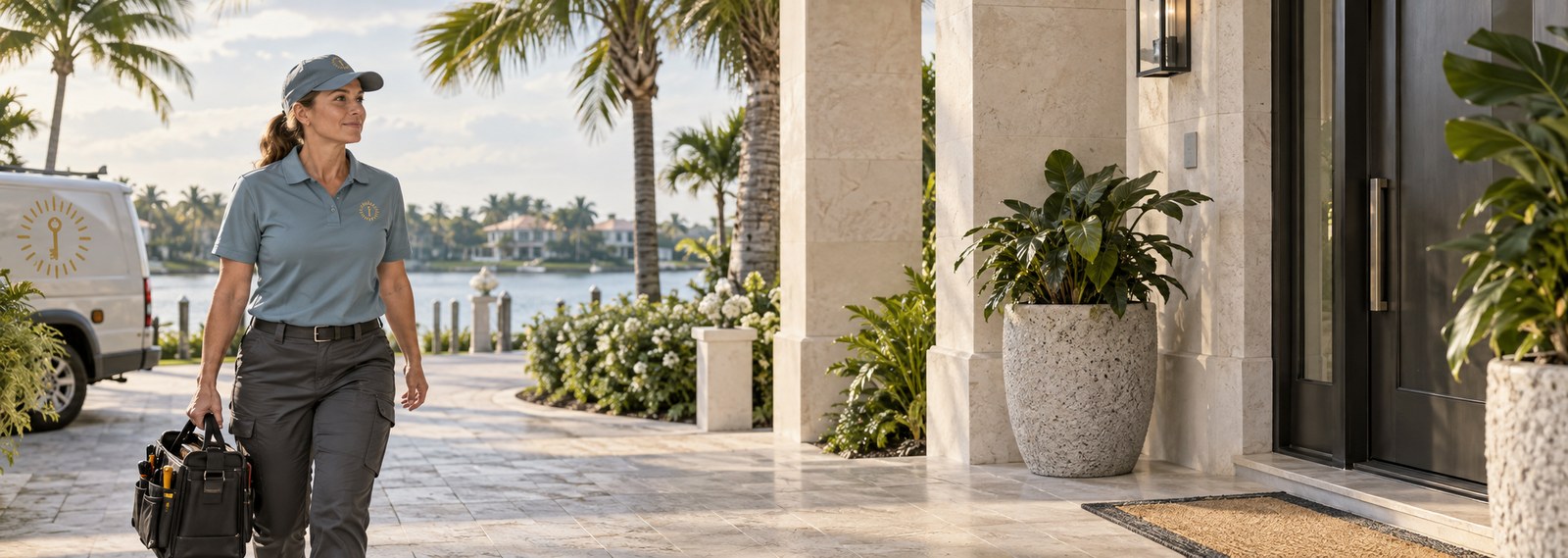
When keys are lost, a home changes hands or a lock starts to misbehave, two answers come up: rekey it or replace it. They solve different problems, and picking the wrong one wastes effort or leaves a weakness in place. This guide explains what each option does, what to look at when deciding, and how a technician helps you choose without pressure.
What rekeying actually does
Inside most residential locks is a cylinder holding a set of small pins. The pins line up only when the correct key is inserted. Rekeying means changing those pins so a different key fits. The old key no longer works, the new key does, and the lock body, handle and finish stay exactly where they are on your door.
The result is a fresh set of keys for the same hardware. Rekeying is useful when keys have been lost, when a former tenant or partner still has copies, when you move into a new home and do not know who else holds a key, or when you want several locks on one key. It takes a short visit and leaves the door looking unchanged.
What rekeying does not do is repair a worn lock, strengthen a weak one or change its appearance. If a deadbolt is loose, corroded or poorly made, rekeying gives you a new key for the same weak hardware. That is the central question in the decision: is the problem with who has the key, or with the lock itself? The answer points you toward the right option.
What replacement does, and when it is the better choice
Replacing a lock means removing the old hardware and installing new. That might be a new deadbolt, a new handle set, a new knob or lever, or a complete entry set. Replacement addresses problems that rekeying cannot: worn parts, broken mechanisms, damaged finishes, low security quality and a desire for a different look or feature.
It is also the right choice when the lock is simply at the end of its life. Locks have moving parts, and in the humid, salty Gulf Coast environment they wear faster than in dry climates. A lock that sticks, grinds or needs jiggling before it will turn is telling you it is tired. Rekeying a tired lock gets you new keys for a lock that will soon fail anyway.
Replacement also lets you upgrade. You might move from a basic builder-grade deadbolt to a sturdier one, add a keypad, choose a finish that resists coastal corrosion or switch to a style that matches other hardware. The technician can explain the options available for your door and help you balance security, appearance and convenience.
Condition: the first question to ask
Start by looking honestly at the lock. Does the key turn smoothly? Does the bolt extend fully and retract without catching? Does the handle feel solid, or does it wobble? Are there rust spots, green powder, pitting or worn-off finish? Does the key itself look worn, with rounded edges and shallow cuts? These details show whether the hardware has life left.
A lock in good condition with a key problem is a clear rekey candidate. If keys were lost but the lock works well, rekeying is efficient and keeps the hardware you already have. A lock in poor condition with any kind of key problem is a replacement candidate, since you would otherwise pay for work on something likely to need replacing soon.
Humidity, salt air and age shape condition here more than usage does. A rarely used lock on a lanai door can corrode just as badly as a front door lock. A technician can inspect the internals, test the action and tell you plainly what shape the lock is in. That inspection is often the quickest way to settle the question.
- Smooth key action and full bolt travel suggest a rekey is enough
- Grinding, sticking or wobble suggests replacement
- Visible corrosion inside the keyway points to replacement
- Worn, rounded keys may indicate a worn cylinder as well
Age and the quality of the original hardware
Age matters, but quality matters more. A well-made lock can serve for decades with care, while a low-grade lock may struggle after a few years. Builder-grade hardware, installed in many homes to keep costs down, tends to use thinner metal, lighter springs and plated finishes that wear through. If your lock is of that type, rekeying it is a short-term fix.
A heavier, higher-grade lock deserves rekeying when the issue is keys. These locks often have solid brass or steel components, tighter tolerances and finishes that stand up to weather. Rekeying one costs less than replacing it, and you keep a better lock than a basic new one. The technician can often recognize quality by feel and by brand markings.
Compatibility is another aspect. Very old locks may use parts no longer made, or may not match modern door preparations. Some cannot be rekeyed at all. In those cases replacement is the practical path. A technician can tell you whether your lock can be rekeyed, whether parts are available and whether the effort makes sense compared with fitting modern hardware.
Finish, appearance and coastal wear
Finish is more than looks. In a salt-air environment, a finish that peels or tarnishes exposes the metal beneath, which then corrodes faster. Hardware with a durable finish, such as solid brass, stainless steel or a high-quality coating, tends to last longer near the Gulf. If your finish is failing, replacement may be wiser than rekeying.
Appearance also plays a role. If the lock matches the rest of your hardware and you like how it looks, rekeying preserves that harmony. If the handle is scratched, the plating is worn or the style no longer suits your home, a replacement gives you a chance to refresh the look. Some owners treat lock replacement as part of a broader door update.
Think about consistency too. Mixed finishes across doors can look uneven, and replacing only one lock may highlight differences. If you plan to change several, consider doing them together so they match. A technician can show samples and explain which finishes hold up best in your location, whether you live on the water, in a golf community or inland.
Security level: what the lock can resist
Not all deadbolts are equally secure. Lock quality is graded, and the grade reflects how well the lock resists force, picking and wear. A basic lock may be adequate for low-risk situations, while a higher-grade lock offers more resistance. If your current lock is a basic model and you want more security, replacement is the way to get it.
Rekeying does not improve resistance. It changes who can use the lock, not how strong the lock is. If the main concern is that a lock can be forced, or the bolt is short, or the strike plate is flimsy, then new keys alone do not help. Consider the whole entry: the lock, the strike plate, the screws, the door and the frame all matter.
If your concern is lost or shared keys on an otherwise sound lock, rekeying addresses it directly. If you are worried about the quality of the lock itself, replacement and a better strike plate address that. Often the answer is a bit of both, such as replacing the weakest door's lock and rekeying the rest to match. A technician can recommend a sensible mix.
Matching locks to one key
Many people want a single key for all exterior doors. This is simple to arrange with rekeying if the locks are compatible, since the technician can set each cylinder to the same new key. If your locks come from different brands or types, they may not be compatible, and some may need replacement to join the set.
Replacement gives you a clean way to start fresh. A set of new keyed-alike locks all operate on one key from the start. This is common in new construction and in major updates. It also lets you choose a consistent style and finish across the home, which can be appealing.
Consider what you want from a keyed-alike system. One key is convenient, but it also means one lost key affects every door. Some owners prefer to keep the front door separate from outbuildings or utility doors. Talk through your preferences with the technician, and decide how many keys you want and who should have which.
Situations that usually point one way or the other
Some common situations lean toward rekeying. You bought a home and want to be sure that previous owners and their contractors cannot enter. A tenant moved out. A key was lost and the lock otherwise works fine. A family member's access needs to end. In these cases the hardware is sound and the issue is who holds keys.
Others lean toward replacing. The lock sticks or grinds. The finish is corroded. The deadbolt is a basic grade and you want better. The door has been forced or the lock damaged. You want a keypad or smart lock. A key broke off and left the cylinder damaged. The lock is so old that parts are no longer available.
Many situations fall between. A lock that is a little stiff but otherwise sound might be rekeyed now and replaced later. A set of decent locks with one failing might be partly rekeyed and partly replaced. The technician can walk through each lock with you and help you set priorities. You decide what to do after hearing the choices.
Ownership checks and what the visit involves
Whether you rekey or replace, the locksmith checks ownership or authority before beginning. For a home, that means identification and something tying you to the address. For a rental, it means the landlord's approval. For a business, it means authority from the owner. This protects the true owner and anyone who relies on the lock.
A typical visit starts with a look at each lock and a discussion of your goals. The technician explains what each lock needs, what the options are and what each will involve. For simple jobs a quote can be given by phone. For complicated ones, a technician visits and the service call charge is explained plainly before dispatch.
Rekeying a standard lock is usually quick, while replacement takes a bit longer, depending on the door. The technician tests the result with you, hands over new keys and explains care. Ask any questions you have, and say if you want to hold off on part of the work. Call us to confirm availability and talk through your situation.
A simple way to decide
If you want a quick rule, ask two questions. First: is the lock in good condition and of decent quality? Second: is my concern about who has keys, rather than how strong or worn the lock is? If both answers are yes, rekey. If either is no, consider replacing. Most decisions fall neatly out of those two questions.
When in doubt, have a technician look. A short inspection costs less than a wrong decision. The technician can explain what they see, show you wear or damage and tell you what is likely to happen if you keep the lock. They can also tell you what is not worth spending on, which is just as valuable as telling you what to do.
Whichever path you choose, keep a record of what was done, and store spare keys sensibly. Revisit the question every few years, because locks wear and needs change. A thoughtful choice now saves money, avoids repeat visits and leaves you with a front door you can trust, in a climate that tests hardware more than most.
Smart locks and keypads: rekey, replace or add
Electronic locks introduce a third path. A keypad deadbolt can often be fitted in place of your existing deadbolt, giving you codes in addition to, or instead of, a metal key. That is a replacement, since the hardware changes, but it can also be the cleanest way to solve a key-control problem, because codes can be added and removed without cutting keys.
Think about the tradeoffs before you choose. Electronic locks depend on batteries and sometimes on a network connection. In a hot, humid, salty environment they need good seals and a sensible finish. Keep a mechanical key backup, and know how to use it. Some owners prefer a conventional lock for the main entry and an electronic lock for secondary doors.
If you already have an electronic lock, rekeying may apply to the mechanical override cylinder, while codes are managed separately. A technician can explain how your lock works and what each option changes. Whatever you choose, ask how the lock behaves in a power outage, how batteries are replaced and what happens if the electronics fail.
If you are still unsure after reading all this, bring photographs to the conversation. A clear picture of the lock, the door edge and the frame lets the dispatcher form a good idea of the situation before anyone is sent. It also helps you describe symptoms such as sticking, rattling or visible wear, which are the details a technician uses to steer you toward the right choice.
Doors that make the decision for you
Sometimes the door, not the lock, drives the answer. A door that is warped, swollen or out of square can make a good lock behave badly. Before replacing a lock that seems to fail, check whether the latch meets the strike plate cleanly and whether the bolt slides into its hole without rubbing. Adjusting hinges or moving a strike plate may solve what looks like a lock problem.
Doors with unusual preparations also matter. Some doors have lock holes that are non-standard, or were cut for older hardware. Fitting new hardware may need adapters, filler plates or small modifications. A technician can measure the door and tell you which locks fit cleanly, and which would require extra work or a different approach.
Finally, consider the door's role. An exterior door facing the water, a door in constant sun and a door in a covered breezeway all age differently. Choose hardware for the conditions it will face. A little thought now about exposure, material and use can mean the difference between a lock that serves for many seasons and one that disappoints within a couple of years.
Cost and timing also enter the picture, though they should not decide the matter alone. A quick rekey on sound hardware is usually the lighter job, while replacement takes more time and may involve choosing parts. Ask the technician how long each option would take and what it involves for your specific door, and weigh that against how long you expect to stay in the home.
Frequently asked questions
Is rekeying cheaper than replacing?
It is often the lighter job, since the hardware stays in place, but that depends on the lock and the situation. Quotes are given by phone for simple work, and a technician visits for complicated jobs, with the service call charge explained plainly before dispatch. A technician can tell you which option makes sense for each lock.
Can every lock be rekeyed?
Most standard residential deadbolts and handle sets can, but some very old, damaged or specialized locks cannot, and many padlocks are not designed for it. A technician looks at the lock and tells you whether rekeying is possible and sensible, or whether replacement is the better path for that door.
Does rekeying make my door more secure?
It makes old keys useless, which is a real security gain when keys are lost or shared. It does not strengthen the lock itself. If the lock is weak, worn or poorly made, replacement and a better strike plate address that. Many homes benefit from a combination of both.
What if my lock is corroded from salt air?
Surface corrosion may be cleaned, but corrosion inside the cylinder or mechanism usually means the lock is nearing the end of its life. Rekeying a lock in that state is rarely wise. Replacement with hardware that has a durable finish usually serves coastal homes better over time.
Do you need proof of ownership for a rekey?
Yes. For homes, vehicles and businesses, the locksmith checks ownership or authority before opening, rekeying or programming. Have photo identification and a document connecting you to the property ready, and if you rent, a message from the landlord or manager approving the work.