
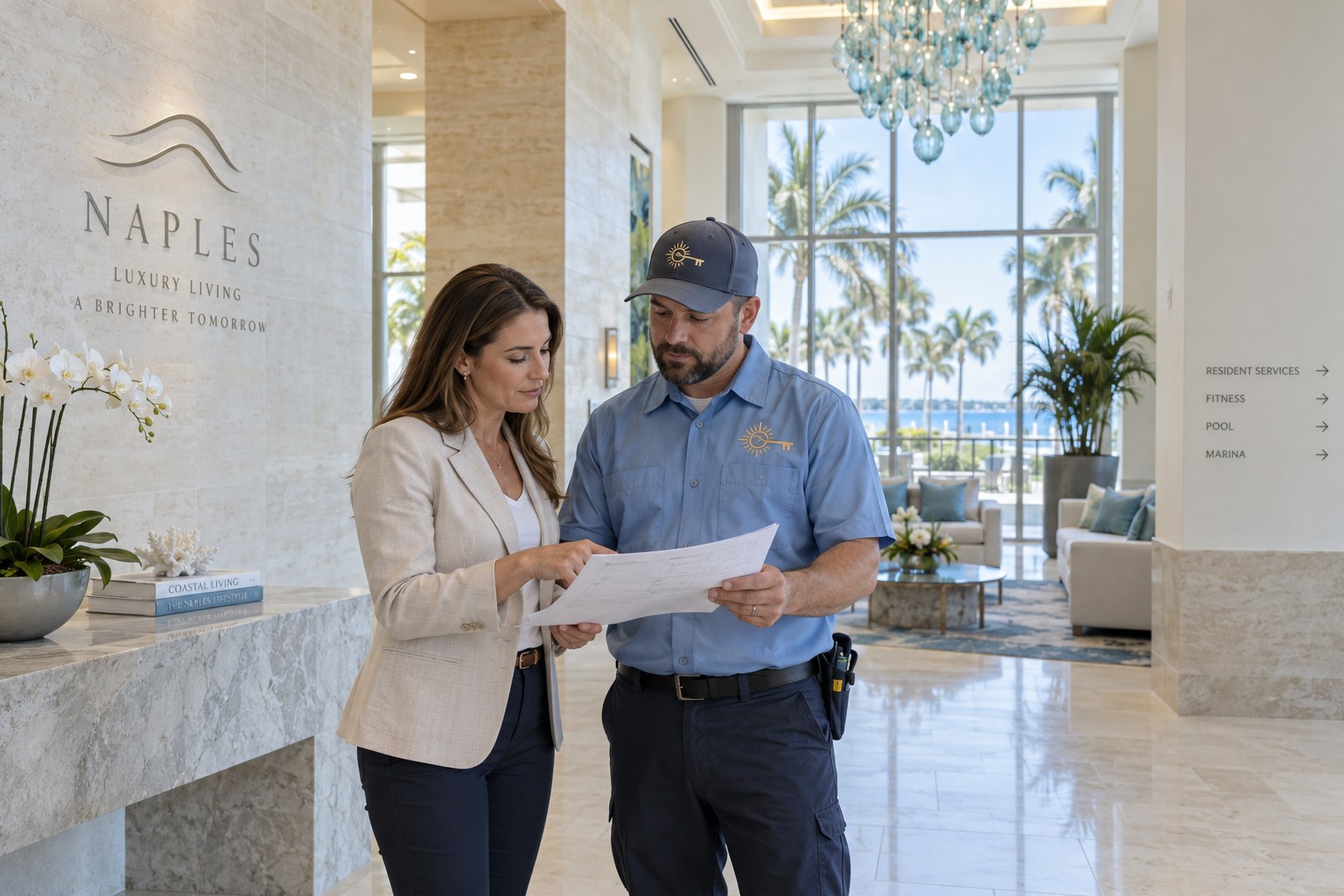
Being asked to prove you live somewhere can feel odd when you are standing at your own front door. It is also one of the most important protections a locksmith offers. This guide explains what proof of residence or authority usually looks like, how it works for owners, renters, seasonal residents and managers, and what to do when your papers are locked inside.
Why the question gets asked at all
A lock exists to keep people out, and a locksmith's skill is getting past one. That combination carries real responsibility. If a technician opened doors for anyone who asked, the service would be useful to burglars, estranged partners, former tenants and anyone with a grudge. Asking who you are and how you are connected to the property is how a locksmith keeps that skill from being misused.
For vehicles, homes and businesses, the locksmith checks ownership or authority before opening, rekeying or programming. This is not an accusation. It is a routine part of the work, as ordinary as a pharmacist asking for identification. Most of the time the check takes a minute and then the work proceeds. It protects the real occupant and it protects you.
Naples has an unusual mix of situations that make this check matter. Many homes belong to seasonal residents who are away for months. Vacation rentals change hands weekly. Condo units are owned by someone in another state and occupied by a tenant or a guest. A technician cannot guess who has authority, so the check is how they sort it out.
What counts as proof for an owner
If you own the home, the best proof ties your name to the address. A photo identification card with the same address is the simplest. If your card shows an old address, other papers can bridge the gap: a property tax bill, a mortgage statement, a closing document or a deed. A phone photo of one of those documents is often acceptable.
Utility bills and mail from banks or government offices also help, especially when they show your name and the property address. Insurance documents for the home are another strong sign. The technician does not need every one of these. One or two that clearly link you to the property are generally enough, along with photo identification that matches the name.
Condo owners may be able to show an association statement or a letter from the management office. If you own through a trust or a company, bring something showing that you are authorized to act for it. A short explanation to the dispatcher during the call helps the technician prepare for the right questions and understand your situation before arriving.
What counts as proof for a renter
Renters have a legitimate right to be let into the place they live, but the lock itself usually belongs to the landlord. Bring your lease or a copy of it. A signed rental agreement with the address and your name is the strongest evidence. A rent receipt, a move-in inspection form or an email from the landlord confirming your tenancy can also help.
Utility accounts in your name, mail delivered to the address and a photo identification that matches the lease all strengthen your case. If your lease is inside the locked home, a photo on your phone or a copy in your email can do the job. It is worth keeping digital copies of important documents for exactly this reason.
For changes to the lock, such as rekeying or replacing hardware, the landlord or manager typically needs to approve. The technician can often open the door for a verified tenant but will want the owner's permission to alter the lock. A quick call or text from the property manager confirming consent usually clears that up. Raise the topic early so the visit is not wasted.
- A signed lease or rental agreement with your name and the address
- Photo identification that matches the name on the lease
- Mail, a utility bill or a bank statement showing the address
- A message or call from the landlord or property manager confirming your tenancy
When a property manager or agent is involved
A great many Naples homes and condos are handled by property managers or rental agents, especially seasonal and vacation properties. When the manager calls the locksmith, the technician needs to confirm that the manager has authority from the owner. A management agreement, a work order from the owner or a letter on company stationery can serve as evidence.
Managers should expect to explain whom they work for, which units or homes are involved and what work is authorized. If the manager is not on site, someone else may be waiting at the door. In that case the technician needs to reach the manager directly and confirm that this person is allowed to be there and that the work is approved.
If you are a guest in a vacation rental, you will usually need the manager or owner to handle the call. A guest generally cannot authorize a lock to be opened or changed, because the rental belongs to someone else. Contact the host or management company first. They can arrange the visit or give you written consent so the technician can proceed with confidence.
Seasonal residents and people who are away
Snowbirds and seasonal residents are a big part of life here, and their situations are common. You might arrive in the fall to find a key that no longer turns, or a lock that has seized after months of humidity and salt air. Your identification may show a northern address while the property sits in Collier County. That is perfectly normal.
Bring a document tying you to the Naples property: a property tax bill, an association statement, an insurance policy or a deed. If you are coming from out of state, keep digital copies in your email so you can show them from your phone. Technicians see this all the time, and a clear document usually settles things quickly.
If you cannot be there in person, a caretaker or relative may be able to meet the technician with written authorization from you. A signed note, a text or email from the owner, and a phone call where the technician can speak to you directly all help. The more clearly authority is documented, the less likely it is that anything is delayed or refused.
Vehicles and business premises
The same logic applies to cars and commercial property. For a vehicle, the technician usually wants to see photo identification that matches the name on the registration or title, along with the vehicle itself. If your registration is inside the locked car, an insurance card on your phone or a title copy in your email may help. Bring what you can.
For a business, authority comes from the owner or someone authorized by the owner. A manager may need to provide a letter, a work order or a call from the owner. Employees acting on their own cannot always authorize a lock change. The technician may ask for the business name, your role and a way to confirm that role.
Leased commercial space adds another layer. The tenant may control the suite while the landlord controls the exterior door or the lock hardware. Explain the arrangement during the call so the technician knows what to expect. A short call to the landlord or building manager is often needed. Working out those relationships beforehand saves the visit from stalling on site.
What to do when your papers are locked inside
It is a frustrating irony: the documents that prove you live here are in the house you cannot enter. Start with your phone. Search your email for a lease, a utility bill, a closing statement or an insurance document. Check your photo library for pictures of identification or paperwork. Many people are surprised to find something useful.
Other options include asking a neighbor who knows you to speak with the technician, though a neighbor's word alone is not always enough. Calling the landlord, property manager or association office can provide confirmation. A package or mail item addressed to you that is sitting at the door can be useful. Bank or government mobile apps sometimes show your name and address.
If you truly cannot show anything, be honest with the dispatcher and ask what alternatives exist. In some cases a family member with documents can come, or a manager can verify you. In others, the job cannot proceed until authority is established. That outcome is frustrating, but it protects every resident, including you, from the consequences of an improper opening.
Privacy: what the technician does with your information
It is reasonable to wonder what happens to the papers you show. The technician looks at the documents to confirm that your name and the address line up, and may note that verification was done. You are not being asked to hand over copies of sensitive financial records. If a document contains account numbers, you can cover them with your thumb.
Show only what is needed. A utility bill with the address and your name is enough. You do not need to display an entire bank statement. If you are uncomfortable with a request, ask what specifically the technician needs to see and offer an alternative that does the same job without exposing more than necessary.
You are also entitled to ask how the verification information is recorded. Some businesses keep a work order with the name and address on file. That is normal for service records. If you have concerns, raise them on the phone before the visit. A clear, calm conversation about privacy usually leaves both sides comfortable and confident in the process.
Making the next lockout easier
A little planning now saves trouble later. Keep digital copies of your lease or deed, a recent utility bill and your vehicle registration in a secure place you can reach from your phone, such as a protected folder in your email. Take a photo of your identification and store it carefully.
Consider leaving a spare key with someone trustworthy, or installing a lock that does not depend on a single metal key. A keypad deadbolt or a lockbox with a code gives you a way in without calling anyone. These options come with their own tradeoffs, and a technician can explain which suits your home and your habits.
If you manage several properties or share a home with others, keep a simple record of who has authority and how to reach them. When something goes wrong, the dispatcher and technician can move quickly. Call us if you want to talk through a plan. A short conversation about documentation costs nothing and makes the next surprise much easier to handle.
Vacation rentals, guests and short stays
Vacation rentals add a particular wrinkle to proof of residence. A guest standing at the door of a rental has a legitimate reason to be there, but not the authority to alter or open the lock. The authority belongs to the owner or the management company. A technician cannot treat a booking confirmation alone as permission to open a door, because anyone can forward an email.
If you are a guest, the best first step is to contact the host or manager and explain the problem. They may have a spare key, a lockbox code or a local contact who can help. If the lock truly needs service, the owner or manager makes the call, or gives clear permission for the technician to proceed. Your booking details can still be helpful supporting evidence.
If you own or manage a rental, keep a simple record of who has authority and how to reach them at any hour, and tell your guests who to call. A manager who can answer quickly makes a lockout a minor delay instead of a spoiled vacation. Smart locks and lockboxes with changing codes can reduce lockouts, though they bring their own maintenance needs.
A short checklist to keep on your phone
Because lockouts rarely come with warning, it helps to prepare a small digital folder in advance. Include a photo of your photo identification, a copy of your lease or deed, a recent utility bill or tax bill, your vehicle registration and a note listing who else has authority over each property. Keep the folder in a place you can open from any device.
Add the contact details of anyone who may need to vouch for you, such as a landlord, an association office, a property manager or a family member. Include their names and what they can confirm. A technician who can reach the right person quickly can often resolve a question that would otherwise end the visit.
Review the folder once or twice a year. Documents expire, addresses change and property managers move on. A folder that is out of date can cause the same trouble as no folder at all. A few minutes of upkeep is a small price for being able to prove, at a difficult moment, that you belong where you say you do.
Common mistakes that slow the process down
A few habits tend to slow things down. The first is offering documents that do not match, such as an identification with one name and a lease with another spelling or a former surname. If your name has changed, mention it and bring something that links the two, such as a marriage certificate copy or an updated account. A mismatch is not a failure, but it needs explaining.
The second is expecting a verbal explanation to substitute for papers. Saying that you have lived there for years, however true, cannot be checked by a stranger at the door. A document or a confirmation from a person with authority can. The third is arguing with the check itself. Technicians follow the process for everyone, and polite patience gets you through it fastest.
The fourth mistake is waiting until the last minute to mention a complication, such as a landlord who is out of the country or a condo board that must approve work. Tell the dispatcher at the start of the call. Early honesty lets everyone plan, and often reveals a simple solution, like a quick call to the right office, that would be missed if the issue appears only on the doorstep.
One more habit is worth building: tell the people who share your home or property where the documents live and who holds authority. A spouse, an adult child or a caretaker who knows the folder exists can step in if you are traveling. That small bit of shared knowledge keeps a lockout from becoming a long, stressful afternoon for the whole household.
Frequently asked questions
Why do you need proof before opening my own door?
The technician cannot tell from outside whether the person asking is the occupant or someone with no right to enter. Checking ownership or authority before opening protects the real resident from improper access. It is a short, routine step, and once it is done the work usually moves along without delay.
What if my lease is inside the locked home?
Look for a copy in your email or phone photos. A utility account, mail addressed to you or a call to your landlord or property manager can also help. Tell the dispatcher what you have when you call, so the technician can advise what will work before the visit.
Can a neighbor vouch for me?
A neighbor can help support your story, but their word alone may not be enough. The technician generally needs documents or confirmation from an owner or manager. A neighbor can still be useful by letting the technician into a gate, holding a pet or confirming that you live there.
I rent. Can the locksmith rekey my lock?
Usually only with the landlord's or property manager's approval, since the lock belongs to the property. The technician can often open the door for a verified tenant first, then handle rekeying once consent is confirmed. Mention the landlord on the call so the right person can be reached during the visit.
What if I truly cannot prove anything today?
Be honest with the dispatcher. Options may include having a family member or manager bring documents, or getting the owner on the phone. If authority cannot be established, the lock will not be opened. That can be frustrating, but it keeps your home and everyone else's safe from improper entry.